Historical background
- The historical significance of East Turkestan to the Uyghur people
East Turkestan (often equated with today’s Xinjiang) is the Uyghurs’ ancestral homeland, a Central Asian region where Turkic, Islamic, and oasis cultures flourished for centuries; the name was popularized in the 19th century, reflecting a distinct identity from “Chinese Turkestan.” Wikipedia UNPO - Incorporation into the People’s Republic of China
The People’s Liberation Army entered and incorporated Xinjiang in late 1949 during the Chinese Civil War, consolidating PRC control through negotiated surrenders and military advances between October and December 1949. Wikipedia - Circumstances surrounding the fall of the East Turkestan Republic in the 1940s
The Second East Turkestan Republic (ETR), centered in Ili (Ghulja) from 1944–1949, operated as a Soviet-aligned satellite; it was folded into a coalition with Xinjiang’s provincial authorities and collapsed amid shifting wartime geopolitics and the PRC’s 1949 takeover. Wikipedia East Turkistan Government in Exile - Chinese government references and why
Beijing has historically referred to the region as “Xinjiang” (“New Frontier”), a Qing-era term institutionalized to frame the territory as an integral frontier of the Chinese state and to avoid the separatist connotations of “East Turkestan.” Wikipedia - Silk Road’s role in shaping identity and culture
Uyghur identity formed along Silk Road oasis networks, melding Turkic traditions, Islam, trade cosmopolitanism, printing and literary culture into a distinct Central Asian society spanning Khotan–Kashgar—an exchange hub shaping music, arts, and religion. historyrise.com Berlin-Brandenburgische Akademie der Wissenschaften JSTOR
Political control and occupation
- Why China officially calls it “Xinjiang”
“Xinjiang” reflects Qing imperial incorporation and modern PRC administrative continuity; the term asserts sovereignty and downplays claims linked to “East Turkestan.” Wikipedia - Beijing’s justification for occupation
Beijing frames its control as anti-terrorism and stability maintenance against separatism and extremism, emphasizing ETIM/TIP threats and national security narratives tied to domestic and transnational militancy. Wikipedia repository.digital.georgetown.edu The Diplomat - Policies to consolidate control
Policies include “Strike Hard” campaigns, mass detention and “re-education,” techno-surveillance, demographic engineering via XPCC settlement, and economic integration via Western Development and BRI corridors. Wikipedia Library of Turkistani MIT Press - Suppression of Uyghur nationalism
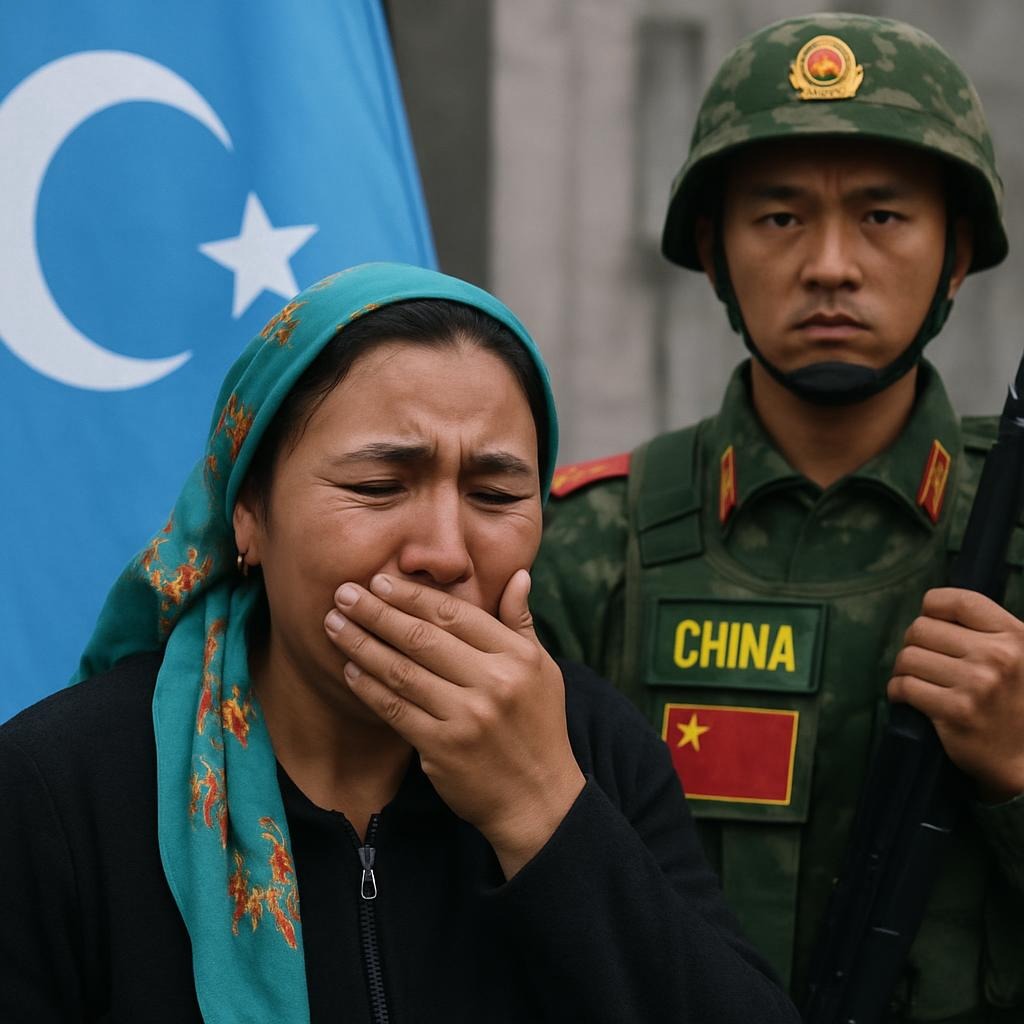
The CCP suppresses nationalist symbols (e.g., Kök Bayraq), polices diaspora networks, and criminalizes expression under security laws and “extremism” charges to delegitimize independence narratives at home and abroad. Wikipedia NewsDay Zimbabwe Uyghur Human Rights Project - Role of military and security forces
A dense security architecture—PAP, public security, XPCC—maintains control with regiment-level “Mobile Detachments,” extensive policing, and overlapping CCP-led chains of command in the region. Uyghur Human Rights Project 108peaceinstitute.org Uyghur Human Rights Project
Uyghur identity and culture
- Assimilation into Han culture
Assimilation policies promote a singular “Zhonghua minzu,” enforcing mixed housing, Chinese-themed public culture, and Sinicized education to subsume Uyghur identity under Han-centric nationhood. GlobalSecurity.org Springer - Language restrictions
Mandarin-only schooling expansion and directives (e.g., Hotan Prefecture 2017) diminish Uyghur-language instruction, with UN experts warning boarding schools risk forced assimilation by removing mother-tongue education. PEN America iuhrdf.org OHCHR UN News - Religious curtailment
New Xinjiang religious regulations (2024) demand “Chinese characteristics” in worship sites, tighten registration, and restrict independent practice, aligned with national Sinicization campaigns since 2016. Human Rights Watch Radio Free Europe/Radio Liberty ChinaFile Amnesty International - Impact of surveillance on cultural expression
AI-enabled, camera-based, and phone-tracking systems (e.g., Hikvision, Dahua) chill everyday speech, music, and arts; UN experts documented criminalization of cultural work and enforced disappearances of artists and scholars. Worldcrunch Business & Human Rights Resource Centre Uyghur Human Rights Project OHCHR - Diaspora activism challenging China’s narrative
Diaspora networks document abuses, mobilize campaigns, and reframe the issue as colonial repression; toolkits and research expose transnational intimidation, sustaining public attention and policy advocacy in Europe and beyond. Global Voices World Uyghur Congress Institutional Repository at the University of San Francisco centralasiaprogram.org
Human rights violations
- Evidence of mass detention camps
Satellite analysis mapped 380+ facilities; police file leaks revealed mugshots and internal protocols; investigations and databases corroborate widespread internment since 2017. The Xinjiang Data Project icij.org Wikipedia whatishappeninginxinjiang.com - Survivor descriptions of conditions
Survivors report torture, forced sterilization, indoctrination, and coercive labor; testimonies and interviews detail severe abuse and psychological trauma inside camps and prisons. Radio Free Europe/Radio Liberty Human Rights Foundation Pulitzer Center Global Investigative Journalism Network - Forms of forced labor
State labor transfers push Uyghurs into textiles, electronics, mining and critical minerals supply chains; U.S. law (UFLPA) presumes goods from the region are made with forced labor, targeting imports and entities involved. U.S. Department of Labor U.S. Department of State U.S. Department of State The Diplomat - Technology and surveillance
High-tech platforms (facial recognition, phone apps, data fusion) track movements and beliefs; companies’ products integrate into Xinjiang’s policing apparatus, enabling automated repression at scale. Bulletin of the Atomic Scientists Worldcrunch Business & Human Rights Resource Centre Uyghur Human Rights Project - “Re-education” role in persecution
“Vocational” centers centralize ideological indoctrination and preventive repression under CCP/XPCC coordination; reports indicate a system designed for mass political control and cultural erasure. Wikipedia uyghurrightsmonitor.org ODNI The Big Issue
International response
- Western governments’ response
Western states passed laws (UHRPA, UFLPA), issued genocide determinations, imposed sanctions, and coordinated statements via the G7 and parliaments; ongoing legislative efforts support victims and accountability. United States Holocaust Memorial Museum U.S. Customs and Border Protection Uyghur Human Rights Project chinastrategy.org - United Nations stance
UN experts repeatedly raised alarm, and OHCHR reported abuses possibly amounting to crimes against humanity; joint statements by member states condemned repression and urged remedial action. Wikipedia Council on Foreign Relations NDTV International Peace Institute - Muslim-majority countries’ reaction
Responses vary, with some governments muted or supportive due to economic ties; NGOs document advocacy and aid efforts amid geopolitical constraints and China’s influence over OIC and regional politics. Uyghur Human Rights Project Universiti Kebangsaan Malaysia - Economic dependence shaping responses
States’ trade/BRI reliance dilutes criticism and enables transnational repression; research highlights how dependence constrains democratic responses and diaspora safety. Leiden University Student Repository Stiftung Wissenschaft und Politik Carnegie Endowment for International Peace - Human rights organizations’ documentation
UHRP, Amnesty, HRW, and investigative consortia produced reports, leaks, and mapping; they maintain repositories of victims, facilities, and corporate links to coercive labor, informing policy and sanctions. xinjiang.amnesty.org Uyghur Human Rights Project udtsb.com World Uyghur Congress
Broader implications
- Fit within domestic security strategy
The CCP’s approach blends counterterrorism with preventive repression—mass detention, re-education, diaspora pressure—reflecting an evolving security paradigm to preempt perceived threats. MIT Press Springer - Belt and Road Initiative’s impact
East Turkestan is a strategic land bridge for BRI; infrastructure, logistics, and XPCC-led industrialization deepen control while exposing supply chains to forced labor risks across sectors and routes. CEEOL Stiftung Wissenschaft und Politik exed.asia - Relations with Central Asia
Security and economic integration tighten with China–Central Asia summits and treaties, entrenching Beijing’s leverage; Uyghur issues intersect with regional stability, militancy, and state cooperation dynamics. East Turkistan Government in Exile Carleton University - Long-term implications for Uyghur identity
Language loss, religious constraints, and surveillance accelerate cultural erosion; forced labor and demographic changes threaten intergenerational transmission of heritage and collective memory. OHCHR Springer Human Rights Foundation - How global pressure might influence future policies
Sustained legal, economic, and diplomatic pressure (import controls, sanctions, documentation) raises costs of repression, strengthens corporate compliance, and supports accountability pathways at multilateral forums. Uyghur Human Rights Project U.S. Customs and Border Protection Council on Foreign Relations
Keywords
- Homeland: East Turkestan, Uyghur identity, Silk Road
- Incorporation: 1949 PLA, PRC sovereignty, Xinjiang
- Control: Strike Hard, XPCC, techno-surveillance
- Culture: Sinicization, language bans, religious regulations
- Abuses: Mass detention, forced labor, re-education
- International: UN stance, G7 responses, UFLPA
- Geopolitics: BRI corridors, Central Asia relations
- Diaspora: Activism, transnational repression, documentation
Popular documentaries and films (with links)
- “In the Age of AI” (PBS Frontline) — segment on surveillance and Uyghurs
https://www.pbs.org/wgbh/frontline/article/how-chinas-government-is-using-ai-on-its-uighur-muslim-population/ PBS - “Reeducated” (The New Yorker/Emmy-winning short; screened at IPI event)
https://www.ipinst.org/2025/05/the-ongoing-mass-atrocity-crimes-against-the-uyghurs-and-how-the-un-can-respond International Peace Institute - “Inside a Xinjiang Detention Camp” (Pulitzer Center/BuzzFeed project)
https://pulitzercenter.org/stories/inside-xinjiang-detention-camp Pulitzer Center - “China Cables / Xinjiang Police Files” (ICIJ investigation)
https://www.icij.org/investigations/china-cables/xinjiang-police-files-uyghur-mugshots-detention/ icij.org - Amnesty’s interactive report: “Like we were enemies in a war”
https://xinjiang.amnesty.org/ xinjiang.amnesty.org - CFR Backgrounder explainer video and multimedia on Uyghurs
https://www.cfr.org/backgrounder/china-xinjiang-uyghurs-muslims-repression-genocide-human-rights Council on Foreign Relations - GIJN feature: “Border of Tears” survivor interviews
https://gijn.org/stories/interview-uyghur-victims-xinjiang-prison-camps/ Global Investigative Journalism Network - Worldcrunch/The Initium: “Every Step, Every Swipe” tech surveillance
https://worldcrunch.com/world-affairs/uyghurs-technology-surveillence/ Worldcrunch
Sources: See inline citations after each answer.
About the Author