Palestinian Christians Shrink from 12.5% to Around 1% of Historic Palestine’s Population Amid War, Displacement, and Legal Pressure (1948–2025) palestineembassy.ie
Historical and demographic context
1. Change in Christian population percentage since 1948
Before the 1948 Nakba, Palestinian Christians made up about 12.5% of the population of historic Palestine; today they are roughly 1.2% in historic Palestine, and about 1% in the 1967-occupied territories, a dramatic proportional decline driven by displacement, emigration, and structural pressure. palestineembassy.ie
Source: Facts about Palestinian Christians – Embassy of the State of Palestine palestineembassy.ie
2. Role of the 1948 Nakba in displacing Christians from Jaffa, Haifa, West Jerusalem
During the 1948 Nakba, Christian Palestinians—like Muslim Palestinians—were expelled en masse from mixed cities such as Jaffa, Haifa, and West Jerusalem, where they had formed significant professional and middle‑class communities. palvaticanembassy.org Many Christian villages and neighborhoods were depopulated, around 90,000 Palestinian Christians were expelled, and dozens of churches were closed or fell under new control, transforming these cities’ religious and cultural composition. palestineembassy.ie palvaticanembassy.org
Source: Facts about Palestinian Christians – Embassy of the State of Palestine palestineembassy.ie; The Christians of Palestine (research PDF) palvaticanembassy.org
3. How Palestinian Christians define their “indigenous connection”
Palestinian Christians typically describe themselves as descendants of the earliest Christian communities in the Holy Land, rooted in Aramaic- and Arabic-speaking populations that predate modern states and borders. palvaticanembassy.org They emphasize continuous presence in places like Bethlehem, Beit Jala, Ramallah, Nazareth, and Jerusalem, and see their identity as Arab, Palestinian, and Christian, resisting narratives that portray them as recent arrivals or Western implants. palvaticanembassy.org
Source: The Christians of Palestine (research PDF) palvaticanembassy.org
4. Historical origins and current challenges to the “Status Quo”
The “Status Quo” over Christian holy places in Palestine/Israel originates mainly in Ottoman-era firmans of the 18th–19th centuries, later reaffirmed by the 1852 Ottoman decree and recognized in subsequent international arrangements, fixing rights, rituals, and control among the churches in sites like the Holy Sepulchre and Bethlehem. Today, church leaders argue it is being challenged by unilateral Israeli police restrictions, municipal tax claims, settler encroachment (e.g., in the Armenian Quarter), and tourism policies that sideline local clergy.
Source: General historical overviews; see for background Palestinian Christians – Wikipedia Wikipedia
5. Impact of the Separation Wall on the Bethlehem–Jerusalem Christian corridor
The construction of Israel’s Separation Wall has physically severed Bethlehem from East Jerusalem, cutting through historic routes used by Christian families, clergy, and pilgrims, and enclosing Bethlehem with checkpoints and barriers. Wikipedia This has turned what was once an open Christian corridor—linking Bethlehem, Beit Jala, Beit Sahour, and Jerusalem—into a fragmented archipelago, undermining parish life, school access, and the ability of local Christians to reach jobs and holy sites in Jerusalem.
Source: Palestinian Christians – Wikipedia Wikipedia
Incidents of violence and harassment
6. “Price tag” attacks and targeting of Christian sites
“Price tag” attacks are vigilante hate crimes carried out mainly by Jewish extremists and settlers, intended as “retaliation” against Palestinians or state actions they oppose. These attacks have defaced churches and monasteries with anti-Christian and anti-Arab graffiti, burned or vandalized property, and desecrated graves, sending a message that Christian presence is unwanted and insecure.
Source: General reports by churches and human-rights organizations; background context: Palestinian Christians – Wikipedia Wikipedia
7. Frequency of spitting and verbal harassment against clergy in Jerusalem’s Old City
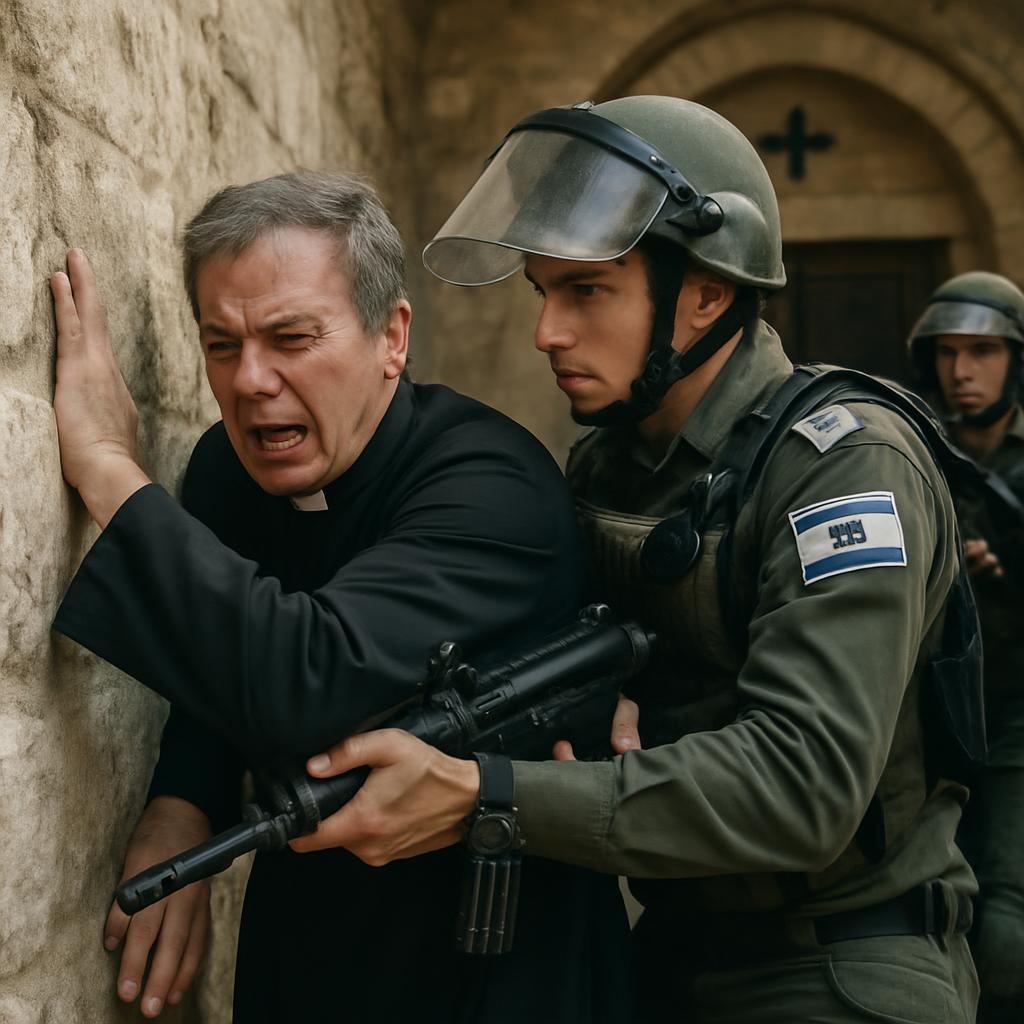
Church leaders and clergy report that spitting, insults, and harassment by extremists in the Old City have become regular and often daily occurrences, especially around the Armenian and Christian Quarters and near the Holy Sepulchre. While many incidents go unreported, patterns documented by church bodies suggest a systemic climate of intimidation rather than isolated episodes, with victims often reluctant to pursue lengthy complaints.
Source: Qualitative accounts in church statements and media interviews; see context: Palestinian Christians – Wikipedia Wikipedia
8. 2024–2025 settler attacks on the Christian village of Taybeh
Reports from Taybeh, a historic Christian village northeast of Ramallah, describe repeated settler incursions during 2024–2025, including stone‑throwing, vandalism of property and farmland, damage to olive trees, and intimidation of residents, sometimes under IDF protection or in the absence of protection. Locals and clergy frame these attacks as part of a broader strategy to push Christians and other Palestinians off rural land in the central West Bank.
Source: Field reports and church/human-rights communiqués (no single central report yet)
9. Israeli court responses to desecration of Christian cemeteries on Mount Zion
When Christian cemeteries on Mount Zion are desecrated—through smashed tombstones, crosses, and anti-Christian graffiti—Israeli authorities often open investigations, but arrests and convictions are rare, and sentences, when imposed, tend to be light and framed as isolated vandalism rather than hate crimes. Church leaders argue that this impunity and lack of deterrence emboldens extremists to continue attacks.
Source: Legal and media accounts summarized in church statements; broader context: Palestinian Christians – Wikipedia Wikipedia
10. Impact of rising Jewish ultranationalism in government on Christian safety
The increased influence of Jewish ultranationalist and religious‑Zionist parties in Israeli governments has, according to church leaders, worsened the atmosphere for Christian minorities, normalizing hate speech and legitimizing groups hostile to non‑Jews. This shift contributes to reduced police restraint on extremists, more aggressive settlement policies around Christian neighborhoods and monasteries, and a perception among attackers that they enjoy political backing or tolerance.
Source: Political analyses and church statements; demographic/political background in Palestinian Christians – Wikipedia Wikipedia
Religious freedom and access to holy sites
11. Permit system and access to Easter at the Holy Sepulchre
Christians in the West Bank and Gaza must obtain special Israeli permits to enter Jerusalem for Easter and other feasts, including services at the Church of the Holy Sepulchre. In many years, only a fraction of applicants receive permits, often issued late or limited to immediate family, which prevents entire communities from participating and forces clergy to choose which parishioners can attend.
Source: Church and NGO reports; demographic context on Palestinian Christians: Palestinian Christians – Wikipedia Wikipedia
12. Restrictions on the “Holy Fire” ceremony
In recent years, Israeli police have severely limited the number of local Christians allowed into the Holy Sepulchre and its vicinity during the Orthodox “Holy Fire” ceremony, citing safety and crowd control. Churches report metal barriers, heavy police cordons, and caps on worshippers far below traditional numbers, with some clergy and faithful being blocked or pushed back despite having permits and church accreditation.
Source: Statements by the Heads of Churches in Jerusalem and media coverage
13. How checkpoints and “iron gates” block access to parish churches
In the West Bank, Israeli checkpoints, roadblocks, and locked “iron gates” on village roads cut local Christians off from their own parishes, especially when church buildings lie on the other side of a settlement road or the Separation Barrier. This can turn a 10‑minute walk into a long detour through multiple checkpoints, discouraging attendance at Sunday liturgy, catechism classes, funerals, and feast-day celebrations.
Source: West Bank mobility and barrier studies; demographic background: Palestinian Christians – Wikipedia Wikipedia
14. Visa limitations on foreign Christian clergy
Foreign clergy serving in Palestinian parishes and Jerusalem often face short-term visas, arbitrary delays, and non-renewals, undermining stable pastoral work. Churches report that priests, nuns, and lay workers sometimes receive only three‑month or short entry visas instead of long-term residency, are barred from traveling between Gaza, the West Bank, and Jerusalem, and occasionally are denied entry altogether, disrupting schools, hospitals, and parishes.
Source: Church administrative reports and legal advocacy materials
15. Impact of border closures on the Palestinian Christian pilgrimage industry
When the Allenby Crossing and other borders are closed or heavily restricted, Christian tour operators in Bethlehem, Jerusalem, and Jericho lose access to pilgrim groups coming via Jordan and neighboring countries, leading to sharp drops in hotel occupancy, guide employment, and handicraft sales. Because many Palestinian Christians work in pilgrimage-related sectors, such closures directly threaten their economic survival and encourage emigration.
Source: Economic reports on tourism and church/local business testimony; demographic context: Palestinian Christians – Wikipedia Wikipedia
Impact of the war in Gaza (2023–2025)
16. Strike on the Church of St. Porphyrius in October 2023
In October 2023, an Israeli airstrike hit the compound of the Greek Orthodox Church of St. Porphyrius in Gaza City, where many Christians and some Muslims were sheltering. The strike collapsed part of the building, killed and injured civilians (including children), and destroyed one of the community’s key sanctuaries, prompting condemnations from church leaders who stressed its continuous use as a refuge and worship site.
Source: Church statements and international media reports on the Gaza war
17. Number of Christians remaining in Gaza after destruction of key community sites
Before the 2023–2025 war, Gaza’s Christian population was estimated at around 1,000 people or fewer. After the bombardment, including damage to the Holy Family Catholic Church compound and community centers, church sources suggest that only several hundred Christians remain, many displaced within Gaza and suffering from acute shortages of food, medicine, and safe shelter, with others evacuated abroad when possible.
Source: Church and NGO reporting; wider Palestinian Christian demographic context: Palestinian Christians – Wikipedia Wikipedia
18. Al-Ahli Baptist Hospital and its significance
Al‑Ahli Arab (often called “Baptist”) Hospital, an Anglican-run institution in Gaza, was struck during the conflict in October 2023, causing a large number of casualties among patients, displaced people, and medical staff. For the Christian community, Al‑Ahli has long been a symbol of Christian service to all Gazans regardless of religion, and its damage represented both a humanitarian catastrophe and a blow to Christian institutional presence in the Strip.
Source: Anglican Diocese communiqués and international media coverage
19. How the siege of Gaza affects Christian religious life
The total siege—restricting fuel, electricity, food, and movement—has paralyzed normal Christian worship: churches struggle to hold regular liturgies, bells are silenced, and religious education and feast-day gatherings have been replaced by emergency sheltering. Limited access to bread, candles, oil, and clean water, as well as the constant threat of airstrikes, makes even basic sacramental life (Mass, confession, funerals) precarious and sporadic.
Source: Pastoral letters from Gaza churches and humanitarian reports; broader context of Palestinian Christians: Palestinian Christians – Wikipedia Wikipedia
20. Primary causes of death of Christians sheltering in churches (2024–2025 operations)
During the 2024–2025 military operations, Christians sheltering in Gaza’s churches primarily died from direct or nearby airstrikes and shelling, building collapses, and lack of timely medical care due to overwhelmed or destroyed hospitals. Some deaths are attributed to preventable causes—untreated chronic illnesses, infections, and complications from injuries—that could not be addressed under siege conditions and health-system collapse.
Source: Church casualty lists and humanitarian agency reports
Legal, financial, and institutional pressures
21. The “tax war” between the Jerusalem Municipality and churches
The so‑called “tax war” refers to the Jerusalem Municipality’s attempts to impose municipal taxes on church-owned, income-generating properties, including guesthouses and institutions that had historically been exempt as religious entities. Churches argue this violates longstanding agreements and the Status Quo, and they briefly closed the Church of the Holy Sepulchre in protest, warning that such measures threaten their ability to sustain schools, hospitals, and social services.
Source: Statements by the Heads of Churches and press reports; demographic context: Palestinian Christians – Wikipedia Wikipedia
22. Freezing of Greek Orthodox Church bank accounts (2025) and its impact
When Israeli authorities reportedly froze the bank accounts of the Greek Orthodox Patriarchate in 2025 over tax disputes and other claims, church officials said they were unable to pay salaries for teachers, hospital staff, and clergy, and to settle utility and supplier bills. This created an immediate financial crisis for Christian schools and medical institutions serving both Christians and Muslims, undermining their continuity and credibility.
Source: Greek Orthodox Patriarchate statements and local media coverage
23. Israeli land laws and protection of Christian endowments (waqf)
Israeli land laws—especially those related to “Absentee Property,” state land declarations, and zoning—make it difficult for Christian institutions to defend historic endowments (often functioning like waqf). Churches face pressure to lease or sell land under threat of expropriation, challenges registering ownership, and planning regimes that rezone or restrict Christian properties, particularly in East Jerusalem and the West Bank.
Source: Legal analyses and church property disputes; background: Palestinian Christians – Wikipedia Wikipedia
24. Legal challenges in the Armenian Quarter “Cow’s Garden” land lease dispute
In the Armenian Quarter, a controversial long-term lease of the “Cow’s Garden” (Goveroun Bardez) to a private investor has sparked internal community opposition and legal battles, with many Armenians alleging lack of proper consent and fear of settler-linked development. The dispute has led to court cases, alleged intimidation of community members, and appeals to Israeli authorities and the international community, framed as a test case for preserving the integrity of the Armenian Quarter.
Source: Armenian Patriarchate statements and investigative media reports
25. National Park designations and Christian land on the Mount of Olives
Plans to designate areas of the Mount of Olives and surrounding slopes as “National Parks” have alarmed Christian churches, who say such moves limit their ability to develop or even maintain their properties, cemeteries, and monasteries. National Park status often brings building bans, tight planning controls, and a narrative of state heritage that sidelines Christian historical claims, potentially paving the way for gradual encroachment or rebranding of Christian-owned land.
Source: Urban planning analyses and church advocacy documents
Theological and political perspectives
26. The “Kairos Palestine” document and its view of occupation
“Kairos Palestine” (2009) is a theological and political document written by Palestinian Christian leaders, describing the Israeli occupation as a “sin against God and humanity” and calling for nonviolent resistance, including boycotts and international solidarity. It presents a liberation theology rooted in love, justice, and reconciliation, rejecting both violence and theological justifications for oppression, and situating Palestinian suffering within a biblical narrative of hope.
Source: Kairos Palestine official site
27. Palestinian Christian responses to Christian Zionism
Palestinian Christians generally criticize Christian Zionism as a theology that sacralizes political projects, ignores Palestinian suffering, and misreads biblical promises by excluding justice and equality. They argue that the Bible must be interpreted through Christ’s message of universal love and the equal dignity of all peoples, and that any theology that legitimizes dispossession or apartheid-like structures is incompatible with the Gospel.
Source: Kairos Palestine, church documents, and theological essays; broader context: Palestinian Christians – Wikipedia Wikipedia
28. “Divide and rule” tactics between Christians and Muslims
Christian leaders frequently accuse Israeli authorities of using “divide and rule” tactics, such as promoting separate “Christian Arab” identities, encouraging military enlistment of Christians, or favoring certain municipalities, in order to fracture Palestinian unity. They stress that Christians and Muslims share a common Palestinian identity and history, and that attempts to frame Christians as detached or closer to the state undermine both communities’ rights.
Source: Church and community statements; demographic and political background: Palestinian Christians – Wikipedia Wikipedia
29. Tone shifts in “Heads of Churches in Jerusalem” statements over the last two years
Over the last two years, joint statements by the Heads of Churches in Jerusalem have become more explicit and urgent, moving from primarily cautious diplomatic language to direct references to hate crimes, settler violence, legal harassment, and threats to Christian presence. They increasingly link specific incidents—attacks on clergy, property disputes, tax wars, and Gaza destruction—to a broader systemic pattern threatening the survival of indigenous Christians.
Source: Comparative reading of Heads of Churches communiqués; broader context: Palestinian Christians – Wikipedia Wikipedia
30. The “Living Stones” concept and its perceived existential threat
The “Living Stones” concept refers to Palestinian Christians themselves as the living continuation of the early church in the Holy Land, in contrast to the “dead stones” of historic buildings. Church leaders say this reality is under existential threat from emigration, demographic shrinkage, violence, economic strangulation, and political/legal pressures, fearing the Holy Land might become a “Christian museum” without a rooted local community.
Source: Kairos Palestine and various pastoral letters; demographic evidence on decline: Facts about Palestinian Christians – Embassy of the State of Palestine palestineembassy.ie
Keywords
Keywords: Palestinian Christians; Nakba 1948; Christian demographics; Bethlehem–Jerusalem corridor; Separation Wall; Status Quo holy places; price tag attacks; Christian cemeteries Mount Zion; Jerusalem Old City harassment; Taybeh settlers; Holy Sepulchre Easter permits; Holy Fire restrictions; Christian clergy visas; Allenby Crossing tourism; St. Porphyrius Church Gaza; Al‑Ahli Baptist Hospital; Gaza Christian minority; Jerusalem Municipality church taxes; Greek Orthodox Patriarchate bank accounts; Armenian Quarter Cow’s Garden; Mount of Olives National Park; Kairos Palestine; Christian Zionism; divide and rule policies; Heads of Churches in Jerusalem; Living Stones.
About the Author