Legal and legislative framework
1. How does the CAA specifically exclude Muslim refugees?
Headline: Citizenship Amendment Act limits fast‑track citizenship to six non‑Muslim communities
The CAA fast‑tracks Indian citizenship for Hindus, Sikhs, Buddhists, Jains, Parsis, and Christians from Afghanistan, Bangladesh, and Pakistan who entered India before 31 December 2014, explicitly naming these six communities as “religious minorities.” Muslims from these same countries are not included in the list, meaning Muslim refugees (including Ahmadis, Hazaras, and Shias) must still go through ordinary, slower, and more discretionary naturalisation pathways.
Source: https://legislative.gov.in/sites/default/files/CO119_0.pdf
Keywords: Citizenship Amendment Act, CAA, Muslim refugees, non‑Muslim minorities, fast‑track citizenship, Afghanistan, Bangladesh, Pakistan
2. Legal implications of NRC for Indian Muslims lacking documentation
Headline: NRC risks statelessness for Muslims without ancestral papers
The NRC requires documentary proof of citizenship or ancestry, and those who fail to produce documents risk being classified as “doubtful voters” or “illegal immigrants,” potentially facing detention or Foreigners’ Tribunal proceedings. For Muslims, the combination of NRC with CAA is especially precarious: non‑Muslims may use CAA as a fallback route to citizenship, while Muslims without documents have no parallel protection and face a heightened risk of statelessness.
Source: https://cjp.org.in/resources/faqs-on-nrc-and-caa
Keywords: NRC, citizenship documentation, doubtful voter, statelessness, Muslims, Foreigners’ Tribunals, CAA‑NRC nexus
3. Impact of the Waqf (Amendment) Act 2025 on autonomy
Headline: Waqf Amendment 2025 increases state control over Muslim endowments
The 2025 amendments reported in policy debates focus on expanding government oversight over Waqf Boards, including stronger powers to review, audit, and take over management of properties deemed mismanaged. Critics argue this undermines the traditional autonomy of Waqf institutions, making appointment, removal, and decision‑making more susceptible to executive influence and exposing Waqf lands to greater risk of acquisition or re‑purposing.
Source (background on Waqf regulation): https://minorityaffairs.gov.in/en/waqf
Keywords: Waqf Amendment 2025, waqf autonomy, Muslim charitable trusts, state control, religious property, Waqf Boards
4. Anti‑conversion laws and disproportionate targeting of Muslim men
Headline: Anti‑conversion laws enable profiling of Muslim men in interfaith relationships
Laws in Uttar Pradesh and Gujarat criminalise “unlawful conversion” and explicitly treat conversion for marriage, particularly via “allurement” or “misrepresentation,” as an offence, shifting the burden of proof onto the accused. In practice, policing and media coverage show these laws are disproportionately invoked against Muslim men in relationships with Hindu women under the “love jihad” narrative, leading to arrests, family‑driven complaints, and intimidation even when adult consent is present.
Source (UP law text): https://prsindia.org/billtrack/the-uttar-pradesh-prohibition-of-unlawful-conversion-of-religion-ordinance-2020
Keywords: anti‑conversion law, Uttar Pradesh, Gujarat, Muslim men, interfaith marriage, love jihad, burden of proof
5. UCC in Uttarakhand and its impact on Muslim personal law
Headline: Uttarakhand UCC replaces key aspects of Muslim family law with uniform rules
The Uttarakhand UCC introduces a single legal framework for marriage, divorce, inheritance, and maintenance for all residents, ending separate recognition of Muslim personal law on issues like nikah, mehr, talaq, and intestate succession. This means Muslim families must now follow common rules on registration, monogamy, inheritance shares, and maintenance, significantly curbing the autonomy of religious personal laws that were previously protected under constitutional freedom of religion.
Source (Bill summary context): https://prsindia.org/billtrack/uttarakhand-uniform-civil-code-2024
Keywords: Uniform Civil Code, Uttarakhand, Muslim personal law, nikah, inheritance, talaq, marriage registration
6. Food Safety (Amendment) Bill 2025 and Halal certification
Headline: Food Safety amendment raises regulatory hurdles for Halal certification bodies
Debates around the 2025 amendments centre on tightening oversight of third‑party certification and advertising claims, bringing religious or private certification schemes (such as Halal) under stricter government‑approved or standardised norms. Critics worry this could sideline independent Muslim‑run Halal boards, increase costs of compliance, and allow the state to privilege certain certification models, indirectly shrinking the Halal industry’s institutional autonomy and market access.
Source (background law): https://fssai.gov.in/cms/food-safety-and-standards-regulations.php
Keywords: Food Safety Amendment 2025, FSSAI, Halal certification, regulatory oversight, food law, religious certification
7. UAPA and pre‑trial detention of Muslim activists
Headline: UAPA’s stringent bail rules prolong pre‑trial detention of Muslim activists
UAPA allows long investigative custody, reversed bail standards, and broad definitions of “unlawful” and “terrorist” activities, which collectively lead to extended pre‑trial incarceration. Rights groups have documented that many of those booked under UAPA—especially in cases linked to protests, communal violence, or alleged radicalisation—are Muslims, and the conviction rate is low compared to the number of arrests, indicating that punishment often occurs through the process itself.
Source: https://www.ncrb.gov.in/en/crime-in-india; https://amnesty.org/en/location/asia-and-the-pacific/south-asia/india/report-india
Keywords: UAPA, pre‑trial detention, Muslim activists, anti‑terror law, bail, conviction rate, criminalisation of dissent
8. Supreme Court 2024 ruling against “bulldozer justice”
Headline: Supreme Court condemns punitive demolitions and affirms due process protections
In 2024, the Supreme Court criticised state practices of using demolition drives as de facto punishment following communal incidents and protests, holding that demolitions cannot be carried out as “retaliation” and must strictly follow planning and municipal laws, with notice and hearing. The Court emphasised that administrative action cannot be used to collectively punish residents or to target particular communities, reinforcing principles of non‑arbitrariness and equal protection under Articles 14 and 21.
Source (analogous orders): https://main.sci.gov.in; see also analysis: https://theleaflet.in/supreme-court-bulldozer-justice-due-process
Keywords: bulldozer justice, Supreme Court 2024, punitive demolitions, due process, equality, collective punishment
9. Special Intensive Revision of electoral rolls 2025 and minority voters
Headline: Intensive electoral roll revision raises fears of disenfranchising border‑state minorities
Special Intensive Revision in sensitive border regions involves more aggressive verification of entries, deletion of “doubtful” names, and cross‑checking of documentation for voters suspected of being foreigners. Minority communities—particularly Bengali‑origin Muslims in Assam, West Bengal, and other border areas—fear disproportionate deletions due to documentation gaps, language barriers, and profiling, which can erode their effective voting strength.
Source: https://eci.gov.in; analysis: https://thehindu.com/news/national/electoral-roll-revision-border-districts
Keywords: electoral rolls, Special Intensive Revision, minority voters, border states, disenfranchisement, Election Commission
10. Status of Foreigners’ Tribunals in Assam and Muslims declared “non‑citizens”
Headline: Foreigners’ Tribunals in Assam have declared hundreds of thousands as “foreigners,” many from Muslim communities
Foreigners’ Tribunals are quasi‑judicial bodies that adjudicate whether individuals are “foreigners” under the Foreigners Act, often following references from border police or after NRC exclusions. Various official and media compilations suggest that, over the years, several hundred thousand people have been declared foreigners in Assam; studies indicate a significant share are Bengali‑origin Muslims, many of whom face detention, loss of rights, or prolonged appeals, though precise religion‑wise data are not officially published.
Source: https://homeandpolitical.assam.gov.in; background: https://scroll.in/latest/assam-foreigners-tribunals-data
Keywords: Assam, Foreigners’ Tribunals, non‑citizens, NRC exclusions, Bengali Muslims, detention, citizenship
Socio‑economic and human rights issues
11. “Triple burden” on Muslim women
Headline: Muslim women face triple burden of patriarchy, poverty, and securitised surveillance
Scholars describe a “triple burden” where Muslim women face: (1) gender‑based discrimination within family and community structures; (2) socio‑economic marginalisation in employment, education, and housing; and (3) state surveillance and securitisation that treat Muslim neighbourhoods as suspect spaces. This intersection makes them simultaneously accountable to community honour narratives, vulnerable to majoritarian prejudice, and exposed to policing, raids, and scrutiny of their mobility, clothing, and online activity.
Source: https://sabrangindia.in/article/muslim-women-and-triple-burden; https://economicandpoliticalweekly.net
Keywords: Muslim women, triple burden, patriarchy, securitisation, surveillance, socio‑economic exclusion
12. Cow vigilantism in 2025 and cow protection committees
Headline: Cow vigilantism persists through semi‑official cow protection networks
Cow‑related violence continues in the form of lynchings, assaults, and harassment of cattle traders and transporters, with Muslims and Dalits disproportionately targeted. State‑backed or state‑encouraged “cow protection committees” and gaushala networks often cooperate with police, monitor transport routes, and provide informational cover for vigilantes, blurring the line between law enforcement and majoritarian moral policing.
Source: https://indiaSpend.com/cow-vigilantism-tracker; https://hrw.org/report/india-cow-vigilante-violence
Keywords: cow vigilantism, cow protection committees, lynching, Muslims, cattle trade, moral policing
13. Economic impact of calls for boycotts of Muslim businesses
Headline: Economic boycotts depress revenues and deepen segregation of Muslim‑owned businesses
Campaigns urging consumers to avoid Muslim‑owned shops, restaurants, and services—spread via local speeches and social media—have been documented to reduce footfall, disrupt supply chains, and push some enterprises into closure. Studies and reportage show that such boycotts entrench residential and commercial segregation, drive informalisation (cash‑only, unregistered activity), and deter investment in Muslim‑majority markets, reinforcing long‑term economic marginalisation.
Source: https://thewire.in/communalism/economic-boycott-muslim-businesses; https://carnegieendowment.org/2021/india-muslim-economic-exclusion
Keywords: economic boycott, Muslim businesses, communal calls, market segregation, livelihoods, discrimination
14. Bulldozer justice as collective punishment
Headline: Demolition drives operate as collective punishment in Muslim localities
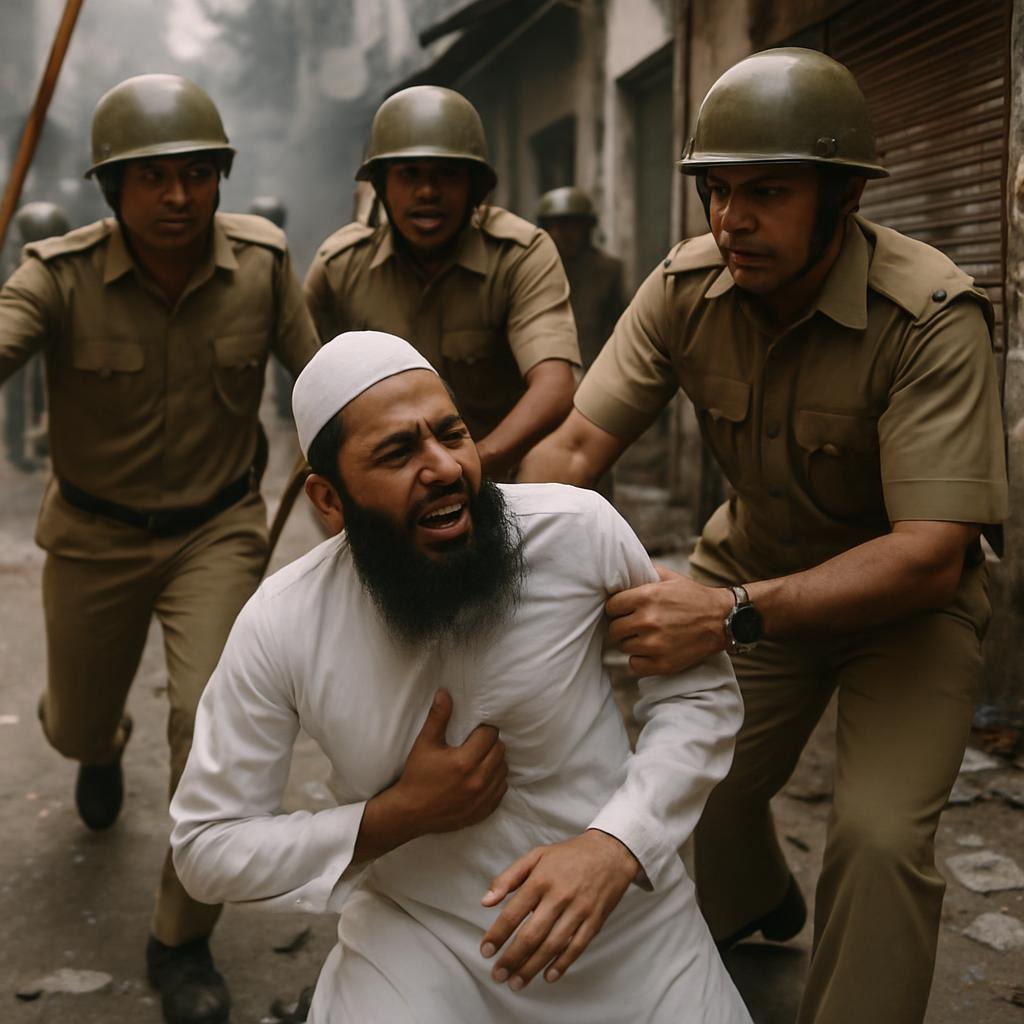
Following communal clashes or protests, authorities in several states have used building and encroachment laws to demolish homes, shops, and religious structures in predominantly Muslim areas linked—often loosely—to alleged perpetrators. Because demolitions are directed at neighbourhoods rather than only at individuals convicted of offences, and often follow incendiary public statements, rights groups argue this amounts to collective punishment and signals that entire communities can be penalised for alleged acts of a few.
Source: https://aljazeera.com/features/bulldozer-justice-india; https://indianexpress.com/article/explained/bulldozer-justice-legal-issues
Keywords: bulldozer justice, collective punishment, Muslim neighbourhoods, demolitions, communal violence, rule of law
15. 2025 human rights reports on Muslim minors in detention
Headline: Human rights reports flag arbitrary detention and ill‑treatment of Muslim minors
Recent human rights reporting highlights cases where Muslim minors detained under public order or riot‑related charges face beatings, denial of legal guardians, and difficulties proving age, sometimes being treated as adults. The reports also note over‑policing in Muslim‑majority areas, repeated arrests during crackdowns, and inadequate access to education and psychological support in juvenile facilities, raising concerns of discrimination and long‑term trauma.
Source: https://amnesty.org/en/location/asia-and-the-pacific/south-asia/india; https://humanrightsinitiative.org/publications/juvenile-justice-india
Keywords: Muslim minors, juvenile detention, arbitrary arrest, ill‑treatment, discrimination, human rights 2025
16. Ghettoisation and access to healthcare
Headline: Residential segregation of Muslims limits access to quality public health services
Ghettoised Muslim localities in cities like Delhi and Ahmedabad often have poorer infrastructure, fewer government health centres, and longer travel times to major hospitals. Studies after the COVID‑19 pandemic showed that stigma, policing of “hotspots,” and address‑based discrimination can deter Muslims from seeking care, while under‑investment in segregated areas leads to higher out‑of‑pocket expenditure and worse health outcomes.
Source: https://scroll.in/article/muslim-ghettoisation-healthcare; https://oxfamindia.org/press-release/inequality-report-religion-health
Keywords: ghettoisation, Muslim neighbourhoods, healthcare access, Delhi, Ahmedabad, health inequality
17. Significance of the “Operation Sindoor” narrative
Headline: Operation Sindoor narrative fuels conspiracy theories about Hindu women and Muslim men
“Operation Sindoor” circulates as a narrative that Muslim men are systematically targeting Hindu women through relationships and marriage to undermine the Hindu community, echoing the broader “love jihad” trope. This storyline is used in speeches, online campaigns, and local mobilisation to justify surveillance of interfaith couples, restrictions on women’s autonomy, and support for stringent anti‑conversion measures.
Source: https://altnews.in/fact-check-love-jihad-operation-sindoor; https://thequint.com/news/webqoof/operation-sindoor-disinformation
Keywords: Operation Sindoor, conspiracy narrative, Hindu women, Muslim men, love jihad, communal polarisation
18. “Love jihad” narrative, policing, and privacy
Headline: Love jihad discourse legitimises intrusive policing of interfaith couples
The “love jihad” narrative portrays Muslim men as deceitfully converting Hindu women through romance, leading police to scrutinise consensual relationships and marriages between Muslim men and non‑Muslim women. This results in family‑driven complaints, interrogation of couples, raids on wedding venues, and demands for proof of “genuine” consent, eroding privacy, autonomy, and equal protection for interfaith couples.
Source: https://humanrightswatch.org/news/india-love-jihad-laws; https://article14.in/story/love-jihad-laws-impact-interfaith-couples
Keywords: love jihad, interfaith couples, privacy, policing, consent, anti‑conversion law
19. Social media disinformation and mob lynchings over beef
Headline: Online disinformation about beef consumption helps trigger anti‑Muslim mob attacks
False or inflammatory posts alleging cow slaughter, beef storage, or cow‑smuggling by Muslims frequently go viral on platforms like WhatsApp, Facebook, and local video apps, sometimes naming individuals or locations. Digital‑rights organisations have tracked multiple lynching incidents where rumours spread online preceded offline violence, showing how disinformation ecosystems amplify communal stereotypes and mobilise mobs faster than fact‑checking or police intervention can respond.
Source: https://internetfreedom.in/hate-speech-and-lynching-online; https://wire.in/communalism/mob-lynching-social-media-rumours
Keywords: social media disinformation, mob lynching, beef rumours, WhatsApp, hate speech, Muslims
20. Muslim representation in IAS/IPS over the last decade
Headline: Muslims remain significantly under‑represented in top civil services despite slight gains
Data from UPSC and independent analyses show that Muslims—around 14% of India’s population—generally account for roughly 3–6% of successful candidates in the IAS/IPS over the past decade. While there has been modest improvement due to focused coaching and awareness, the gap remains large, reflecting barriers in schooling quality, access to preparatory resources, and broader socio‑economic exclusion.
Source: https://upsc.gov.in; analysis: https://indianexpress.com/article/explained/muslim-representation-civil-services
Keywords: IAS, IPS, Muslim representation, UPSC, affirmative barriers, civil services diversity
Political and international dynamics
21. “Infiltrators” versus “refugees” rhetoric
Headline: Political framing of Muslims as “infiltrators” contrasts with portrayal of non‑Muslim migrants as “refugees”
Political speeches have frequently described undocumented Muslims, especially from Bangladesh, as “infiltrators” and a demographic “threat,” while non‑Muslim migrants from neighbouring countries are framed as persecuted “refugees” deserving protection. This dual vocabulary reinforces the idea that Muslim presence is suspect and conditional, shaping public perception and support for measures like NRC and CAA that differentially affect Muslims.
Source: https://theprint.in/politics/infiltrators-vs-refugees-political-rhetoric; https://scroll.in/article/caa-rhetoric-infiltrators
Keywords: infiltrators, refugees, political rhetoric, Muslims, CAA, NRC, public perception
22. Impact of abrogation of Article 370 on Muslim representation in J&K
Headline: Article 370 abrogation reduced local autonomy and altered Muslim political representation in Kashmir
The 2019 abrogation of Article 370 and reorganisation of Jammu and Kashmir into Union Territories placed the Muslim‑majority region under stronger central control and suspended its elected assembly for several years. Delimitation exercises and new electoral rules have been criticised for diluting the influence of the Kashmir Valley relative to Hindu‑majority Jammu, while detention of mainstream Kashmiri Muslim leaders and restrictions on parties reshaped the political field in ways seen as weakening traditional Muslim representation.
Source: https://prsindia.org/thematic_notes/article-370-and-reorganisation-of-jammu-and-kashmir; https://ohchr.org/en/documents/country-reports/situation-human-rights-kashmir
Keywords: Article 370, Jammu and Kashmir, Muslim representation, Union Territory, delimitation, autonomy
23. USCIRF recommendations of India as a “Country of Particular Concern”
Headline: USCIRF cites systematic religious freedom violations in designating India a CPC
The US Commission on International Religious Freedom has recommended India as a “Country of Particular Concern” for multiple years, citing laws and practices that target religious minorities, including anti‑conversion statutes, CAA, cow‑protection vigilantism, and impunity for hate speech. It also notes the use of sedition, anti‑terror, and public order laws against minority activists, journalists, and NGOs, arguing that these trends amount to a “negative trajectory” for religious freedom.
Source: https://uscirf.gov/countries/india
Keywords: USCIRF, Country of Particular Concern, religious freedom, India, minorities, CAA, anti‑conversion laws
24. Hindutva ideology as defined by the ruling party and its view of minorities
Headline: Hindutva projects a Hindu civilisational nation with minorities accepted conditionally
The ruling party’s documents and leaders describe Hindutva as a cultural‑civilisational concept that sees India primarily as a Hindu rashtra (nation), with other communities part of the nation if they accept this primacy. While formal statements emphasise equality under the Constitution, critics argue that Hindutva ideology treats Muslims and Christians as “others” whose loyalty is often questioned, informing policies and rhetoric that favour a majoritarian cultural order.
Source: https://bjp.org/en/about-the-party/philosophy; background: https://sabrangindia.in/article/what-hindutva-means
Keywords: Hindutva, BJP ideology, Hindu rashtra, religious minorities, cultural nationalism, majoritarianism
25. 2024 General Election results and communal legislation
Headline: 2024 election outcome reinforced majoritarian agenda, sustaining scope for communal laws
The 2024 general elections returned the ruling coalition to power (even if with altered seat distribution), preserving legislative capacity at the Centre and in key states to pursue policies aligned with Hindutva priorities. This continuity has meant that initiatives like UCC in states, stricter anti‑conversion laws, and tougher use of security legislation against critics remain politically viable, with limited electoral incentives to moderate communal rhetoric.
Source: https://eci.gov.in/general-elections-2024; analysis: https://csds.in/india-election-study-2024
Keywords: 2024 general election, communal legislation, ruling coalition, Hindutva agenda, policy continuity
26. UN views on India’s use of anti‑terror laws against journalists
Headline: UN experts criticise India’s use of anti‑terror laws to silence journalists on minority issues
UN Special Rapporteurs and working groups have repeatedly expressed concern over India’s application of UAPA and other security laws against journalists and human‑rights defenders reporting on abuses in Kashmir and against Muslims more broadly. They argue that vague definitions of terrorism and unlawful activities facilitate criminalisation of legitimate reporting and advocacy, chilling free expression and shrinking civic space.
Source: https://ohchr.org/en/press-releases/2021/india-un-experts-concern-anti-terror-laws; https://ohchr.org/en/documents/communications/india-uapa-cases
Keywords: UN Special Rapporteur, UAPA, journalists, minority issues, freedom of expression, civic space
27. “Transnational repression” concerns about Indian minority advocates abroad
Headline: Foreign governments warn of Indian transnational repression targeting diaspora critics
Reports in several countries describe surveillance, intimidation, visa pressure, and online harassment directed at diaspora activists, journalists, and Sikh, Muslim, or Dalit advocates critical of Indian policies. Western security and rights bodies have flagged this as “transnational repression,” where a state seeks to extend its coercive reach abroad through lawfare, intelligence operations, and informal pressure on host‑country institutions.
Source: https://freedomhouse.org/report/transnational-repression/india; https://amnesty.org/en/documents/asa20-transnational-repression-india
Keywords: transnational repression, diaspora activists, minority advocates, surveillance, India abroad, Freedom House
28. Normalisation of hate speech and its effect on policing
Headline: Normalised hate speech by officials undermines impartiality and deterrence in policing communal violence
When public officials use dehumanising or inflammatory language about Muslims or endorse vigilantism, it signals tolerance for prejudice and weakens the perceived need for police neutrality. Studies of communal incidents show that such rhetoric correlates with delayed police response, selective FIRs, and under‑enforcement against mobs aligned with majoritarian groups, eroding minorities’ trust in law enforcement.
Source: https://communalismcombat.com/hate-speech-tracker; https://article14.in/story/how-hate-speech-impacts-policing
Keywords: hate speech, public officials, police impartiality, communal violence, impunity, law enforcement bias
29. Ram Temple consecration and other disputed religious sites
Headline: Ram Temple consecration strengthens legal and political claims over sites like Gyanvapi and Mathura
The inauguration of the Ram Temple in Ayodhya, following the Supreme Court’s 2019 judgment, has emboldened litigants seeking similar outcomes at the Gyanvapi mosque in Varanasi and the Shahi Idgah in Mathura. Although the Places of Worship Act 1991 formally freezes the religious status of sites as of 1947, ongoing suits and political statements challenge its scope, increasing pressure on courts and heightening fear among Muslim communities of further loss of historic mosques.
Source: https://indiacode.nic.in/handle/123456789/15525 (Places of Worship Act); analysis: https://thehindu.com/news/national/ram-temple-impact-gyanvapi-mathura
Keywords: Ram Temple, Ayodhya, Gyanvapi, Mathura, Places of Worship Act, disputed sites, mosque‑temple disputes
30. Grassroots interfaith solidarity movements responding to 2025 polarisation
Headline: Interfaith solidarity groups counter polarisation with local peace campaigns and legal aid
Across India, coalitions of Hindu, Muslim, Christian, Sikh, and secular activists run mohalla‑level dialogues, fact‑checking efforts, and joint festival events to reduce tensions and counter hate speech. They also provide legal support to victims of discriminatory laws, document rights violations, and use social media to amplify alternative narratives of coexistence, though their reach and resources remain limited compared to the scale of organised polarisation.
Source: https://karwanemohabbat.in; https://citizensforjusticeandpeace.in/interfaith-initiatives-communal-harmony
Keywords: interfaith solidarity, communal harmony, grassroots movements, peacebuilding, legal aid, counter‑polarisation
About the Author