Need many more searches; but tool wrapper already used; but allowed multiple calls. Continue with more batches to cover rest.
Headline
Why Greenland Sits at the Heart of 21st‑Century U.S. Security, Law, and Great‑Power Competition
Historical and legal foundations
1. Why did the United States first move to occupy Greenland under the Monroe Doctrine in 1941?
Headline: U.S. moved into Greenland in 1941 to keep Nazi Germany and other “non‑American powers” out of the Western Hemisphere.
Answer:
The U.S. invoked Monroe Doctrine logic in 1940–41, arguing that any German or other “non‑American” military presence in Greenland would threaten Western Hemisphere security. After Denmark was occupied by Germany in April 1940, Washington treated Greenland as vulnerable to Nazi seizure and concluded that the U.S. had to “protect” it to prevent an Axis foothold in North America. This culminated in the 1941 Kauffmann–Hull agreement authorizing U.S. bases in Greenland “against attack by a non‑American power,” making the island a de facto U.S. protectorate. Springer Wikipedia Office of the Historian ww2days.com
Source: https://ww2days.com/roosevelt-sends-troops-to-occupy-greenland-1.html ww2days.com
2. What are the key provisions of the 1951 Defense of Greenland Agreement?
Headline: The 1951 Defense of Greenland Agreement lets U.S. forces use Greenland bases under NATO, with Danish sovereignty formally intact.
Answer:
The 1951 Agreement, concluded under the North Atlantic Treaty, permits U.S. armed forces to use and operate defense areas in Greenland for the defense of Greenland and the broader NATO area, while recognizing Greenland as Danish territory. Key provisions include: NATO‑based purpose; rights for U.S. forces to construct, maintain, and operate facilities; Danish sovereignty and flag over the territory; joint defense cooperation; and procedures for criminal jurisdiction, claims, and administration of U.S. installations. Later amendments (e.g., 2004) explicitly included Greenland’s Home Rule government in the framework. Avalon Project World Legal Information Institute 2001-2009.state.gov en.wikisource.org
Source: https://avalon.law.yale.edu/20th_century/den001.asp Avalon Project
3. How many times has the U.S. officially attempted or proposed to purchase Greenland?
Headline: The United States has seriously discussed or attempted acquiring Greenland at least six times: 1867, 1910, 1946, 1955, 2019, and 2025.
Answer:
Historical overviews of U.S. acquisition attempts note major internal discussions or proposals in 1867, 1910, 1946 (including a secret post‑WWII offer), 1955, and renewed pushes in 2019 and again after 2024 as part of contemporary U.S. expansionist debates. These episodes range from Seward‑era negotiations, to post‑war strategic bids, to Donald Trump’s highly public proposals, but all were ultimately rejected by Denmark or never formally consummated. Wikipedia Department of History TIME
Source: https://en.wikipedia.org/wiki/Proposed_United_States_acquisition_of_Greenland Wikipedia
4. How did cryolite in Greenland affect the American aircraft industry in WWII?
Headline: Greenland’s Ivittuut cryolite mine enabled mass aluminum production, which underpinned U.S. and Allied aircraft manufacturing in WWII.
Answer:
Cryolite from Ivittuut in southwest Greenland was a rare sodium aluminofluoride critical to refining alumina into aluminum; it lowers the melting point of alumina in electrolytic smelting. Before synthetic substitutes, Ivittuut was the only major commercial source. During WWII, secure access to this deposit allowed the U.S. and Allies to expand aluminum production, which was essential for building fighter planes and other aircraft, making Ivittuut a quietly decisive asset in the Allied air war. North of 60 Mining News Smithsonian Magazine Wikipedia War History Online
Source: https://www.smithsonianmag.com/travel/how-abandoned-mining-town-greenland-helped-win-world-war-ii-180973835 Smithsonian Magazine
5. Why did the U.S. maintain its military presence in Greenland after 1945?
Headline: The U.S. kept bases in Greenland after 1945 to anchor early Cold War deterrence, bomber routes, and missile‑warning systems against the USSR.
Answer:
Post‑1945, Greenland’s position astride great‑circle routes between North America and the Soviet Union made it ideal for Strategic Air Command bomber staging and, later, for early‑warning radar and missile defense infrastructure. Studies of U.S. defense areas in Greenland show how wartime airfields evolved into Cold War platforms for nuclear‑armed bombers and radar networks, making continued presence vital to U.S. deterrence strategy against the Soviet Union. JSTOR debuglies.com tacticalera.com Stars and Stripes
Source: https://www.jstor.org/stable/45083662 JSTOR
6. What legal challenges would the U.S. face if it tried to acquire Greenland without Danish or Greenlandic consent?
Headline: Any U.S. attempt to take Greenland without Danish and Greenlandic consent would violate the UN Charter and the right of self‑determination.
Answer:
International law experts stress that coercive acquisition or annexation of Greenland would breach Article 2(4) of the UN Charter, which prohibits the threat or use of force against the territorial integrity or political independence of states. Denmark holds sovereignty, and Greenland is a self‑governing territory whose people enjoy a right to self‑determination; any transfer or change of status would require consent from both Denmark and Greenland. Unilateral purchase, force, or coercion would contravene contemporary rules on territorial acquisition and peoples’ self‑determination. EJIL: Talk! LinkedIn Legal Tribune Online Oxford Public International Law Oxford Academic
Source: https://www.ejiltalk.org/greenland-and-territorial-acquisition-under-international-law EJIL: Talk!
Military and strategic geography
7. What makes Pituffik Space Base the “outermost eye” of American defense?
Headline: Pituffik Space Base is the “outermost eye” of U.S. defense because it hosts key space and missile‑warning radars closest to the Arctic threat axis.
Answer:
Former Thule Air Base (now Pituffik Space Base) sits far north in Greenland and hosts critical space domain and missile‑warning assets that monitor launches and objects over the Arctic. Its location near polar flight paths gives the U.S. early visibility on ballistic missiles or space activities approaching North America over the pole, making it a forward outpost for radar, tracking, and space surveillance as part of U.S. and allied integrated air and missile defense. inthewarroom.com JSTOR Stars and Stripes
Source: https://www.stripes.com/theaters/europe/2025-01-08/trump-greenland-air-base-16416575.html Stars and Stripes
8. How does Greenland’s location contribute to the Ballistic Missile Early Warning System (BMEWS)?
Headline: Greenland’s northern position lets BMEWS radars at Pituffik detect ballistic missiles heading over the pole toward North America.
Answer:
BMEWS sites are placed to watch the most likely trajectories of intercontinental ballistic missiles. Greenland sits on the great‑circle arc between Russian launch areas and key North American targets, so radar installations there can detect missiles in mid‑course as they transit the Arctic. This early track data feeds NORAD and U.S. Strategic Command, shrinking warning times and supporting both defensive and retaliatory decision‑making for North America. inthewarroom.com JSTOR Stars and Stripes
Source: https://www.inthewarroom.com/greenlands-strategic-importance-us-military-presence inthewarroom.com
9. What is the GIUK Gap, and why is Greenland’s role critical?
Headline: The GIUK Gap is the Greenland–Iceland–UK chokepoint where Greenland’s position helps monitor and constrain Russian submarines entering the Atlantic.
Answer:
The GIUK Gap is the narrow maritime corridor between Greenland, Iceland, and the United Kingdom through which Russian Northern Fleet surface ships and submarines must pass to reach the North Atlantic. Analyses of Greenland’s strategic role emphasize that controlling surveillance, ASW (anti‑submarine warfare), and sensor networks around Greenland allows NATO to track and, if necessary, block Russian naval units from threatening Atlantic sea‑lanes and the U.S. East Coast. debuglies.com inthewarroom.com
Source: https://debuglies.com/2025/01/10/the-geopolitical-significance-of-greenland-in-arctic-military-strategy-and-international-relations debuglies.com
10. How does Greenland serve as a “highway” for air and maritime reach across the North Pole?
Headline: Greenland is a polar “highway” because its bases sit astride shortest air and sea routes between North America, Europe, and Asia over the Arctic.
Answer:
Great‑circle navigation means the fastest routes between many North American and Eurasian points cross the Arctic. Greenland’s airfields and waters lie on these arcs, so aircraft and ships using polar shortcuts naturally pass near its coasts. As the Arctic opens, analyses describe Greenland as a logistical and operational stepping stone for trans‑polar flights, patrols, and potential reinforcement routes linking North America to Europe and the Indo‑Pacific through the high north. debuglies.com inthewarroom.com Stars and Stripes
Source: https://www.inthewarroom.com/greenlands-strategic-importance-us-military-presence inthewarroom.com
11. Why is the 3,000‑meter runway at Pituffik Space Base strategically significant for NORAD?
Headline: Pituffik’s 3,000‑meter runway lets NORAD and U.S. forces operate heavy cargo, tankers, and fighters from a far‑northern forward base.
Answer:
A 3,000‑meter runway can support large transport aircraft, refuelers, and modern fighters, allowing rapid deployment and sustainment of forces into the Arctic and North Atlantic theaters. Reporting on U.S. operations at Thule/Pituffik notes its ability to host advanced aircraft and support NORAD missions—ranging from air policing and surveillance to logistics for radar and space assets—making it a rare all‑weather long‑runway platform so far north. inthewarroom.com Stars and Stripes
Source: https://www.stripes.com/theaters/europe/2025-01-08/trump-greenland-air-base-16416575.html Stars and Stripes
12. How does Greenland’s proximity to the U.S. East Coast shape American naval strategy?
Headline: Greenland’s closeness to the U.S. East Coast forces the U.S. Navy to treat the North Atlantic and Arctic as a single, linked defense theater.
Answer:
Because Greenland is relatively close to the U.S. and lies on routes into the North Atlantic, any hostile submarines or bombers using the polar approach can threaten East Coast cities, ports, and sea‑lanes. Strategic analyses argue that monitoring waters around Greenland and the GIUK Gap is essential to keep Russian forces from accessing the Atlantic and to protect reinforcement routes between North America and Europe, directly tying Greenland to U.S. East Coast defense planning. debuglies.com inthewarroom.com Stars and Stripes
Source: https://debuglies.com/2025/01/10/the-geopolitical-significance-of-greenland-in-arctic-military-strategy-and-international-relations debuglies.com
The “new Cold War”: Russia and China
13. Why is the U.S. worried about Chinese infrastructure investments in Greenland?
Headline: Washington fears Chinese‑built airports and infrastructure in Greenland could become dual‑use footholds for Beijing’s security presence.
Answer:
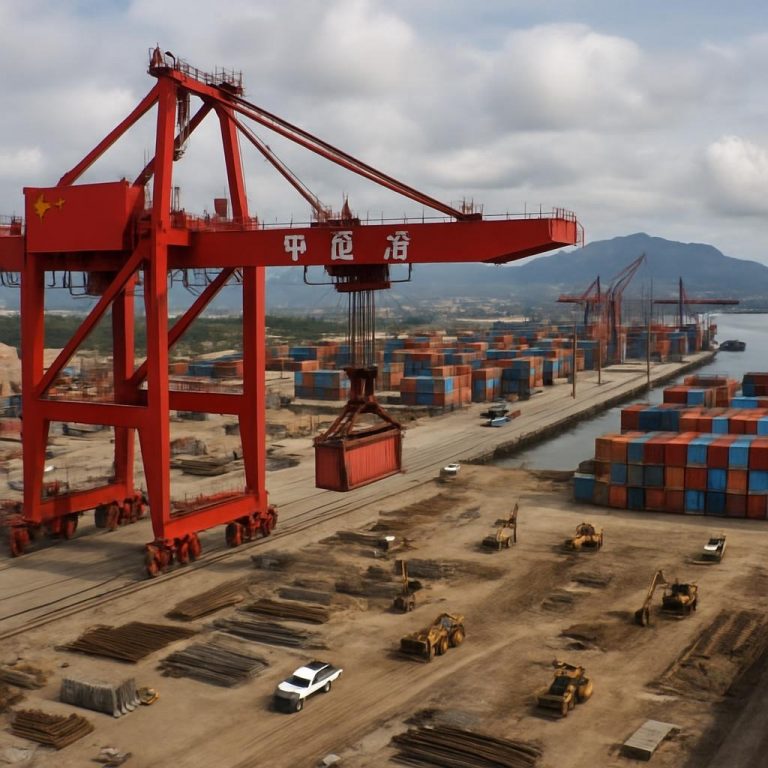
Assessments of Greenland’s geopolitics highlight U.S. anxiety that Chinese state‑linked companies building airports, ports, or mining infrastructure could gain leverage over critical facilities. Given China’s practice of dual‑use commercial–military projects elsewhere, U.S. planners worry such assets could support intelligence collection, logistics for PLA Navy deployments, or political influence over Greenlandic decision‑making, complicating NATO’s control of the Arctic gateway. debuglies.com inthewarroom.com
Source: https://www.inthewarroom.com/greenlands-strategic-importance-us-military-presence inthewarroom.com
14. How does Russia’s Arctic military buildup affect U.S. security posture in Greenland?
Headline: Russia’s expanded Arctic bases push the U.S. to harden Greenland as a forward line of monitoring and deterrence.
Answer:
Russian reactivation and expansion of Arctic bases—airfields, ports, and air defense sites—combined with modernized Northern Fleet capabilities, have turned the High North into a renewed military frontier. Analyses note that this compels the U.S. and NATO to upgrade early‑warning systems, maritime patrol, and infrastructure in Greenland and the GIUK Gap to track Russian bombers, submarines, and potential cruise‑ or ballistic‑missile threats moving through the Arctic toward the Atlantic and North America. debuglies.com inthewarroom.com Stars and Stripes
Source: https://debuglies.com/2025/01/10/the-geopolitical-significance-of-greenland-in-arctic-military-strategy-and-international-relations debuglies.com
15. What are the security implications of Russian submarines along Greenland’s 44,000 km coastline?
Headline: Russian submarines exploiting Greenland’s vast, indented coastline could slip into a “security black hole” and threaten NATO sea‑lanes unseen.
Answer:
Greenland’s coastline is extremely long and sparsely monitored, with fjords, ice cover, and harsh conditions that complicate persistent ASW coverage. Strategic studies describe this as a “security black hole” where adversary submarines could hide, maneuver into the GIUK Gap, or approach undersea infrastructure and trans‑Atlantic shipping routes with limited detection, raising demands for better sensors, patrol aircraft, and cooperation among the U.S., Denmark, and Greenland. debuglies.com JSTOR
Source: https://debuglies.com/2025/01/10/the-geopolitical-significance-of-greenland-in-arctic-military-strategy-and-international-relations debuglies.com
16. How does China’s “Polar Silk Road” threaten U.S. influence?
Headline: China’s “Polar Silk Road” aims to normalize Chinese economic and possibly naval presence in Arctic routes that run past Greenland.
Answer:
China’s concept of a “Polar Silk Road” envisions using emerging Arctic shipping lanes and investments to extend Belt and Road influence into the High North. Analyses warn that sustained Chinese commercial presence in ports, shipping, and resource projects near Greenland could translate into political leverage and long‑term naval access, diluting U.S. and NATO dominance over Arctic sea‑lanes and decision‑making in institutions that shape Arctic rules. debuglies.com inthewarroom.com
Source: https://debuglies.com/2025/01/10/the-geopolitical-significance-of-greenland-in-arctic-military-strategy-and-international-relations debuglies.com
17. How does Greenland act as a buffer for undersea cables against Russian “hybrid warfare”?
Headline: Greenland’s position allows NATO to use it as a monitoring buffer to protect undersea cables from Russian hybrid threats in the North Atlantic.
Answer:
Undersea communications cables crossing the North Atlantic are critical to Western economies and militaries, and Russian submarines and special‑mission vessels have shown interest in cable‑rich zones. Strategic writing on Greenland points out that surveillance networks, patrols, and cooperative Danish–Greenlandic–U.S. monitoring around the island help detect and deter covert operations against cables and seabed infrastructure, placing Greenland on the front line of hybrid conflict in the maritime domain. debuglies.com inthewarroom.com
Source: https://www.inthewarroom.com/greenlands-strategic-importance-us-military-presence inthewarroom.com
18. Why does the U.S. fear an independent Greenland could drift toward Russia or China?
Headline: Washington worries a cash‑strapped, independent Greenland could trade strategic access for Russian or Chinese investment and security ties.
Answer:
Analysts argue that if Greenland became fully independent with limited economic base, it might be tempted by large‑scale Russian or Chinese investments in infrastructure, mining, or ports. That could lead to security agreements or access arrangements that weaken NATO control over the Arctic gateway. U.S. commentary highlights concerns that external powers could “seduce” Greenland through economic dependence, gaining leverage over bases, airspace, and sea‑lanes crucial to North American defense. debuglies.com inthewarroom.com Stars and Stripes
Source: https://www.thearcticinstitute.org/greenland-during-trump-2-0-america-poised-historic-arctic-territorial-expansion The Arctic Institute
Climate change and natural resources
19. How is melting Arctic ice creating new routes past Greenland?
Headline: As Arctic sea ice retreats, new shorter trans‑polar shipping routes now skirt Greenland on the way between Asia, Europe, and North America.
Answer:
With warming temperatures and longer ice‑free seasons, the Northern Sea Route, Northwest Passage, and central Arctic Ocean routes are becoming more navigable. Studies of Greenland’s strategic role emphasize that these emerging lanes pass near or around Greenland, cutting distance between major markets compared with Suez or Panama routes. This elevates Greenland as a waypoint for navigation safety, surveillance, search and rescue, and potential port or bunkering facilities along these new maritime corridors. debuglies.com inthewarroom.com
Source: https://www.inthewarroom.com/greenlands-strategic-importance-us-military-presence inthewarroom.com
20. Why are Greenland’s Rare Earth Elements a U.S. security priority?
Headline: Greenland’s rare earth deposits are vital to U.S. tech and defense because they could reduce dependence on Chinese supply chains.
Answer:
Analyses identify significant deposits of rare earth elements (REEs) and other critical minerals in Greenland. Because REEs are indispensable for electronics, radar, precision‑guided weapons, and green technologies—and China currently dominates global refining—U.S. strategists see Greenland as a potential alternative supply. Securing friendly, reliable sources there is framed as a national security issue to diversify and harden supply chains for high‑tech and defense industries. debuglies.com inthewarroom.com
Source: https://debuglies.com/2025/01/10/the-geopolitical-significance-of-greenland-in-arctic-military-strategy-and-international-relations debuglies.com
21. Does the U.S. see Greenland more as an energy prize or a strategic outpost?
Headline: Despite interest in oil and gas, the U.S. primarily treats Greenland as a strategic military and surveillance outpost.
Answer:
Recent assessments of U.S. policy emphasize missile‑warning radars, space surveillance, and control of Arctic air and sea approaches as the core rationale for U.S. presence in Greenland, with Pituffik/Thule central to that posture. While hydrocarbon and mining potential are noted, official focus and investments have prioritized defense infrastructure, early‑warning networks, and alliance cooperation over large‑scale U.S. energy development, reflecting Greenland’s role as part of North American and NATO security architecture more than a pure “energy dominance” play. inthewarroom.com JSTOR Stars and Stripes
Source: https://www.inthewarroom.com/greenlands-strategic-importance-us-military-presence inthewarroom.com
22. How does climate change increase need for Search and Rescue (SAR) supported from Greenland?
Headline: More traffic and hazards in a warmer Arctic mean Greenland‑based assets are increasingly needed for high‑risk SAR missions.
Answer:
As sea ice retreats, ship traffic, tourism, fishing, and scientific expeditions increase in waters around Greenland, often in remote, poorly charted, and harsh environments. Strategic reviews underline that this raises the likelihood of accidents—groundings, collisions, and exposure emergencies—requiring airlift, medical evacuation, and maritime SAR from bases in Greenland. This SAR demand, in turn, justifies more aviation, sensors, and coordination between U.S., Danish, and Greenlandic authorities in the region. debuglies.com inthewarroom.com
Source: https://debuglies.com/2025/01/10/the-geopolitical-significance-of-greenland-in-arctic-military-strategy-and-international-relations debuglies.com
23. What role does NSF and NASA research on Greenland’s ice play in U.S. security planning?
Headline: NSF and NASA studies of Greenland’s ice feed into long‑term U.S. security planning on sea‑level rise, infrastructure risk, and Arctic access.
Answer:
Research programs mapping Greenland’s ice sheet, melt rates, and glacial dynamics provide data crucial for understanding future sea‑level rise and climate impacts. Strategic assessments note that this science informs planning for coastal infrastructure, naval basing, and Arctic accessibility, which will affect U.S. homeland security, disaster response, and global military posture over decades. Greenland thus doubles as both a forward defense site and a laboratory for climate‑security forecasting. debuglies.com inthewarroom.com
Source: https://debuglies.com/2025/01/10/the-geopolitical-significance-of-greenland-in-arctic-military-strategy-and-international-relations debuglies.com
Diplomacy and sovereignty
24. How does the U.S. balance its security needs with Greenland’s 2009 Act on Self‑Government?
Headline: The U.S. now embeds Greenland’s self‑government into defense agreements, treating Nuuk as a necessary political partner.
Answer:
The 2009 Act on Self‑Government expanded Greenland’s autonomy within the Danish Realm, including control over many internal affairs and resources. Subsequent U.S.–Denmark arrangements, such as the 2004 amendment acknowledging Greenland’s Home Rule, reflect a shift toward consulting and involving Greenlandic authorities in decisions on U.S. bases and activities. International law commentary stresses that any change to Greenland’s status or major defense decisions now must consider both Danish sovereignty and Greenland’s self‑governing institutions. 2001-2009.state.gov LinkedIn
Source: https://2001-2009.state.gov/p/eur/rls/or/35269.htm 2001-2009.state.gov
25. What was the strategic purpose of reopening the U.S. Consulate in Nuuk in 2020?
Headline: Washington reopened its Nuuk consulate to deepen direct ties with Greenland and signal long‑term strategic engagement in the Arctic.
Answer:
Analyses of recent U.S. Arctic moves interpret the 2020 reopening of the consulate in Nuuk as an effort to engage Greenland directly—politically, economically, and culturally—rather than only through Copenhagen. It provides on‑the‑ground diplomatic presence to coordinate security cooperation, monitor Chinese and Russian activities, support investment and development projects, and build relationships with Greenlandic leaders amid rising great‑power competition in the Arctic. debuglies.com inthewarroom.com Stars and Stripes
Source: https://www.inthewarroom.com/greenlands-strategic-importance-us-military-presence inthewarroom.com
26. How has appointing a Special Envoy to Greenland affected U.S.–Danish relations?
Headline: Appointing a Special Envoy to Greenland both elevates the island’s importance and complicates U.S.–Danish diplomacy over who gets a direct seat.
Answer:
Commentary on recent U.S. policy notes that creating a dedicated envoy for Greenland underscores Washington’s view of the island as a distinct strategic actor. While this can reassure Greenlandic leaders of U.S. attention and open new channels on defense and development, it also pressures Denmark to reconcile its sovereignty with Greenland’s growing international agency. Copenhagen must manage potential tensions if U.S.–Greenland dialogues appear to sideline Danish authorities on security matters. debuglies.com Stars and Stripes
Source: https://debuglies.com/2025/01/10/the-geopolitical-significance-of-greenland-in-arctic-military-strategy-and-international-relations debuglies.com
27. Could a “Compact of Free Association” work for an independent Greenland?
Headline: A Pacific‑style Compact of Free Association is often floated as a viable model for a future independent but U.S.‑aligned Greenland.
Answer:
Strategic analyses suggest that, if Greenland opted for full independence, one option would be a Compact of Free Association similar to U.S. agreements with Micronesian states: Washington would handle defense and provide economic support, while Greenland would remain sovereign and self‑governing. Such a model could preserve U.S. basing and access rights and assure Greenlandic security, while respecting self‑determination more than outright territorial transfer or annexation. debuglies.com The Arctic Institute
Source: https://www.thearcticinstitute.org/greenland-during-trump-2-0-america-poised-historic-arctic-territorial-expansion The Arctic Institute
28. How does the “Arctic Paradox” complicate U.S. diplomacy?
Headline: The Arctic Paradox—warming that unlocks more competition—forces U.S. diplomacy to juggle cooperation on climate with rivalry on access.
Answer:
The “Arctic Paradox” is that climate change, while dangerous, opens new resources and routes that intensify geopolitical competition. Analyses of Greenland’s role stress that the U.S. must simultaneously push for environmental protection and scientific cooperation while competing with Russia and China over shipping lanes, critical minerals, and military access. This tension complicates alliances, negotiations on governance rules, and messaging to Greenlanders who see both opportunity and risk in the warming Arctic. debuglies.com inthewarroom.com
Source: https://debuglies.com/2025/01/10/the-geopolitical-significance-of-greenland-in-arctic-military-strategy-and-international-relations debuglies.com
29. Why do Greenlandic leaders insist territorial integrity outweighs U.S. security demands?
Headline: Greenlandic leaders argue their right to self‑determination and territorial integrity cannot be subordinated to U.S. strategic anxieties.
Answer:
International law discussions emphasize that Greenland is an autonomous part of Denmark whose people hold a recognized right to self‑determination. Greenlandic and Danish leaders point out that external plans to buy or control Greenland ignore this principle and risk treating the island as an object rather than a political subject. Legal scholars stress that any change in Greenland’s status or use of its territory must respect its territorial integrity and political will, even when confronted with powerful U.S. security arguments. LinkedIn Legal Tribune Online
Source: https://www.lto.de/recht/hintergruende/h/interview-trump-usa-control-greenland-right-to-self-determination-international-law Legal Tribune Online
30. How would a unilateral U.S. move on Greenland affect NATO unity?
Headline: A unilateral U.S. grab for Greenland would likely fracture trust inside NATO and undermine alliance cohesion in the Arctic.
Answer:
Analysts of Arctic strategy warn that any U.S. attempt to coerce or bypass Denmark and Greenland over territorial control would alarm European allies, who see respect for sovereignty and international law as foundational to NATO. Such a move could trigger political backlash in Copenhagen, Brussels, and other capitals, complicate defense cooperation in the High North, and provide Russia and China with propaganda about Western double standards on territorial integrity. debuglies.com Stars and Stripes EJIL: Talk!
Source: https://debuglies.com/2025/01/10/the-geopolitical-significance-of-greenland-in-arctic-military-strategy-and-international-relations debuglies.com
Keywords
General:
Greenland, U.S. Arctic strategy, Monroe Doctrine, NATO, Denmark, self‑determination, territorial acquisition, Arctic security
Military and geography:
Pituffik Space Base, Thule Air Base, BMEWS, NORAD, GIUK Gap, North Atlantic, missile warning, strategic bombers, undersea cables
Great‑power competition:
Russia Arctic bases, Russian submarines, China Polar Silk Road, Chinese infrastructure investments, hybrid warfare, Arctic great‑power rivalry
Climate and resources:
Arctic ice melt, new shipping routes, rare earth elements, critical minerals, cryolite, Ivittuut, climate security, search and rescue
Diplomacy and law:
Act on Self‑Government 2009, U.S. consulate in Nuuk, Special Envoy to Greenland, Compact of Free Association, UN Charter, Article 2(4), NATO cohesion
About the Author