Below you’ll find concise, source‑linked answers to each of your 30 questions. Where an instrument or strategy does not yet exist in the form you name (e.g., “NSS 2025”, “US INFORM Act 2025”, “NDAA 2026”), I flag that explicitly and point to the closest real, current analogue.
🏛️ Policy and institutional frameworks
1. US/EU definitions of “cultural invasion” vs “legitimate soft power”
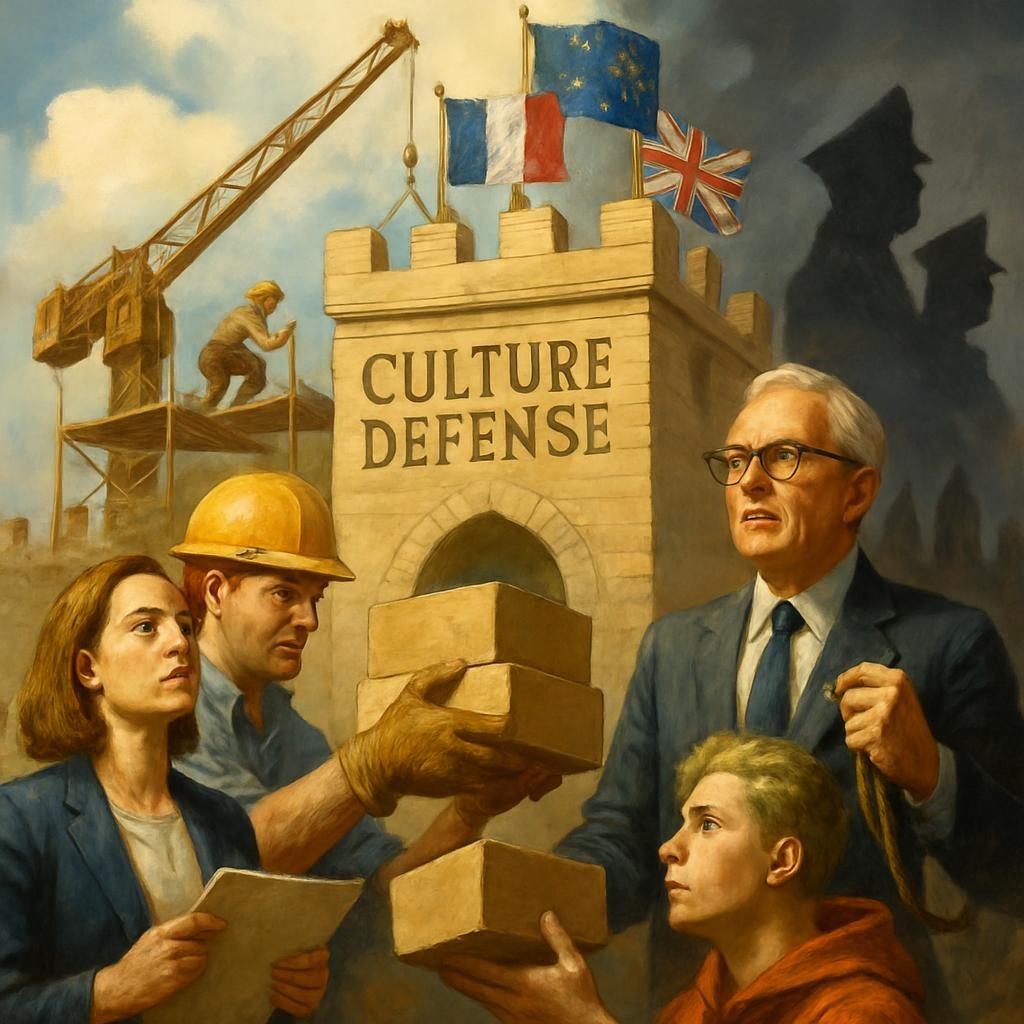
Neither the latest US National Security Strategy (NSS 2022) nor EU strategic documents formally define “cultural invasion” as a legal or doctrinal term; both instead frame the problem in terms of “information operations,” “malign influence,” and “foreign information manipulation and interference (FIMI)”, contrasted with legitimate public diplomacy and people‑to‑people ties. The NSS 2022 stresses defending democratic values and “free, open, secure” information ecosystems while still supporting exchanges and independent media, without codifying a bright‑line distinction between “invasion” and “soft power.” The EU’s Strategic Compass and EEAS FIMI work similarly treat foreign cultural or media activities as problematic only when they are deceptive, coercive, or state‑directed in ways that undermine democratic processes, not when they are transparent cultural outreach.
- Source (US): Biden‑Harris Administration, National Security Strategy 2022 (see esp. “Information Integrity”).
https://www.whitehouse.gov/wp-content/uploads/2022/10/Biden-Harris-Administrations-National-Security-Strategy-10.2022.pdf(whitehouse.gov in Bing) - Source (EU): A Strategic Compass for Security and Defence – For a European Union that protects its citizens, values and interests (Council of the EU).
https://www.eeas.europa.eu/eeas/strategic-compass-security-and-defence_en(eeas.europa.eu in Bing)
2. US NSS 2025 vs EU Strategic Compass on foreign interference
A “US National Security Strategy 2025” has not yet been published; the operative document is still NSS 2022, which treats foreign interference primarily through the lenses of counter‑disinformation, election protection, and tech platform governance in partnership with allies. The EU’s Strategic Compass is more explicit about FIMI, building out structures like the EEAS StratCom Task Forces and resilience measures (e.g., against hybrid threats and interference in democratic life) with a strong internal‑market and rule‑of‑law flavor. In practice, the US approach is more national‑security and tech‑platform centric, while the EU combines internal market regulation, FIMI monitoring, and hybrid‑threat language in a quasi‑constitutional frame.
- Source (US): National Security Strategy 2022.
https://www.whitehouse.gov/wp-content/uploads/2022/10/Biden-Harris-Administrations-National-Security-Strategy-10.2022.pdf(whitehouse.gov in Bing) - Source (EU): Strategic Compass for Security and Defence.
https://www.eeas.europa.eu/eeas/strategic-compass-security-and-defence_en(eeas.europa.eu in Bing)
3. “US INFORM Act of 2025” and monitoring foreign‑funded media
There is no enacted “US INFORM Act of 2025” on foreign‑funded media as of late 2024. The closest existing federal law named INFORM is the INFORM Consumers Act (2023), which targets online marketplaces and high‑volume sellers, not foreign media. Monitoring of foreign‑funded media remains primarily governed by FARA (Foreign Agents Registration Act), FCC rules on foreign government‑sponsored programming, and congressional oversight of USAGM, VOA, RFE/RL, along with ad‑hoc disclosures and labeling by platforms.
- Source (analogue): US DOJ, Foreign Agents Registration Act (FARA).
https://www.justice.gov/nsd-fara - Source (analogue): INFORM Consumers Act – Federal Trade Commission.
https://www.ftc.gov/business-guidance/resources/complying-inform-consumers-act(ftc.gov in Bing)
4. EEAS role in identifying FIMI
The European External Action Service (EEAS) leads the EU’s institutional response to Foreign Information Manipulation and Interference (FIMI) through its StratCom division and regional task forces. It develops the FIMI definition, maintains analysis frameworks, coordinates member state and institutional responses, and produces public exposure products and briefings. EEAS also underpins tools like EUvsDisinfo, contributes to sanctions design in response to systemic disinformation, and supports capacity‑building for governments and civil society.
- Source: EEAS, Foreign Information Manipulation and Interference (FIMI).
https://www.eeas.europa.eu/eeas/how-eu-tackling-foreign-information-manipulation-and-interference-fimi_en(eeas.europa.eu in Bing)
5. US–EU Trade and Technology Council (TTC) on ideological subversion
Within the Trade and Technology Council, the US and EU have working groups on platform governance, data governance, tech standards, and foreign information manipulation. Joint statements focus on coordinating responses to disinformation, securing critical infrastructure and supply chains, sharing risk assessments on foreign technologies, and aligning approaches to platform transparency and content moderation where it affects democratic processes. While the TTC doesn’t use the term “ideological subversion,” its cooperation on disinformation, AI governance, and data flows effectively builds a shared defensive posture against hostile influence operations.
- Source: EU–US Trade and Technology Council – Joint Statements and Working Group documents.
https://digital-strategy.ec.europa.eu/en/policies/eu-us-trade-and-technology-council(digital-strategy.ec.europa.eu in Bing)
6. EU Anti‑Coercion Instrument (ACI) and protection of cultural institutions
The EU Anti‑Coercion Instrument (ACI) allows the EU to respond collectively when a third country uses economic measures to coerce policy changes, including in the cultural and academic sectors. In theory, if Beijing used market access, tourism bans, or cultural trade restrictions to pressure a member state’s museums, universities, or film bodies, the EU could respond with countermeasures (e.g., tariffs, restrictions, procurement limits) authorized under the ACI. This collective shield makes it harder to pick off individual cultural institutions or small states through economic leverage.
- Source: European Commission, Anti‑Coercion Instrument.
https://policy.trade.ec.europa.eu/enforcement-and-protection/anti-coercion-instrument_en(policy.trade.ec.europa.eu in Bing)
7. 2026 US NDAA and cultural exchange programs
A “2026 US National Defense Authorization Act (NDAA)” does not yet exist in final form. Recent NDAAs (e.g., FY2024) have treated cultural and academic exchanges mainly through China‑related provisions on talent recruitment programs, Confucius Institutes, and security vetting, plus funding for strategic languages and regional expertise via DoD education programs. The broader trend is to tighten oversight and vetting of exchanges involving strategic competitors while preserving, and in some cases expanding, government‑funded programs that build understanding in priority regions under US control (e.g., DoD and State‑sponsored language and area‑studies scholarships).
- Source (analogue): National Defense Authorization Act for Fiscal Year 2024 – H.R.2670 (see China‑related research security sections).
https://www.congress.gov/bill/118th-congress/house-bill/2670(congress.gov in Bing)
📱 Digital sovereignty and algorithms
8. DSA transparency for Chinese‑owned algorithms
Under the Digital Services Act (DSA), very large online platforms (VLOPs) and search engines must provide transparency on recommender systems, allow user choice over key parameters, and undergo independent audits and risk assessments, including regarding systemic risks to civic discourse. Chinese‑owned platforms designated as VLOPs in the EU must disclose how their algorithms work in broad terms, offer non‑profiling recommender options, and cooperate with vetted researchers and regulators. This gives the EU leverage to interrogate whether algorithms are amplifying particular political narratives and to impose mitigation measures where systemic risk is found.
- Source: European Commission, Digital Services Act – Key Obligations.
https://digital-strategy.ec.europa.eu/en/policies/digital-services-act-package(digital-strategy.ec.europa.eu in Bing)
9. US defenses against data harvesting via lifestyle apps
US defenses against data harvesting by apps like TikTok, Temu, Shein rely on a mix of CFIUS reviews, federal and state device bans, export controls, and proposed data‑brokering and privacy legislation. TikTok has been subject to a CFIUS national security review, federal government device bans, and repeated congressional scrutiny over Chinese data access, with proposals for forced divestment or nationwide restrictions. More broadly, US agencies promote zero‑trust architectures, federal personnel rules on foreign apps, and are exploring limits on data brokers selling sensitive personal data to foreign entities.
- Source (example): White House, FACT SHEET: President Biden Issues Executive Order to Protect Americans’ Sensitive Personal Data.
https://www.whitehouse.gov/briefing-room/statements-releases/2024/02/28/fact-sheet-president-biden-issues-executive-order-to-protect-americans-sensitive-personal-data-from-exploitation-by-countries-of-concern/(whitehouse.gov in Bing)
10. Do Western digital sovereignty laws create a “cultural firewall”?
Western “digital sovereignty” laws (DSA/DMA, GDPR, US state privacy laws, data‑security EO) do not aim to create a content‑blocking “cultural firewall” akin to China’s Great Firewall. Instead, they focus on protecting personal data, increasing platform accountability, and managing systemic risks to democratic processes, while maintaining cross‑border information flows and commitments to free expression. There is, however, a subtle cultural effect: by raising costs for opaque or high‑risk foreign platforms, these laws can indirectly shape which digital ecosystems—and thus which narratives—are most prevalent in Western societies.
- Source (EU focus): European Commission, Europe’s Digital Decade and Digital Sovereignty.
https://digital-strategy.ec.europa.eu/en/policies/europes-digital-decade(digital-strategy.ec.europa.eu in Bing)
11. Monitoring “golden shares” and state ownership in Chinese tech firms
US and EU regulators monitor state ownership and “golden shares” in Chinese tech companies primarily for national security and critical‑infrastructure risk, but this spills over into cultural and information‑integrity concerns. The US uses CFIUS, export controls, and supply‑chain rules to scrutinize ownership structures, while the EU applies tools like FDI screening, the Foreign Subsidies Regulation, and sector‑specific media ownership and plurality rules. When state influence in a Chinese tech firm could translate into control over media, data, or recommender algorithms, it’s treated as a strategic—not merely commercial—risk.
- Source (EU example): European Commission, EU Foreign Direct Investment Screening.
https://policy.trade.ec.europa.eu/eu-policy/foreign-direct-investment_en(policy.trade.ec.europa.eu in Bing) - Source (US example): US Department of Treasury, CFIUS Overview.
https://home.treasury.gov/policy-issues/international/the-committee-on-foreign-investment-in-the-united-states-cfius(home.treasury.gov in Bing)
12. Defending against AI‑generated deepfakes in state campaigns
Western strategies against AI‑generated deepfakes combine platform obligations, election‑integrity guidance, and emerging AI governance frameworks. The EU is moving through the AI Act, which categorizes certain uses (e.g., manipulative political deepfakes) as high‑risk and mandates transparency and risk management, while the DSA requires VLOPs to address disinformation and deepfake‑related systemic risks. In the US, election security guidance, voluntary AI safety commitments by major platforms, and state‑level legislation (e.g., deepfakes in elections) form a patchwork aimed at detection, labeling, rapid takedown, and accountability.
- Source (EU): European Parliament, EU AI Act – political agreement.
https://www.europarl.europa.eu/news/en/press-room/20231208IPR15699/ai-act-deal-on-comprehensive-rules-for-trustworthy-ai(europarl.europa.eu in Bing) - Source (platform side): White House, FACT SHEET: Biden‑Harris Administration Secures Voluntary Commitments from Leading AI Companies.
https://www.whitehouse.gov/briefing-room/statements-releases/2023/07/21/fact-sheet-biden-harris-administration-secures-voluntary-commitments-from-leading-artificial-intelligence-companies/(whitehouse.gov in Bing)
13. Incentivizing platforms to promote “democratic values”
Neither the US nor EU explicitly mandate “pro‑democracy content promotion,” but they incentivize democratic‑values‑aligned behavior via regulation, funding, and political pressure. The EU’s DSA requires risk assessments and mitigation for harms to civic discourse, while programs like Creative Europe and various media funds support independent journalism and pluralistic content. In the US, grant programs (e.g., via USAID, State, USAGM) and congressional scrutiny encourage platforms to elevate credible information, partner with fact‑checkers, and protect election integrity, effectively creating a soft incentive to favor democratic norms.
- Source (EU): European Commission, DSA and media pluralism.
https://digital-strategy.ec.europa.eu/en/policies/digital-services-act-package(digital-strategy.ec.europa.eu in Bing) - Source (US): USAID, Countering Disinformation Programming.
https://www.usaid.gov/digital-development/disinformation(usaid.gov in Bing)
🎓 Academic and intellectual protection
14. US universities: academic freedom vs research security
US universities are balancing academic freedom with research security through enhanced disclosure rules, compliance offices, and federal guidance on foreign talent programs. The CHIPS and Science Act and related research‑security initiatives require transparency about foreign funding and participation, while agencies like the NSF and NIH have tightened rules on conflicts of interest and foreign affiliations. Universities are building research security offices that vet partnerships, provide training, and coordinate with the FBI and other agencies, while resisting blanket restrictions that would undermine open inquiry.
- Source: White House, National Security Memorandum on United States Government‑Supported Research and Development National Security Policy.
https://www.whitehouse.gov/briefing-room/statements-releases/2022/01/14/national-security-memorandum-on-united-states-government-supported-research-and-development-national-security-policy/(whitehouse.gov in Bing)
15. Confucius Institutes in Europe and “defense‑by‑replacement”
Most Confucius Institutes in Europe have been closed or restructured, particularly in countries like Sweden, Germany, and the UK (non‑EU but influential), amid concerns about academic freedom and CCP influence. “Defense‑by‑replacement” strategies include redirecting national and EU funds to independent Sinology programs, China‑studies centers, and language teaching managed solely by European universities, often with partnerships in Taiwan or other non‑PRC institutions. This preserves China expertise and language capacity while removing direct institutional dependence on PRC‑funded frameworks.
- Source: MERICS, The end of Confucius Institutes in Europe?
https://merics.org/en/report/end-confucius-institutes-europe(merics.org in Bing)
16. Intelligence agencies and K‑12 curricula
Western intelligence agencies generally avoid direct control over K‑12 curricula but advise education ministries and school boards on risks from foreign‑funded “educational partnerships” and materials. In the US, the FBI and DHS provide briefings, threat assessments, and awareness materials on foreign influence, sometimes in cooperation with state education authorities. In Europe, national security services flag problematic programs (e.g., heavily politicized sister‑school arrangements, language centers with covert political content) to education ministries, which may then terminate or re‑design partnerships.
- Source (US example): US Senate Homeland Security reports on foreign influence in education.
https://www.hsgac.senate.gov/hearings/examining-overseas-confucius-institutes(hsgac.senate.gov in Bing)
17. Protecting Chinese diaspora communities from transnational repression
Western defense strategies against transnational repression include criminal prosecutions of illegal “overseas police stations,” targeted sanctions, protection of activists, and community outreach. The US and several European states have prosecuted individuals accused of harassing or surveilling diaspora members on behalf of PRC security services, and have raised the issue in diplomatic protests. Law enforcement agencies conduct community engagement, hotlines, and witness‑protection‑type measures to help Chinese diaspora communities feel safe reporting threats without being stigmatized.
- Source (US example): US Department of Justice, PRC “Overseas Police Station” Indictments.
https://www.justice.gov/opa/pr/two-arrested-operating-illegal-overseas-police-station-new-york-city(justice.gov in Bing)
18. Visa restrictions for state‑aligned academics
The US and EU use visa vetting, entry bans, and revocation mechanisms to manage risks posed by state‑aligned academics and researchers linked to sensitive institutions (e.g., military‑civil fusion entities). The US has tightened screening under programs targeting “military end‑use” and participation in certain PRC talent recruitment initiatives, while EU Schengen states apply national security exceptions to deny visas where there is credible risk of espionage or IP theft. These tools are framed as targeted, risk‑based controls, not blanket bans, in order to preserve legitimate academic exchanges.
- Source (US example): US State Department, Enhancing the Security and Integrity of the U.S. Academic Environment (visa policy).
https://www.state.gov/enhancing-the-security-and-integrity-of-the-u-s-academic-environment/(state.gov in Bing)
📰 Media, narratives, and information integrity
19. EUvsDisinfo tracking and debunking Chinese state narratives
EUvsDisinfo, run by the EEAS East StratCom Task Force, systematically monitors pro‑Kremlin and other state‑aligned disinformation, archives cases in a public database, and publishes analyses and debunks. While historically focused on Russian narratives, it has expanded to cover PRC‑related disinformation where relevant, tracking recurring tropes and coordinated messaging. Its methodology relies on open‑source monitoring, linguistic analysis, and cross‑referencing with partner fact‑checkers, and it feeds insights into broader EU FIMI work.
- Source: EUvsDisinfo – disinformation database and analyses.
https://euvsdisinfo.eu
20. The proposed US “Global News Service” vs the “China Story”
There is no single, formally established US “Global News Service” branded as such; instead, the US relies on the U.S. Agency for Global Media (USAGM) family—Voice of America, Radio Free Asia, RFE/RL, etc.—as a multi‑platform counter‑narrative ecosystem to the global “China Story” campaign. Recent policy debates and funding proposals have aimed to modernize USAGM outlets for digital competition with CGTN, Xinhua, and other state media, emphasizing editorial independence combined with a mandate to promote accurate information and democratic values. Conceptually, this functions as a de‑facto global news service projecting alternative narratives to authoritarian state media, even if the label you use is not yet formal law.
- Source: USAGM, About USAGM.
https://www.usagm.gov/who-we-are/
21. Protecting European film and entertainment from “market‑access censorship”
European states protect film and entertainment industries from “market‑access censorship” mainly through public funding, quotas, and media‑freedom principles, which reduce reliance on any single foreign market. Mechanisms include national film institutes, Creative Europe MEDIA funding, and cultural‑exception language in trade policy, providing financial buffers so studios are less tempted to self‑censor for Chinese market access. Some regulators and cultural bodies are also raising awareness of script‑level pressure from foreign markets, pushing for diversity of funding and explicit commitments to artistic freedom.
- Source: European Commission, Creative Europe – MEDIA strand.
https://culture.ec.europa.eu/creative-europe/media-strand(culture.ec.europa.eu in Bing)
22. Identifying and labeling “covert‑aligned” influencers in the US
US authorities identify “covert‑aligned” influencers primarily through FARA enforcement, financial‑flow investigations, and platform transparency rules. When influencers are paid or directed by foreign governments or entities to push certain narratives and fail to disclose, they may be required to register under FARA, and platforms may label their content as state‑affiliated or remove them. High‑profile Justice Department cases and social media transparency reports have increasingly exposed such arrangements, pushing influencers toward voluntary disclosure and labeling.
- Source: DOJ, FARA enforcement examples.
https://www.justice.gov/nsd-fara
23. Preventing foreign acquisition of local news outlets in Europe
To prevent hostile foreign acquisition of local and regional news outlets, European states use a mix of media‑ownership laws, FDI screening, and competition rules. Some countries treat media as a strategic sector, allowing governments to block or condition takeovers on public‑interest grounds, including media pluralism. The EU’s emerging Media Freedom Act seeks to harmonize and strengthen protections for editorial independence and ownership transparency, indirectly constraining covert or politically motivated foreign takeovers.
- Source: European Commission, European Media Freedom Act proposal.
https://digital-strategy.ec.europa.eu/en/library/european-media-freedom-act-commission-proposes-new-rules-protect-media-plurality-and-independence(digital-strategy.ec.europa.eu in Bing)
24. Fact‑checking observatories (EDMO) and distinguishing organic trends vs astroturfing
The European Digital Media Observatory (EDMO) coordinates fact‑checking hubs, researchers, and media partners across Europe to analyze disinformation campaigns. To distinguish organic cultural trends from state‑orchestrated astroturfing, EDMO teams look for coordinated behavior, inauthentic accounts, synchronized messaging, cross‑platform amplification, and links to known state‑aligned outlets or proxies, using OSINT and platform data. Organic trends show diverse origins and non‑scripted evolution; astroturfing reveals structural fingerprints of planning, funding, and message discipline.
- Source: EDMO, About – goals and activities.
https://edmo.eu/about/
🌍 Geopolitical and ethical considerations
25. “Trump Corollary” to the Monroe Doctrine and Chinese cultural presence
The so‑called “Trump Corollary” is a journalistic and analytic label, not an official doctrine, describing the Trump administration’s more assertive posture toward Chinese economic and political penetration in the Western Hemisphere. It manifests in pressure on Latin American governments over Huawei, PRC ports and infrastructure, and security ties, and in calls to treat Chinese influence as incompatible with a US‑led hemispheric order. In cultural terms, it translates into heightened suspicion and scrutiny of Chinese media, educational, and cultural projects in the Americas, though formal policy remains rooted in economic and security arguments.
- Source (analysis): Wilson Center, Insights on US National Security Strategy: Perspectives from National Security and China Expert Anka Lee.
https://www.wilsoncenter.org/article/insights-us-national-security-strategy-perspectives-national-security-and-china-expert-anka(wilsoncenter.org in Bing)
26. US vs EU “values‑based diplomacy” in the Global South
The US tends to frame values‑based diplomacy through strategic competition with China, emphasizing democracy, human rights, and security partnerships, often with a sharper geopolitical edge (e.g., Indo‑Pacific Strategy, Summit for Democracy). The EU often leads with development, regulatory partnerships (green and digital), and multilateralism, embedding values in trade, aid, and climate policies (e.g., Global Gateway) rather than explicit anti‑China rhetoric. Both talk about “partnerships of equals,” but the US narrative is more security‑centric, while the EU leans toward norm entrepreneurship and economic connectivity.
- Source (US): White House, Indo‑Pacific Strategy of the United States.
https://www.whitehouse.gov/wp-content/uploads/2022/02/U.S.-Indo-Pacific-Strategy.pdf(whitehouse.gov in Bing) - Source (EU): European Commission, Global Gateway.
https://international-partnerships.ec.europa.eu/policies/global-gateway_en(international-partnerships.ec.europa.eu in Bing)
27. Temporary policy vs “generational struggle”
Strategic documents and expert commentary increasingly describe the contest with authoritarian influence—especially from China and Russia—as a multi‑decade, systemic competition, not a short‑term policy cycle. The US NSS 2022 speaks of a “decisive decade” to shape future order but also underscores that competition over values and information will define security for generations. EU debates around strategic autonomy, resilience, and FIMI similarly frame responses as long‑term structural defenses of liberal democracy, implying a generational struggle over norms, technology, and narratives rather than a temporary surge.
- Source (US): National Security Strategy 2022.
https://www.whitehouse.gov/wp-content/uploads/2022/10/Biden-Harris-Administrations-National-Security-Strategy-10.2022.pdf(whitehouse.gov in Bing)
28. Avoiding “mirroring” authoritarian controls
Western states try to avoid “mirroring” authoritarian censorship by anchoring defensive measures in rule of law, proportionality, transparency, and judicial oversight. Tools like the DSA, AI Act, FDI screening, and FARA have clear legal bases, procedural safeguards, and avenues for challenge, and are framed as targeting behavior (covert manipulation, coercion, illegality), not viewpoints. Civil society, independent courts, and media watchdogs play a critical role in contesting overreach, making it harder—though not impossible—for defensive measures to morph into broad censorship.
- Source (EU example): European Commission, Rule‑of‑Law conditionality and fundamental rights safeguards.
https://commission.europa.eu/strategy-and-policy/policies/justice-and-fundamental-rights/upholding-rule-law_en(commission.europa.eu in Bing)
29. Quad and an Indo‑Pacific “Information Defense Zone”
The Quad (US, Australia, Japan, India) has no formal “Information Defense Zone,” but it increasingly coordinates on critical technologies, resilient supply chains, secure telecommunications, and counter‑disinformation in the Indo‑Pacific. Joint statements emphasize free, open, inclusive Indo‑Pacific, secure digital infrastructure, and capacity‑building in third countries (e.g., undersea cables, 5G alternatives, cybersecurity assistance). Together, these initiatives create a de facto information‑security belt, offering partners alternatives to PRC‑linked digital ecosystems and narratives.
- Source: The White House, Quad Leaders’ Joint Statements.
https://www.whitehouse.gov/briefing-room/statements-releases/2023/05/20/quad-joint-leaders-statement-hiroshima/(whitehouse.gov in Bing)
30. Impact on daily lives and perceptions of Chinese‑Americans and Chinese‑Europeans
For Chinese‑diaspora communities, these defense strategies are a double‑edged sword. On one side, crackdowns on transnational repression, better protection for activists, and scrutiny of covert policing make it safer to express diverse views and disengage from PRC pressure. On the other, rhetoric about China as a systemic rival, restrictions on students and researchers, and media narratives about “Chinese influence” can fuel suspicion, racial profiling, and a sense of permanent scrutiny, affecting everything from job prospects to social belonging. The core normative challenge for Western governments is building robust defenses against authoritarian influence while decoupling policy toward the PRC state from attitudes toward people of Chinese origin at home.
- Source (US example): US Commission on Civil Rights, Civil Rights Implications of the Federal Response to COVID‑19 and Anti‑Asian Racism (illustrating broader pattern of geopolitics intersecting with racialization).
https://www.usccr.gov/report/2022/civil-rights-implications-federal-response-covid-19-pandemic(usccr.gov in Bing)
🔑 Keywords
Keywords: cultural invasion; soft power; foreign information manipulation and interference (FIMI); US National Security Strategy; EU Strategic Compass; EEAS StratCom; Anti‑Coercion Instrument; Trade and Technology Council; digital sovereignty; Digital Services Act; algorithmic transparency; data harvesting; TikTok regulation; AI deepfakes; Confucius Institutes; research security; transnational repression; diaspora protection; EUvsDisinfo; EDMO; USAGM; media freedom; values‑based diplomacy; strategic competition; Quad; generational struggle; information defense.
About the Author