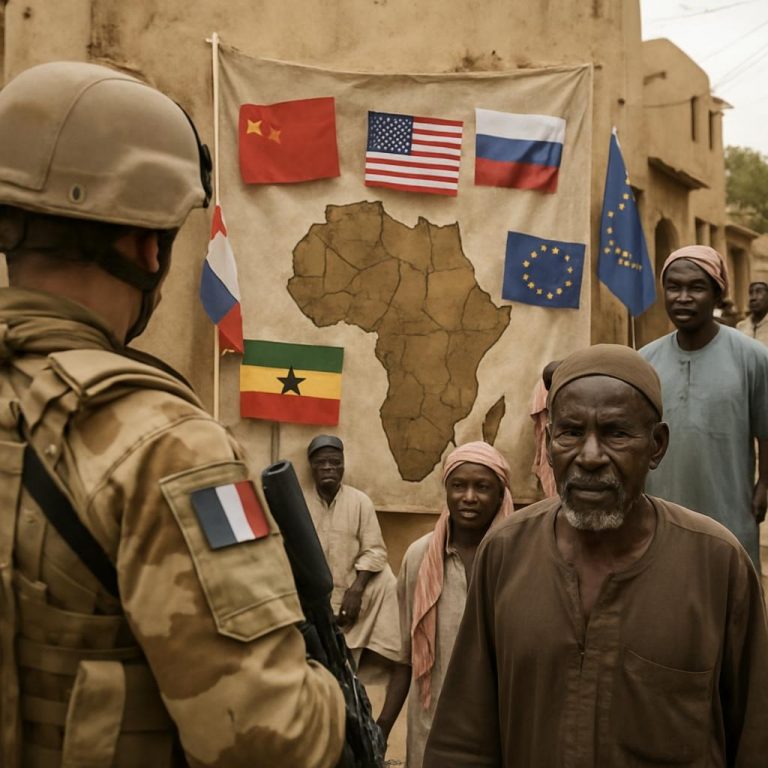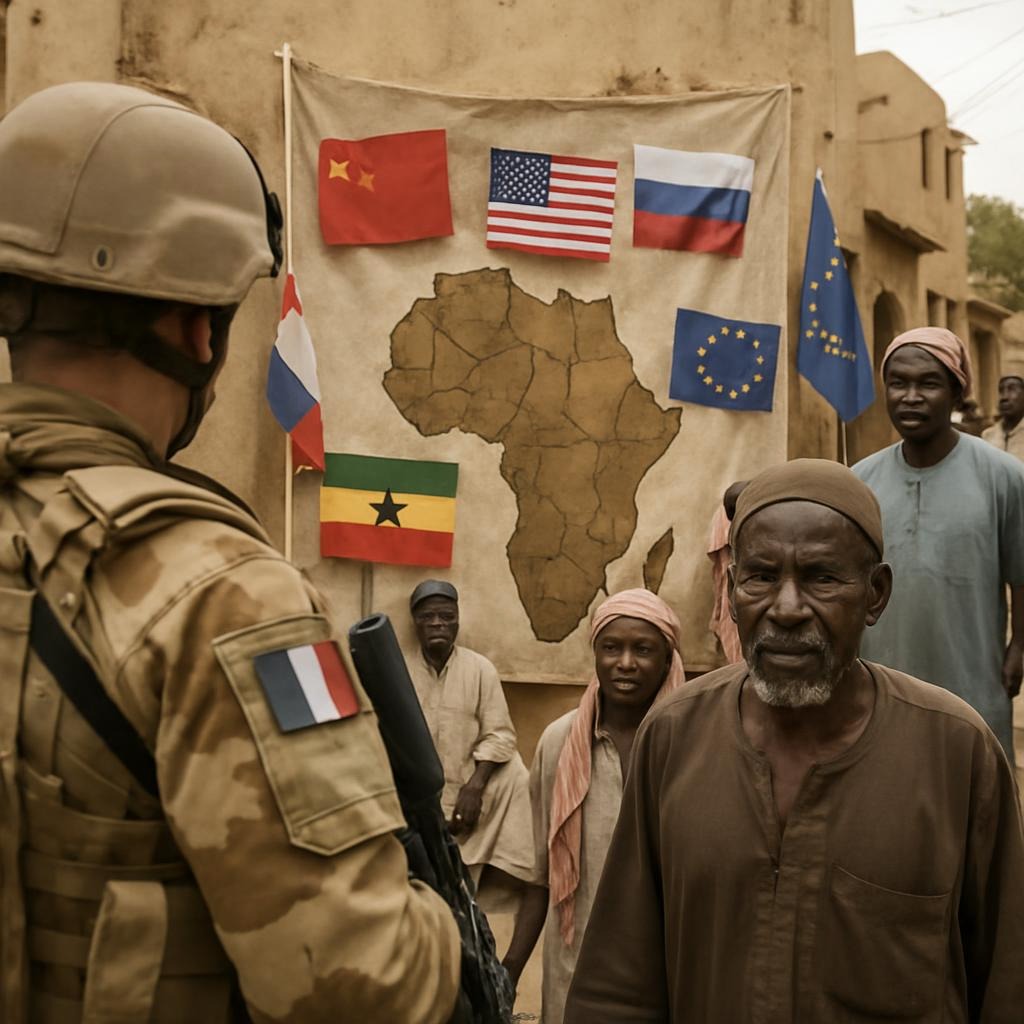
Section 1: The decline of French strategic influence
- The withdrawal of French troops from Mali, Burkina Faso and Niger has removed the main external counter‑terrorism backbone, allowing juntas in the Alliance of Sahel States (AES) and new partners such as Russia to step into the gap with their own security architectures and bases. Wikipedia Business Insider Africa
Source: https://en.wikipedia.org/wiki/Alliance_of_Sahel_States Wikipedia - The perceived failure of Operation Barkhane—high costs, persistent jihadist violence and civilian harm—fed a narrative of ineffective, neo‑colonial militarism that youth movements in Bamako, Ouagadougou and Niamey turned into explicitly anti‑French street politics and social‑media campaigns. France 24 DW
Source: https://www.france24.com/en/africa/20250102-france-faces-gradual-decline-of-influence-in-africa France 24 - The Nairobi Summit 2026 is framed in Paris as a “rebalanced” Africa policy and, unlike classic France‑Africa jamborees, is designed to showcase trilateral projects with non‑French partners such as India and Germany, in line with Macron’s call for “equal‑to‑equal” partnerships rather than exclusive French leadership. RFI
Source: https://www.rfi.fr/en/france/20260109-macron-seeks-to-reset-france-s-africa-policy-amid-shrinking-influence RFI - Decades of French “paternalism” in Francophone Africa—tight control over currency, security and elites—created resentment that coup leaders in Mali, Burkina Faso, Niger and Gabon exploited, presenting their putsches as acts of sovereign emancipation from Françafrique structures. DW Africa Is a Country
Source: https://africasacountry.com/2020/02/the-end-of-the-cfa-franc Africa Is a Country - By shifting to a “back‑seat” advisory posture and closing forward bases, France has lost granular, on‑the‑ground access that once fed its human intelligence and signals networks, forcing greater reliance on partners’ reporting and open‑source data and weakening its ability to anticipate coups and jihadist shifts. Business Insider Africa France 24
Source: https://africa.businessinsider.com/local/lifestyle/from-endless-interference-to-silent-retreat-how-france-has-shifted-its-tone-about/6xw4qc5 Business Insider Africa - France’s image as a former colonial master—reinforced by the CFA franc and memories of military interventions—makes its offers of conditional aid and governance reforms less attractive than the “no‑strings‑attached” or sovereignty‑affirming narratives pushed by Russia, China and Gulf states. Nexus Newsfeed Council on Foreign Relations
Source: https://nexusnewsfeed.com/article/geopolitics/cfa-the-sinister-tool-france-uses-to-control-its-former-colonies Nexus Newsfeed
Section 2: Russia and the security‑for‑resources model
- Rebranding Wagner as the state‑run Africa Corps allows Moscow to present its deployments as official, treaty‑based military‑technical cooperation that helps regimes “defend sovereignty” against both jihadists and Western interference, rather than as deniable mercenary activity. Modern Diplomacy ETH Zürich
Source: https://moderndiplomacy.eu/2024/01/28/russia-prioritizing-sustainable-security-and-strategic-economic-questions-in-sahel-saharan-region Modern Diplomacy - Russia’s security‑for‑resources deals—trading protection and regime support for gold and uranium concessions—risk locking African states into opaque, long‑term arrangements that entrench elite dependence, weaken institutions and complicate future diversification away from Moscow. Atlantic Council ETH Zürich
Source: https://ethz.ch/content/dam/ethz/special-interest/gess/cis/center-for-securities-studies/pdfs/CSSAnalyse318-EN.pdf ETH Zürich - Through “Russian Houses” and cultural centers, Moscow promotes language courses, media content and historical narratives that emphasize anti‑colonial solidarity and portray Western sanctions and criticism as neo‑imperial pressure, amplifying anti‑French and anti‑US sentiment in West Africa. Atlantic Council Council on Foreign Relations
Source: https://www.atlanticcouncil.org/wp-content/uploads/2023/02/RUSSIAS-INFLUENCE-IN-AFRICA-A-SECURITY-PERSPECTIVE-Sarah-Daly.pdf Atlantic Council - In the Sahel, Russian involvement has shifted priorities from broad counter‑terrorism to regime survival: juntas in Bamako, Ouagadougou and Niamey use Russian trainers and contractors primarily to secure capitals, mines and presidential guards rather than to stabilize rural peripheries. GIS Reports ETH Zürich
Source: https://www.gisreportsonline.com/r/russias-africa-footprint GIS Reports - Unlike France, which formally ties security cooperation to human‑rights and democratic benchmarks, Russia’s model is largely indifferent to governance standards, offering arms, advisors and information operations with minimal conditionality, which appeals to embattled regimes but often worsens abuses. European Union Institute for Security Studies Council on Foreign Relations
Source: https://www.iss.europa.eu/sites/default/files/EUISSFiles/Russia%20in%20Africa%20Roundtable%20%28Summary%20Report%29_RY.pdf European Union Institute for Security Studies - Analysts argue that Russia’s security‑heavy approach is fragile without matching economic depth: Moscow is not among Africa’s top investors or traders, so if it cannot scale infrastructure, energy and jobs the way China and Western partners do, its influence may remain narrow and crisis‑bound. European Union Institute for Security Studies ETH Zürich
Source: https://www.iss.europa.eu/sites/default/files/EUISSFiles/Russia%20in%20Africa%20Roundtable%20%28Summary%20Report%29_RY.pdf European Union Institute for Security Studies
Section 3: China’s economic displacement of France
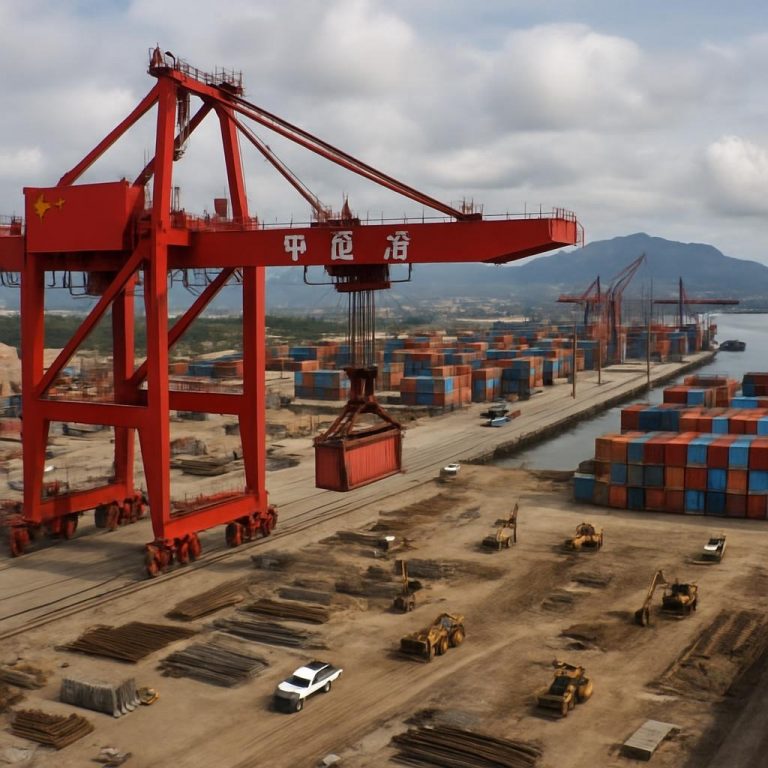
- Over the last decade, China has become Africa’s largest trading partner, with bilateral trade reaching nearly $296 billion in 2024 and displacing France as a leading partner in many former colonies such as Cameroon, where France has fallen to fifth place. Global Times African Leadership Magazine
Source: https://www.globaltimes.cn/page/202505/1334585.shtml Global Times - Chinese‑backed Special Economic Zones (SEZs) in countries like Ethiopia, Zambia and several Francophone states offer tax breaks, logistics hubs and industrial parks that attract manufacturers and logistics firms, undercutting French commercial influence in telecoms, ports and transport corridors. afdb.org cgs-bonn.de
Source: https://www.afdb.org/sites/default/files/documents/publications/africa_economic_brief_-_chinese_special_economic_zones-lessons_for_africa.pdf afdb.org - The “debt trap” narrative remains politically potent, but recent scholarship and renegotiations show a more mixed picture: African governments have secured restructurings, grace periods and even write‑offs, reframing Chinese finance as risky but negotiable rather than a one‑way trap. The Geopolitics Democracy in Africa
Source: https://thegeopolitics.com/chinas-debt-trap-in-africa-a-comprehensive-analysis The Geopolitics - Through the Belt and Road Initiative (BRI), China has financed ports, railways and roads—from Lekki Port in Nigeria to corridors in Mali—that plug Francophone Africa into global value chains oriented toward Asian and Gulf markets, reducing Paris as a necessary gateway. Britannica ijassjournal.com
Source: https://www.britannica.com/topic/Belt-and-Road-Initiative Britannica - China’s “win‑win” rhetoric, backed by tariff‑free access, infrastructure and support for AU priorities, often resonates more with African leaders than France’s conditional development aid, which is associated with governance lectures and slower delivery. Modern Diplomacy Mercator Institute for China Studies (MERICS)
Source: https://moderndiplomacy.eu/2025/06/19/china-africa-relations-a-new-chapter-of-solidarity-development-and-shared-future Modern Diplomacy - Chinese firms such as Huawei and ZTE now build roughly half of Africa’s 3G and 70% of its 4G networks, dominating backbone infrastructure that French‑linked companies once targeted, and embedding China’s Digital Silk Road across the continent. Atlantic Council Council on Foreign Relations
Source: https://www.atlanticcouncil.org/blogs/africasource/the-digital-infrastructure-imperative-in-african-markets Atlantic Council
Section 4: Turkey’s rise as an “Afro‑Eurasian” power
- The Bayraktar TB2 has become a preferred system for African militaries because it is relatively cheap, combat‑proven and politically less encumbered than Western hardware, allowing states like Morocco, Niger and Nigeria to acquire precision strike capability without French export constraints. Africa Defense Forum Military Africa
Source: https://adf-magazine.com/2025/02/as-drone-warfare-expands-in-africa-turkey-increases-share-of-the-market Africa Defense Forum - Erdoğan’s “Afro‑Eurasian” framing presents Türkiye as a Muslim, non‑colonial middle power that understands both Europe and the Global South, helping Ankara market itself as an alternative partner to former European empires in Africa. Policy Center for the New South ISS Africa
Source: https://www.policycenter.ma/publications/turkiye-emerging-middle-power-africa Policy Center for the New South - Turkey’s humanitarian and religious diplomacy—via the Diyanet, Maarif Foundation and NGOs—builds mosques, schools and social projects, deepening grassroots ties and projecting Ankara as a benevolent Muslim partner rather than a distant geopolitical player. africheorienti.com Insight Turkey
Source: https://www.africheorienti.com/journal/article/view/159 africheorienti.com - Acting as mediator in the Ethiopia–Somalia dispute and hosting the Ankara talks has boosted Turkey’s reputation as a pragmatic peace broker, reinforcing its status as a credible regional power in the Horn of Africa. Stratejik Araştırmalar Merkezi SETA – Siyaset, Ekonomi ve Toplum Araştırmaları Vakfı
Source: https://www.sam.gov.tr/snapshots/why-is-turkiye-s-recent-deal-woth-somalia-being-hailed-as-historic-0 Stratejik Araştırmalar Merkezi - Turkish construction firms have completed over $85–100 billion worth of projects across Africa, from airports to stadiums and roads, increasingly competing with French giants like Vinci and Bouygues for major infrastructure contracts. turkeyjournal.com Daily Sabah
Source: https://turkeyjournal.com/nation/turkiye-africa-trade-surges-to-37-billion-with-100-billion-in-infrastructure-projects turkeyjournal.com - Ankara’s Africa strategy leans heavily on SMEs and relatively agile private firms that can move quickly into mid‑sized projects and joint ventures, contrasting with France’s reliance on large, state‑backed champions and big‑ticket contracts that are slower and more politicized. P.A. Turkey cats-network.eu
Source: https://www.cats-network.eu/visualisations/visualising-turkeys-activism-in-africa cats-network.eu
Section 5: Sovereignty, currency and future projections
- Campaigns to reform or abolish the CFA franc—including the planned ECO and the removal of reserve‑deposit obligations to the French Treasury—have become symbols of economic decolonization and a push to sever formal monetary tutelage by Paris. uggcafrica.com innerkwest.com
Source: https://uggcafrica.com/are-we-heading-for-the-end-of-the-cfa-franc uggcafrica.com - The Alliance of Sahel States (AES) aims to build a confederation with its own security and economic instruments, fully outside ECOWAS and French‑backed frameworks, but analysts warn that structural dependence and limited fiscal capacity may constrain its viability as a self‑standing bloc. Afrique Média Chatham House
Source: https://afriquemedia.tv/2025/08/01/a-strategic-turning-point-for-west-africa-as-the-aes-breaks-away-from-ecowas Afrique Média - The UAE and Qatar deploy “petrodollar diplomacy” through port operator DP World, AD Ports and strategic investments in Red Sea and Atlantic hubs, turning African ports and logistics corridors into arenas of Gulf competition that increasingly sideline traditional French investors. IPS Journal Modern Diplomacy
Source: https://www.ips-journal.eu/topics/foreign-and-security-policy/the-uaes-ever-expanding-footprint-in-africa-8063 IPS Journal - The African Union has moved from strict non‑interference toward “non‑indifference,” becoming more vocal about rejecting external meddling and insisting on partnership rather than tutelage in its dealings with the EU and other European powers. CIDOB europarl.europa.eu
Source: https://www.cidob.org/sites/default/files/2025-07/SHAPEDEM-EU_Publication_25_Working_Paper_African_Union_%28D6.1%29.pdf CIDOB - France’s pivot toward Anglophone powers like Nigeria and South Africa—emphasizing trade and investment rather than military bases—may soften its overall continental decline, but it is unlikely to fully offset the loss of privileged influence in the Francophone Sahel. intelligencegeopolitica.it RFI
Source: https://intelligencegeopolitica.it/frances-strategic-pivot-in-africa intelligencegeopolitica.it - By 2030, Africa is likely to experience elements of a “new Cold War” as the West, Russia and China compete, but many states are already pursuing hedging and multipolar strategies—leveraging rivalries for better deals rather than aligning rigidly with one camp. Foreign Affairs cirsd.org RAND Corporation
Source: https://www.foreignaffairs.com/africa/why-new-cold-war-will-split-africa Foreign Affairs
Keywords
Keywords: Françafrique, Sahel, Operation Barkhane, Africa Corps, security‑for‑resources, Belt and Road Initiative, Special Economic Zones, Digital Silk Road, Bayraktar TB2, Afro‑Eurasian middle power, CFA franc reform, Alliance of Sahel States, petrodollar diplomacy, African Union, multipolarity, new Cold War.
About the Author