The Legal and Structural Framework
1. The IEEPA Grants Presidential Power via National Emergencies3
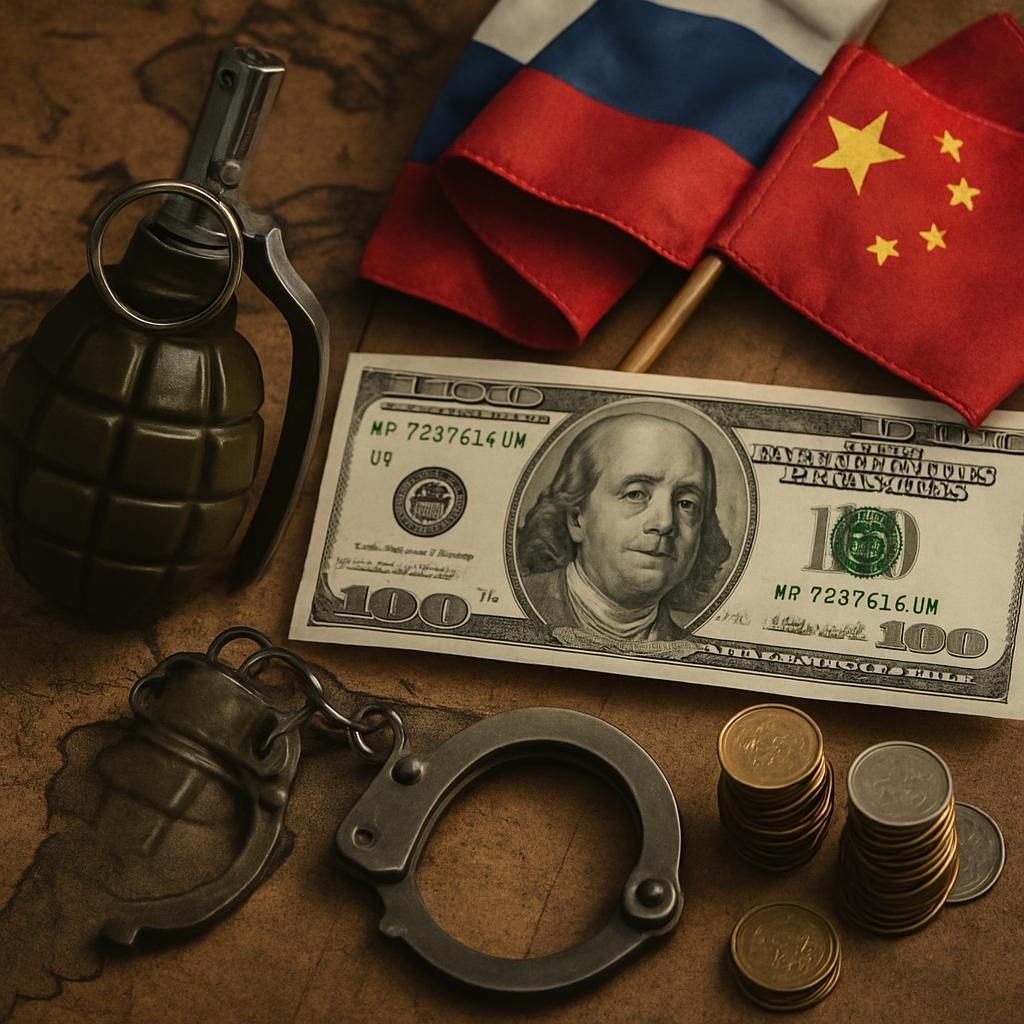
The International Emergency Economic Powers Act (IEEPA) of 1977 allows the US President to declare a national emergency in response to an unusual and extraordinary threat.4 Under this authority, the President can regulate or prohibit any transactions in foreign exchange, transfer of credit, or the export of currency and securities.5 This provides the legal “trigger” to freeze assets and block property of foreign entities within US jurisdiction.6
Source: U.S. Department of the Treasury
2. OFAC Enforces Foreign Policy through Financial Sanctions7
The Office of Foreign Assets Control (OFAC) is the specialized division within the US Treasury Department tasked with administering and enforcing economic sanctions.8 Its role is to translate foreign policy goals into actionable restrictions for financial institutions, ensuring that designated terrorists, narco-traffickers, and sanctioned regimes are barred from the US financial system.9
Source: U.S. Department of the Treasury – About OFAC
3. The SDN List Effectively “Deletes” Entities from Global Finance10
Being placed on the Specially Designated Nationals (SDN) List is often called the “financial death penalty.” Because most global trade is dollar-denominated, US banks are prohibited from dealing with SDNs. Furthermore, because foreign banks risk losing their own access to US markets if they transact with SDNs, the entity is effectively cut off from the global financial system entirely.
Source: CFR – How US Sanctions Work
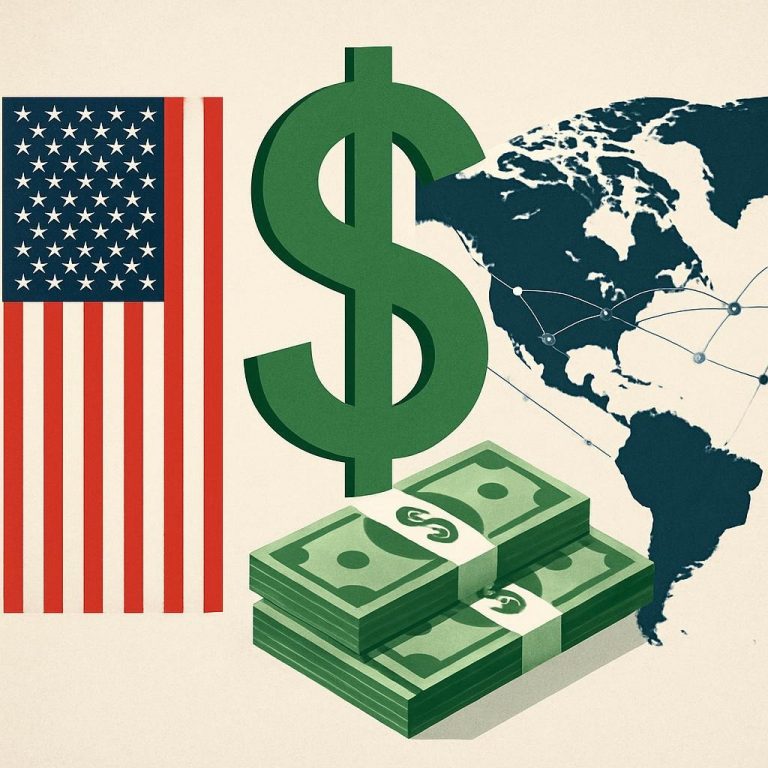
4. Reserve Currency Status Is the Ultimate Source of US Sanctioning Power
The US dollar’s role as the global reserve currency means it is used for over 80% of global trade and held as the primary asset by central banks.11 Since every dollar transaction must eventually clear through a US-based correspondent bank, the US maintains “jurisdictional hooks” over nearly all international commerce, regardless of where the parties are located.
Source: Federal Reserve – The International Role of the U.S. Dollar
5. Primary Sanctions Target US Persons While Secondary Sanctions Pressure Foreigners
Primary sanctions prohibit US persons (citizens, residents, and companies) from conducting business with a target.12 Secondary sanctions are more aggressive; they target non-US persons by threatening to cut off their access to the US financial system if they continue to trade with a sanctioned entity, even if no US person is involved in the transaction.13
Source: U.S. International Trade Commission
6. CHIPS and Fedwire Provide Granular Visibility into Dollar Flows
CHIPS (Clearing House Interbank Payments System) and Fedwire are the primary rails for clearing large-value dollar payments.14 Because these systems are based in the US and subject to US law, the government can monitor, intercept, and block suspicious transactions in real-time as they pass through these domestic gateways.
Source: Deloitte – Leveraging CHIPS and ISO 20022
7. SWIFT Is the Critical Messaging Nerve System of Global Banking
SWIFT is a secure messaging network that banks use to send payment instructions.15 While it doesn’t move money itself, disconnecting a country from SWIFT (as happened to major Russian banks in 2022) is a “financial nuclear option” because it prevents banks from communicating with the rest of the world, making cross-border trade nearly impossible to execute at scale.16
Source: Atlantic Council – What is SWIFT?
8. Export Controls Focus on Physical Technology Rather than Just Money
While financial sanctions target the flow of capital, export controls administered by the Bureau of Industry and Security (BIS) regulate the physical transfer of goods, software, and technology.17 They are designed to prevent “dual-use” items (like high-end semiconductors) from reaching adversaries to limit their military or industrial capabilities.
Source: Torres Trade Law – Export Controls vs Sanctions
Impact and Geopolitical Consequences
9. Over-Compliance Creates Massive Barriers for Legal Humanitarian Aid18
“Over-compliance” occurs when banks, fearing massive US fines (like the $8.9 billion penalty paid by BNP Paribas), refuse to process even legal transactions—such as food or medicine—for sanctioned nations.19 The risk of an accidental violation is often seen as greater than the profit from the transaction, leading to de-risking.
Source: Human Rights Watch – Maximum Pressure
10. Freezing Central Bank Reserves Has Undermined Global Asset Security
The 2022 freeze of $300 billion in Russian central bank reserves signaled to the world that even sovereign assets held in Western jurisdictions are not safe.20 This has prompted countries like China, India, and Saudi Arabia to re-evaluate the risk of holding their wealth in US Treasuries or Euros.
Source: Atlantic Council – The G7’s unprecedented freeze on Russia’s central bank
11. Sanctions Are Driving the Bifurcation of the Global Financial System
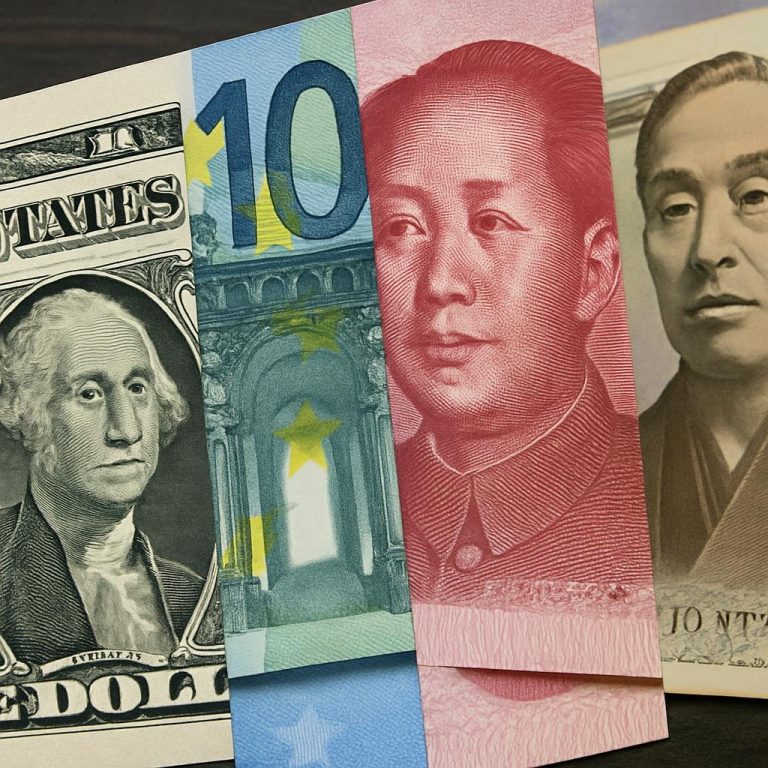
The aggressive use of sanctions is splitting the world into two blocs: one led by the US/EU using the dollar/euro, and another led by China and Russia using alternative currencies and networks. This “fragmentation” reduces global efficiency but increases the “sanctions-resilience” of the non-Western bloc.
Source: IMF – Geoeconomic Fragmentation and the Future of Multilateralism
12. Broad Sanctions Inflict Severe Humanitarian Costs on Civilian Populations
Broad-based sanctions on a nation’s energy or banking sectors often lead to hyperinflation, unemployment, and shortages of basic goods. While intended to pressure governments, the primary victims are often the civilian population who suffer from a collapsed economy and reduced access to healthcare.
Source: The Lancet – Humanitarian Impact of Economic Sanctions
13. Extraterritorial Sanctions Strain Diplomatic Relations with US Allies
US secondary sanctions often clash with the sovereignty of its allies. For example, European countries have historically used “Blocking Statutes” to protect their companies from US sanctions on Iran or Cuba, viewing the US’s attempt to dictate who Europeans can trade with as a diplomatic overreach.21
Source: European Commission – Protection against extraterritorial legislation
14. Weaponization of the Dollar Risks Diminishing Long-Term Returns
U.S. Treasury Secretary Janet Yellen has acknowledged that using the dollar as a tool of foreign policy could, over time, undermine its hegemony. By creating an incentive for the world to find alternatives, the US may eventually lose the very tool that makes its sanctions so effective.
Source: CNN – Yellen warns sanctions could threaten dollar hegemony
Evasion Tactics and “Shadow” Trade
15. The “Shadow Fleet” Transports Sanctioned Oil via Opaque Ownership22
Sanctioned nations like Russia and Iran utilize a “shadow fleet”—hundreds of aging, often uninsured tankers with opaque ownership structures.23 These vessels operate outside Western shipping regulations and insurance markets to move millions of barrels of oil to buyers in Asia.24
Source: S&P Global – Inside the shadow fleet
16. Front Companies and Shell Layers Mask Beneficial 25Ownership
Evasion networks use layers of shell companies across multiple jurisdictions (like Seychelles or BVI) to hide the ultimate beneficial owner.26 A transaction for sanctioned parts might pass through four “front companies” before reaching the actual end-user, making it difficult for compliance officers to trace the origin.
Source: New Zealand Ministry of Foreign Affairs – Sanctions Evasion Red Flags
17. AIS Spoofing Hides Tanker Locations through Falsified Signals27
Tankers use AIS spoofing to broadcast false GPS coordinates.28 A ship might appear to be drifting in the South China Sea while it is actually docked at an Iranian terminal. Sophisticated spoofing even creates realistic movement patterns along common shipping lanes to fool satellite tracking.29
Source: Kpler – AIS spoofing: The fast track to sanctions
18. Barter Systems Eliminate the Electronic Money Trail Entirely30
Trading oil for gold or oil for food allows countries to settle accounts without using the banking system. Since no electronic message is sent via SWIFT and no dollar is cleared via CHIPS, there is no digital trail for the US Treasury to monitor or block.
Source: Reuters – Venezuela’s gold for food swap
19. Third-Country Intermediaries Act as Re-Export Hubs
Firms in countries like the UAE, Turkey, or Kazakhstan often act as “middlemen.”31 They import sanctioned Western electronics or machinery and then “re-export” them to Russia or Iran. On paper, the Western company is selling to a friendly buyer in Dubai, which then redirects the goods.
Source: Bloomberg – How Sanctioned Goods Reach Russia Through Central Asia
20. Documentation Falsification Bypasses Price Caps and Embargoes
By changing the “Certificate of Origin,” sanctioned oil can be rebranded as “Malaysian Blend” or “Latvian Blend.” This allows the cargo to be sold on international markets or processed in refineries that are prohibited from taking oil from the original sanctioned source.32
Source: European Commission – FAQ on Russian Oil Sanctions
The Rise of Alternative Infrastructures
21. China’s CIPS Serves as a Direct Alternative to US-led CHIPS33
The Cross-Border Interbank Payment System (CIPS) allows banks to settle international Renminbi transactions directly.34 Unlike CHIPS, it does not require a US correspondent bank, providing a “sanctions-proof” highway for China and its trading partners.
Source: Reuters – What is China’s CIPS?
22. Russia’s SPFS Replaces SWIFT for Domestic and Regional Trade35
After the 2014 sanctions, Russia developed SPFS (System for Transfer of Financial Messages).36 While its international reach is limited compared to SWIFT, it ensures that the Russian domestic economy and some regional partners can continue to function even if totally cut off from Western messaging.37
Source: NNRV Trade – Lessons from Russia’s SPFS Exclusion
23. BRICS Pay Aims to Decouple the Bloc from Western Financial Dominance38
The BRICS Pay initiative focuses on creating a decentralized, blockchain-based messaging and payment system for member nations.39 Its goal is to allow countries like Brazil, Russia, India, China, and South Africa to trade in their own currencies without relying on the US dollar or SWIFT.40
Source: GIS Reports – BRICS making progress on payment system
24. CBDCs Like the Digital Yuan Bypass Western Intermediary Banks
Central Bank Digital Currencies (CBDCs) allow for direct peer-to-peer settlement between central banks.41 Projects like mBridge (connecting China, UAE, Thailand, and Hong Kong) enable instant, low-cost cross-border payments that never touch a US bank, making them immune to US blocking.
Source: Bank for International Settlements (BIS) – Project mBridge
25. INSTEX Failed Because of Its Dependence on the Global Banking System
The European INSTEX was a “special purpose vehicle” designed to allow trade with Iran without using dollars.42 It failed primarily because private European banks were still terrified of US secondary sanctions and refused to facilitate the underlying transactions.
Source: The Guardian – European trade mechanism for Iran fails
26. Stablecoins Like Tether Are Used for “Uncensorable” Trade
In regions like Russia and Venezuela, Tether (USDT) has become a preferred medium for cross-border trade.43 Because it is a decentralized digital asset, it can be sent instantly across borders without going through a bank, though issuers like Tether Limited increasingly face pressure to blacklist sanctioned addresses.44
Source: The Wall Street Journal – Russia turns to Tether to bypass sanctions
27. Local Currency Swaps Reduce Vulnerability to US Monetary Pressure
By signing bilateral currency swaps, countries agree to trade in their own currencies (e.g., Rupees for Rubles).45 This removes the need for a dollar “middleman,” insulating the trade relationship from changes in US interest rates or the threat of financial sanctions.
Source: UN DESA – Managing Local Currency Risk
Future Outlook
28. A “Fortress Economy” Prioritizes Resilience Over Efficiency
Countries like Russia have built “fortress economies” by accumulating massive gold reserves, reducing external debt, and developing domestic technology substitutes.46 This strategy makes the economy less efficient and slower to grow, but far more resilient to external Western pressure.
Source: Chatham House – The ‘Fortress Russia’ economy
29. The Loss of “Exorbitant Privilege” Is a Long-Term Risk for the US
The dollar’s “exorbitant privilege”—the ability for the US to run large deficits and borrow cheaply—relies on global demand for the dollar.47 If the world successfully moves toward a multipolar financial system, the US may lose the ability to fund its military and social programs at current levels.48
Source: CFR – The Dollar: The World’s Reserve Currency
30. International Law Currently Lacks a Mechanism to Overturn US Sanctions
Under international law, there is no clear framework to challenge the extraterritorial application of US secondary sanctions. While the UN General Assembly frequently condemns them, the US argues they are a matter of national security and domestic jurisdiction, and no international court has the power to force the US to change its policy.
Source: UPenn Journal of International Law – Second Thoughts on Secondary Sanctions
Keywords: Financial Sanctions, OFAC, IEEPA, SWIFT, De-dollarization, CIPS, SDN List, Shadow Fleet, Geopolitics, Central Bank Digital Currency (CBDC), US Dollar Hegemony, Secondary Sanctions.
About the Author