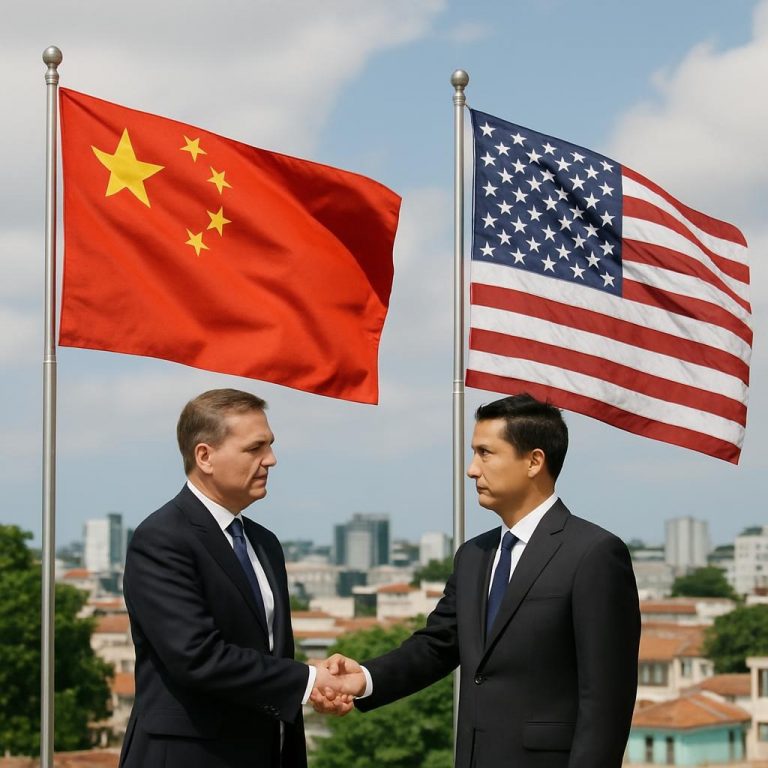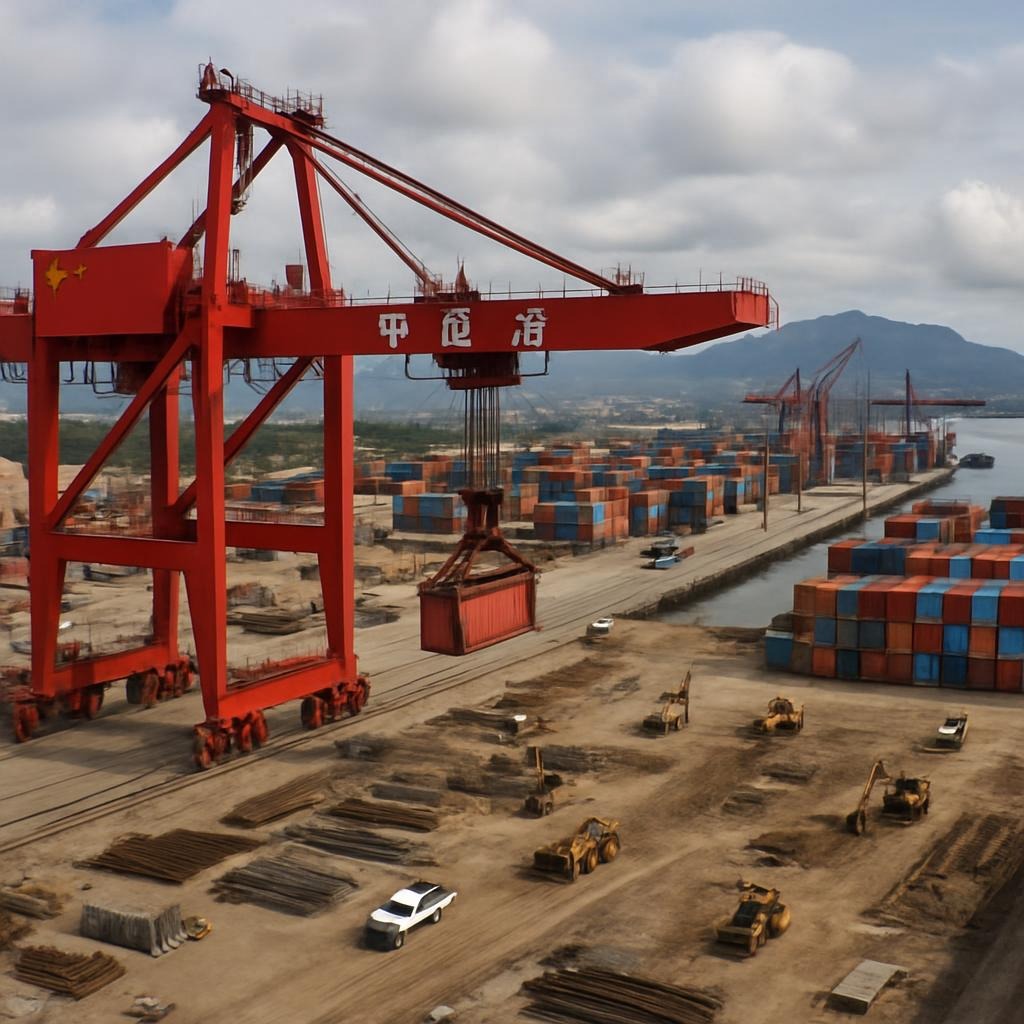
As of January 2026, the landscape of the Western Hemisphere has shifted significantly. China has moved from being a purely economic actor to a foundational architect of regional infrastructure, technology, and energy grids. Simultaneously, the United States has recalibrated its presence through assertive military operations and a renewed “Monroe Doctrine” for the 21st century.
I. The Mechanics of Expansion: Trade, Tech, and Diplomacy
1. The BRI has shifted focus to “small but beautiful” high-tech and green energy projects.
Since its 2018 extension, the Belt and Road Initiative (BRI) in Latin America has transitioned from massive, debt-heavy dams and railways to the “Digital Silk Road” and “Green Silk Road.” By 2026, Chinese investment focuses on 5G networks, EV lithium processing, and “high-quality” infrastructure that integrates with local digital economies rather than just raw material extraction.
Source: CSIS: China’s Third Policy Paper on LAC
Keywords: BRI 2.0, Digital Silk Road, Green Energy, High-Quality Investment.
2. Chancay Port cuts shipping times to Asia by 10–12 days, bypassing the Panama Canal.
The Chancay megaport in Peru, inaugurated in late 2024/early 2025, provides a direct “Shanghai-to-Chancay” route. It allows ultra-large container ships to avoid the draught limits and congestion of the Panama Canal, effectively turning Peru into the primary logistical gateway for South American exports to China.
Source: Agência Brasil: Brazil, China sign railroad plan to Peru
Keywords: Chancay Port, Logistics, Trade Routes, Maritime Efficiency.
3. Chinese influence is reshaping through 5G, AI, and Green Energy integration.
China’s “high-quality” investments have moved the needle from extraction to innovation. By 2026, Huawei and BYD are the dominant providers of 5G infrastructure and electric public transit in Brazil and Mexico, creating a technological dependency that anchors Latin American nations to Chinese technical standards.
Source: Ookla: 5G in Latin America Pockets of Progress
Keywords: 5G, Artificial Intelligence, Electromobility, Technical Standards.
4. State-owned enterprises (SOEs) now control over 50% of Peru and Chile’s power distribution.
Through acquisitions by State Grid and China Southern Power Grid, Chinese SOEs have secured a near-monopoly on energy distribution in Lima and significant portions of Chile. This “invisible” control over the power switchboard provides Beijing with immense strategic leverage over national stability.
Source: CFR: China’s Growing Influence in Latin America
Keywords: State-Owned Enterprises, Energy Security, Power Grid, Strategic Assets.
5. Vaccine diplomacy evolved into long-term “Health Silk Road” tech cooperation.
While the immediate pandemic has passed, the “Vaccine Diplomacy” of 2021-2023 established Sinovac and Sinopharm production hubs in Chile and Brazil. In 2026, these facilities have been repurposed for genomic research and AI-driven diagnostics, cementing China as a primary health-tech partner.
Source: GIGA: Vaccine Diplomacy in LAC
Keywords: Health Silk Road, Biotech, Genomic Research, Sinovac.
6. Currency swap lines offer “no-strings” liquidity compared to IMF austerity.
Nations like Argentina have increasingly utilized RMB swap lines to pay off IMF debts and stabilize their currencies. These swaps offer liquidity without the strict structural reform requirements of the IMF, though they deepen the “renminbi-ization” of regional finance.
Source: Boston University: Chinese Finance to LAC 2026
Keywords: Currency Swaps, De-dollarization, IMF vs China, Financial Sovereignty.
7. The Lithium Triangle is the critical anchor for China’s global EV battery monopoly.
Argentina, Bolivia, and Chile (the Lithium Triangle) are now primary targets for Chinese “resource-for-infrastructure” swaps. By 2026, Chinese firms like Ganfeng control the majority of refining capacity in the region, ensuring China’s dominance in the global EV supply chain.
Source: Dialogue Earth: Minerals, EVs and US tensions 2026
Keywords: Lithium Triangle, EV Batteries, Resource Nationalism, Supply Chain.
8. Diplomatic recognition of Taiwan has dropped to just 7 LAC nations.
Since 2018, heavyweights like Panama and Honduras have switched ties. By 2026, pressure has intensified on Paraguay and Guatemala, with the PRC using the promise of massive BRI investment as the primary carrot to finalize the diplomatic isolation of Taiwan in the hemisphere.
Source: German Marshall Fund: China’s Latin America Strategy
Keywords: One-China Policy, Taiwan Diplomacy, Diplomatic Recognition, PRC.
9. “Smart City” technologies are normalizing Chinese surveillance and privacy standards.
Over 80 cities in LAC now utilize Chinese facial recognition and “Safe City” tech. These systems, often built by Huawei or ZTE, come with data governance models that prioritize state security over individual privacy, gradually aligning regional norms with Beijing’s standards.
Source: Ifri: Chinese Surveillance Tech in LAC
Keywords: Smart Cities, Surveillance, Privacy, Data Governance.
10. The China-CELAC Forum has bypassed the OAS for regional policy coordination.
The China-CELAC Forum, which held its major 2025 summit in Beijing, has become the preferred venue for “South-South” cooperation. Unlike the OAS, it excludes the U.S. and Canada, allowing Beijing to negotiate directly with a unified regional bloc on trade and security.
Source: CFR: China-CELAC Forum Impact
Keywords: CELAC, OAS, Multilateralism, South-South Cooperation.
II. Impact on the United States: Security and Competition
11. The rise of China has prompted a “Monroe Doctrine 2.0” response from the U.S.
By early 2026, the U.S. has revitalized the Monroe Doctrine (often termed the “Trump Corollary”) to justify direct interventions. The stated goal is to deny non-hemispheric competitors like China control over strategic assets, effectively ending the era of U.S. “benign neglect.”
Source: Gordon Institute: Latin America Outlook 2026
Keywords: Monroe Doctrine, Trump Corollary, Strategic Competition, Hegemony.
12. Dual-use ports like Chancay create risks for future Chinese naval hosting.
U.S. security officials have flagged Chinese-operated ports as “dual-use” facilities. While currently commercial, their deep-water docks and Chinese management mean they could host PLA Navy logistics or surveillance vessels during a global conflict.
Source: CSIS: No Safe Harbor – China Port Projects
Keywords: Dual-Use Infrastructure, PLA Navy, Maritime Security, Geopolitics.
13. Space stations in Argentina provide China with critical satellite tracking capabilities.
China’s deep-space station in Neuquén, Argentina, remains a flashpoint. While officially for civilian moon missions, the U.S. argues it provides China with the ability to monitor and potentially disrupt U.S. satellite communications over the Southern Hemisphere.
Source: GMF: China’s Latin America Strategy
Keywords: Space Race, Satellite Security, Neuquén Station, Atacama Desert.
14. “Nearshoring” has successfully diverted some manufacturing from China to Mexico.
The U.S. nearshoring strategy has seen significant success by 2026, with billions in investment moving from China to Mexico and the Dominican Republic. However, many of these “nearshored” factories are actually Chinese-owned (e.g., BYD in Mexico), complicating the “decoupling” effort.
Source: CSIS: Nearshoring Strategy Success 2026
Keywords: Nearshoring, Decoupling, Supply Chain Resilience, Mexico.
15. Chinese economic lifelines have rendered U.S. sanctions on Venezuela less effective.
Chinese trade, barter deals for oil, and alternative payment systems have provided a “lifeline” to sanctioned regimes. In 2026, this leverage allows countries to bypass U.S. financial pressure, as seen in the resilience of sanctioned entities before the recent U.S. military actions.
Source: USCC: China’s Facilitation of Sanctions Evasion
Keywords: Sanctions, Economic Leverage, Venezuela, Financial Isolation.
16. Huawei 5G adoption complicates intelligence sharing with “Five Eyes” partners.
The U.S. has warned that countries adopting Huawei 5G may be restricted from receiving high-level U.S. intelligence. By 2026, this has created a “digital rift” in the region, where some partners (like Panama) align with U.S. tech while others (like Brazil) prioritize Chinese cost-efficiency.
Source: Light Reading: Trump’s Venezuela raid and Huawei 2026
Keywords: Huawei, Intelligence Sharing, 5G Security, Cybersecurity.
17. China’s status as #1 trader has eroded the U.S. dollar’s regional dominance.
With China as the top partner for nearly all of South America, more trade is being settled in Renminbi (RMB). The rise of the e-CNY in 2026 for commodity trades (soy, copper) has noticeably reduced the regional demand for U.S. dollars for transactional liquidity.
Source: International Banker: Impact of CBDCs on Power Dynamics
Keywords: De-dollarization, Trade Finance, e-CNY, Reserve Currency.
18. SOUTHCOM has recalibrated focus toward “Selective Aggression” and maritime interdiction.
Under the leadership of General Laura Richardson (and successor strategies in 2026), SOUTHCOM has moved from “soft power” engagement to Operation Southern Spear. This involves high-kinetic maritime interdictions to stop illicit trade and signal a “hard power” return to the Caribbean.
Source: SouthCom: Maritime Interdiction Operation Jan 2026
Keywords: SOUTHCOM, Maritime Interdiction, Operation Southern Spear, Kinetic Action.
19. China’s “non-interference” policy is more attractive to authoritarian leaders.
China’s policy of ignoring internal human rights records is a competitive advantage. In 2026, leaders in Nicaragua and El Salvador prefer Chinese loans over U.S. aid, which often carries “conditionality” regarding democratic reforms and anti-corruption measures.
Source: CSIS: China’s Third Policy Paper on LAC
Keywords: Non-interference, Conditionality, Human Rights, Diplomatic Leverage.
20. Confucius Institutes and media buys have successfully shifted the “Soft Power” balance.
Through Confucius Institutes and partnerships with regional media (e.g., China Today inserts in major papers), China has successfully curated a “benign partner” image. By 2026, polling shows a generational shift in which younger Latin Americans view China as a more reliable economic partner than the U.S.
Source: CFR: China Soft Power in LAC
Keywords: Soft Power, Confucius Institutes, Media Influence, Public Perception.
III. The Future Outlook: 2026 and Beyond
21. The 2025 Policy Paper guides the next decade toward a “Community with a Shared Future.”
Released in late 2025, the Third Policy Paper outlines “Five Programs” for Solidarity, Development, Civilization, Peace, and People-to-People connectivity. It signals China’s intent to move beyond trade into formal security and ideological alignment with the region.
Source: CSIS: China’s Third Policy Paper on LAC
Keywords: Shared Future, Global Security Initiative, Policy White Paper.
22. LAC could become a “theatre of competition” during a Taiwan crisis.
If tensions over Taiwan escalate, China may use its leverage in LAC to disrupt U.S. supply lines or use its space tracking stations for military purposes. By 2026, the region is no longer a “zone of peace” but a contested flank in the U.S.-China rivalry.
Source: CSIS: China’s Third Policy Paper on LAC
Keywords: Taiwan Crisis, Escalation, Strategic Flank, Global Competition.
23. Argentina’s Milei proves that “economic gravity” outweighs ideological shifts.
Despite President Javier Milei’s early rhetoric against “communist” China, the reality of Argentina’s debt in 2026 forced him to renew RMB swap lines and maintain trade. This proves that China’s economic gravity is too strong for even right-wing leaders to fully resist.
Source: Dialogue Earth: Minerals, EVs and US tensions 2026
Keywords: Javier Milei, Economic Realism, Ideological Pivot, Argentina.
24. A permanent Chinese “logistics hub” is likely by 2030, possibly in the Caribbean.
While a formal military base is not yet reality, analysts predict that by 2030, China will establish a “permanent logistics hub” in a friendly nation like Antigua or Venezuela, providing the PLA Navy with a foothold in the Western Hemisphere for the first time.
Source: European Parliament: China’s Increasing Presence in LAC 2025
Keywords: Military Base, Logistics Hub, PLA Navy, 2030 Outlook.
25. The Green Transition gives LAC nations “resource leverage” in negotiations.
The global demand for lithium, copper, and soy gives South American nations unprecedented bargaining power. In 2026, nations are playing the U.S. and China against each other to extract better “technology transfer” and domestic manufacturing agreements for batteries and EVs.
Source: Dialogue Earth: Minerals, EVs and US tensions 2026
Keywords: Resource Leverage, Green Transition, Technology Transfer, Bargaining Power.
26. A 2026 debt crisis could trigger significant “anti-China” sentiment.
As Chinese loans from the 2010s come due, a regional debt crisis is brewing. If China refuses to take “haircuts” on debt for countries like Ecuador or Venezuela, it could trigger a populist backlash similar to the historic “anti-Yankee” sentiment of the 20th century.
Source: CFR: China’s Growing Influence in Latin America
Keywords: Debt Trap, Debt Crisis, Populism, Anti-China Sentiment.
27. The Bi-Oceanic Railway would rewire South American trade, bypassing the U.S. entirely.
A July 2025 MOU between Brazil and China launched a 5-year feasibility study for a Bi-Oceanic Railway (Atlantic to Pacific). Once completed, this 4,500km line would allow Brazilian soy and minerals to reach the Port of Chancay without ever entering U.S.-influenced maritime zones.
Source: Agência Brasil: Brazil, China sign railroad plan to Peru
Keywords: Bi-Oceanic Railway, Infrastructure, Brazil-China, Geopolitics.
28. A bloc for “strategic autonomy” is emerging to refuse choosing sides.
Led by Brazil and Colombia, a movement for “strategic autonomy” is gaining traction. These nations seek to benefit from both U.S. security and Chinese investment while refusing to join any formal anti-China or anti-U.S. coalition.
Source: Dialogue Earth: Minerals, EVs and US tensions 2026
Keywords: Strategic Autonomy, Non-Alignment, Multipolarity, Regional Bloc.
29. e-CNY adoption for trade will provide a “SWIFT-proof” financial exit.
The Digital Yuan (e-CNY) is increasingly being integrated into regional trade platforms. By 2026, this provides a credible alternative to the SWIFT system, allowing regional governments to continue trading even if they are targeted by U.S. financial sanctions.
Source: International Banker: Impact of CBDCs on Power Dynamics
Keywords: e-CNY, SWIFT, Financial Sanctions, Digital Currency.
30. The “Shared Future” concept aligns LAC UN voting with Chinese positions.
By 2026, the concept of a “Community with a Shared Future” has successfully aligned the voting records of several LAC nations with China in the UN General Assembly, particularly on issues of “non-interference” and the reform of Western-led global institutions.
Source: CSIS: China’s Third Policy Paper on LAC
Keywords: Shared Future, United Nations, Voting Alignment, Global Governance.
Chinese Port Projects in Latin America
This video provides a visual overview of how China’s strategic port investments are changing the maritime balance of power in the Western Hemisphere.
About the Author