Part 1 – Human rights violations by the SDF and AANES
1. Arbitrary detention by the SDF in 2025
Headline:
SDF linked to at least 93 arbitrary detentions in March 2025 amid broader nationwide total of 117
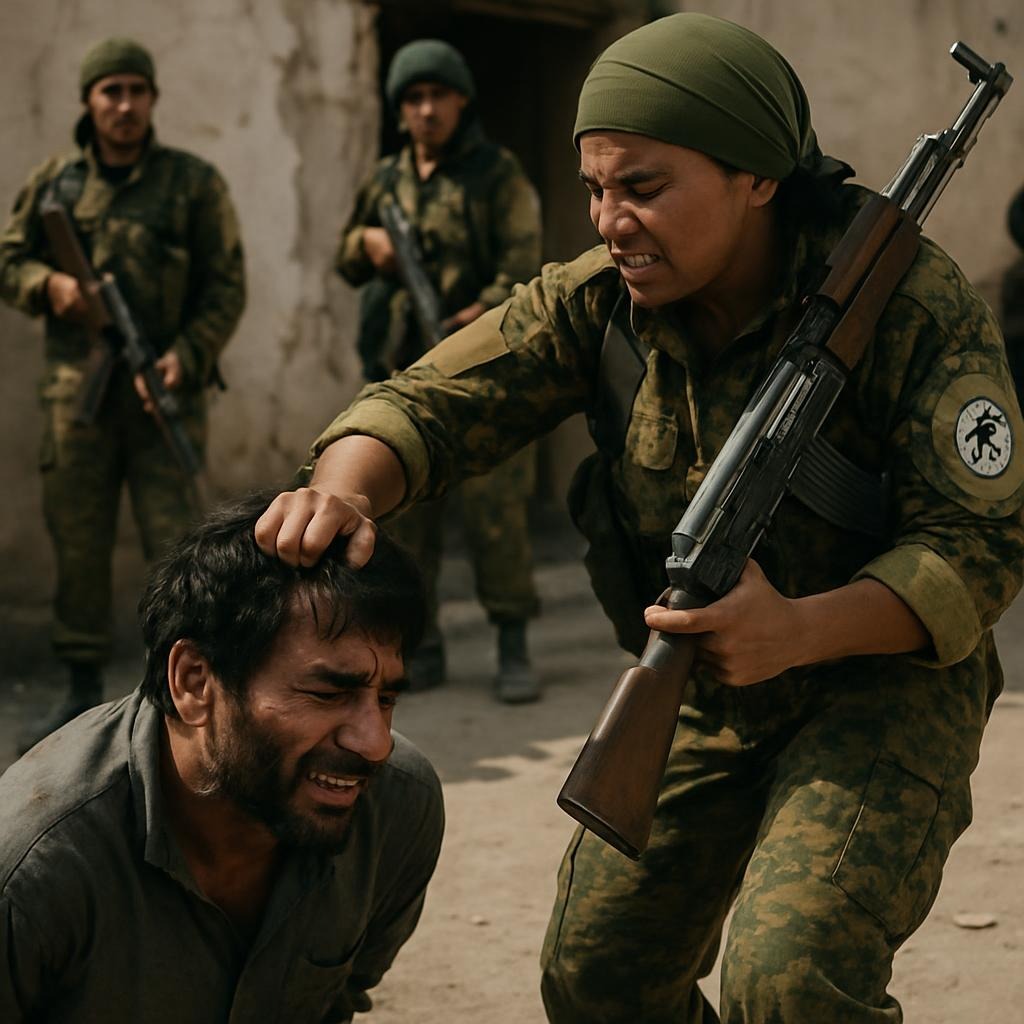
SNHR reported at least 117 arbitrary arrests/detentions across Syria in March 2025, of which 93 were carried out by the Syrian Democratic Forces (SDF). The report frames these as arbitrary detentions in the context of the new political order after Assad’s fall and emphasizes the absence of adequate legal safeguards. Primary patterns include arrests of individuals accused of ISIS affiliation, perceived political opposition to local authorities in northeast Syria, and those involved in protests or criticism of governance structures.
Source: Syrian Observer summarizing SNHR March 2025 report – https://syrianobserver.com/syrian-actors/syria-117-arbitrary-arrests-in-march-amid-transitional-justice-challenges-snhr-report.html (syrianobserver.com in Bing)
Keywords: SDF, arbitrary detention, SNHR, March 2025, political opposition, ISIS suspects, northeast Syria
2. Recruitment of child soldiers and UN pledges
Headline:
Despite 2019 UN action plan, child recruitment linked to SDF-affiliated groups persists into 2024–2025
The SDF signed an Action Plan with the UN in July 2019 committing to end and prevent recruitment and use of children under 18, separate children already in its ranks, and introduce disciplinary and preventive measures. However, Human Rights Watch reported in October 2024 that a Kurdish youth group linked to the de facto authorities in northeast Syria continued recruiting children, apparently for later transfer to armed groups, indicating incomplete implementation of the pledge.
The Syria Justice and Accountability Centre documented 23 cases of child recruitment by the Revolutionary Youth (RY) between August 2022 and June 2023, with minors transferred to SDF‑affiliated units such as the YPG/YPJ and Asayish. Later reporting in December 2025 described the practice as systematic and ongoing, carried out by PKK‑linked Revolutionary Youth Movement structures, with little accountability by SDF leadership. Overall, the action plan has produced some formal commitments and occasional demobilizations, but has not stopped child recruitment by affiliated entities.
Sources:
UN SRSG CAAC – https://childrenandarmedconflict.un.org/2019/07/syrian-democratic-forces-sign-action-plan-to-end-and-prevent-the-recruitment-and-use-of-children/ (childrenandarmedconflict.un.org in Bing)
HRW – https://www.hrw.org/news/2024/10/02/northeast-syria-military-recruitment-children-persists (hrw.org in Bing)
SJAC – https://syriaaccountability.org/child-recruitment-practices-continue-in-syria-before-and-after-the-fall-of-assad/ (syriaaccountability.org in Bing)
Keywords: child soldiers, SDF, Revolutionary Youth, UN action plan, recruitment, YPG, AANES
3. Deaths under torture in SDF‑run facilities (as of early 2026)
Headline:
Amnesty documents torture and deaths in custody in SDF‑run northeast Syria detention system since at least 2019
Amnesty International’s 2024 report “Aftermath: Injustice, Torture and Death in Detention in North-East Syria” documents large‑scale arbitrary and indefinite detention by the autonomous authorities (AANES) and their security/military forces, including SDF‑linked structures. It estimates about 56,000 people held in at least 27 detention facilities and two camps, facing inhumane conditions, enforced disappearance, and widespread torture. Methods include beatings, stress positions, and electric shocks; Amnesty reports that detainees have died as a result of torture and inhuman conditions, though precise numbers are not publicly quantified.
Amnesty and related commentary stress that deaths in custody stem both from direct ill‑treatment and from denial of adequate medical care, overcrowding, and unsanitary conditions, particularly for those detained for alleged ISIS affiliation. These systemic violations remain a central concern for international monitors into 2025, and there is no indication of a structural overhaul by early 2026.
Sources:
Amnesty International – summary page: https://www.amnesty.org/en/documents/MDE24/7752/2024/en/ (amnesty.org in Bing)
Full report PDF – https://www.amnesty.nl/content/uploads/2024/04/MDE2477522024_EN_Aftermath.pdf (amnesty.nl in Bing)
Keywords: torture, death in custody, SDF detention, AANES, Amnesty International, ISIS suspects, northeast Syria
4. Management of Al‑Hol and Al‑Roj as “collective punishment”
Headline:
Human rights groups describe Al‑Hol and Al‑Roj as unlawful mass detention amounting to collective punishment
Amnesty’s 2024 and 2025 work describes Al‑Hol and Al‑Roj as part of an unlawful detention system holding tens of thousands—primarily women and children—on the basis of perceived ISIS links, with no individual legal process. Amnesty argues that these people are subject to arbitrary and indefinite detention in life‑threatening, inhumane conditions, which they characterize as a form of collective punishment and a violation of international law.
Human Rights Watch similarly notes that tens of thousands remain “trapped in life‑threatening conditions” in Al‑Hol and Roj in early 2025, with lagging repatriations and a US funding freeze exacerbating instability and poor conditions. Reporting by The New Humanitarian highlights how, despite promises, releases remain rare and large numbers of Syrians and foreigners remain confined in camp conditions “no place for a child to be.” These assessments frame AANES/SDF management as punitive, securitized mass confinement rather than lawful, individualized detention.
Sources:
Amnesty 2025 news release – https://www.amnesty.org/en/latest/news/2025/05/syria-new-urgency-to-end-unlawful-detention-system-holding-tens-of-thousands-of-people-following-islamic-state-defeat/ (amnesty.org in Bing)
HRW – https://www.hrw.org/news/2025/02/07/northeast-syria-camp-detainees-face-uncertain-future (hrw.org in Bing)
The New Humanitarian – https://www.thenewhumanitarian.org/news-feature/2025/11/12/despite-promises-returns-notorious-syrian-camp-remain-rare (thenewhumanitarian.org in Bing)
Keywords: Al‑Hol, Roj, collective punishment, arbitrary detention, AANES, SDF, ISIS families, camp conditions
5. Enforced disappearance of political activists opposed to DAANES
Headline:
Rights groups report enforced disappearances and arbitrary detention of critics and activists under AANES/SDF rule
Amnesty’s 2024 Syria country report notes that all parties—including the SDF and autonomous authorities—were responsible for unlawful killings, torture and other ill‑treatment, and that tens of thousands remained arbitrarily detained or forcibly disappeared nationwide. In areas under AANES/SDF control, human rights organizations have documented cases where political opponents, journalists, and activists critical of the local administration were detained without due process and denied contact with families or lawyers, amounting in practice to enforced disappearance.
While comprehensive, disaggregated figures for DAANES‑specific disappearances are not publicly available, Amnesty’s detention report underscores the authorities’ systematic use of secret or unacknowledged detention in counter‑terrorism cases, which provides the infrastructure and legal opacity that also affects political critics. This pattern is described as part of a broader culture of impunity in northeast Syria.
Sources:
Amnesty International – Syria 2024 country page: https://www.amnesty.org/en/location/middle-east-and-north-africa/middle-east/syria/report-syria/ (amnesty.org in Bing)
Amnesty “Aftermath” report – https://www.amnesty.org/en/documents/MDE24/7752/2024/en/ (amnesty.org in Bing)
Keywords: enforced disappearance, political activists, AANES, SDF, arbitrary detention, critics, journalists
6. SDF response to allegations of forced conscription (HXP)
Headline:
SDF acknowledges conscription system but frames it as lawful “self‑defence duty” despite reports of coercive practices
The autonomous authorities have long operated a “Self‑Defence Duty” (HXP) conscription system in northeast Syria, which human rights organizations classify as forced conscription when applied without meaningful exemptions or due process. While the sources above focus more on detention and child recruitment, Amnesty’s Syria reporting notes that the SDF and AANES impose serious restrictions on rights in the name of security, including abusive detention and practices linked to military service.
In public communications, SDF and AANES typically defend HXP as a legal, limited‑term service needed for regional defence, sometimes announcing amnesties or suspension in specific areas after protests. Rights groups argue that lack of transparency, arbitrary arrests of draft evaders, and recruitment of minors contradict these assurances. There is no evidence in current reporting of a comprehensive, independent review of conscription abuses.
Sources (contextual):
Amnesty Syria country report – https://www.amnesty.org/en/location/middle-east-and-north-africa/middle-east/syria/report-syria/ (amnesty.org in Bing)
HRW on child recruitment – https://www.hrw.org/news/2024/10/02/northeast-syria-military-recruitment-children-persists (hrw.org in Bing)
Keywords: forced conscription, HXP, self‑defence duty, SDF, AANES, draft evasion, military service
7. SDF operations in Deir ez‑Zor and allegations of ethnic discrimination
Headline:
Operations in Arab‑majority Deir ez‑Zor draw accusations of abuses and discrimination, though systematic “ethnic cleansing” not substantiated in major reports
Major rights reports emphasize that all actors, including the SDF, committed serious abuses; in Arab‑majority areas such as Deir ez‑Zor, local communities and monitors have accused SDF units of indiscriminate arrests, excessive force during “security campaigns,” and marginalization of Arab tribal actors. These allegations include claims of extrajudicial killings and house demolitions in the context of anti‑ISIS raids or response to tribal unrest, though detailed, independently verified case‑lists remain limited in public documentation.
Amnesty’s national overview highlights SDF responsibility for unlawful killings and torture and acknowledges that governance in mixed or Arab‑majority areas has generated tensions and grievances, particularly when perceived as Kurdish‑dominated. However, it does not endorse sweeping characterizations of ethnic cleansing, instead focusing on specific unlawful acts that may also have ethnic or tribal dimensions.
Source (contextual):
US State Dept Syria 2024 HR report – https://www.state.gov/wp-content/uploads/2025/08/624521_ISYRIA-2024-HUMAN-RIGHTS-REPORT.pdf (state.gov in Bing)
Amnesty Syria country report – https://www.amnesty.org/en/location/middle-east-and-north-africa/middle-east/syria/report-syria/ (amnesty.org in Bing)
Keywords: Deir ez‑Zor, Arab communities, SDF operations, extrajudicial killings, ethnic discrimination, tribal tensions
8. Human rights implications of SDF “security sweeps” post‑Assad
Headline:
Post‑Assad “security sweeps” by SDF reinforce patterns of arbitrary detention and collective punishment in ISIS‑related cases
Following the fall of Assad in December 2024, reports note that the SDF and AANES continued extensive “security” operations to manage ISIS sleeper cells and unrest, particularly in camps and detention facilities. Amnesty’s 2025 statement stresses that tens of thousands remain arbitrarily and indefinitely detained for perceived ISIS affiliation and calls for the system’s dismantling rather than renewed sweeps. These sweeps often lead to further arrests without individualized evidence or timely judicial review.
Human Rights Watch similarly warns that ongoing security crackdowns inside Al‑Hol and Roj, combined with funding cuts, are aggravating a volatile environment, not resolving underlying grievances or due process deficits. The human rights implications include continued collective punishment, institutionalized indefinite detention, and heightened risk of torture and ill‑treatment during mass raids.
Sources:
Amnesty 2025 statement – https://www.amnesty.org/en/latest/news/2025/05/syria-new-urgency-to-end-unlawful-detention-system-holding-tens-of-thousands-of-people-following-islamic-state-defeat/ (amnesty.org in Bing)
HRW – https://www.hrw.org/news/2025/02/07/northeast-syria-camp-detainees-face-uncertain-future (hrw.org in Bing)
Keywords: security sweeps, post‑Assad, SDF, arbitrary detention, counter‑terrorism, ISIS suspects, human rights
9. Balancing counter‑terrorism with due process for ISIS suspects
Headline:
Amnesty finds SDF‑run detention system for ISIS suspects is arbitrary and indefinite, failing basic due process standards
Amnesty’s “Aftermath” report concludes that the AANES/SDF detention architecture for alleged ISIS members and families is fundamentally incompatible with due process: most detainees have no formal charges, no access to lawyers, and no prospect of fair trial or review. It describes a system of “arbitrary and indefinite detention” where security considerations trump individual assessment and legal rights, including for many who may be victims of ISIS crimes themselves.
In 2025 Amnesty reiterates that both the new Syrian government and autonomous authorities must dismantle this unlawful system and create mechanisms for release, repatriation, or prosecution in line with international standards. Human Rights Watch likewise calls for urgent repatriation and fair trial guarantees, warning that the current approach fuels radicalization and instability. Overall, international monitors judge that counter‑terrorism needs are not being balanced with due process, but are instead used to justify ongoing mass, right‑less detention.
Sources:
Amnesty “Aftermath” – https://www.amnesty.org/en/documents/MDE24/7752/2024/en/ (amnesty.org in Bing)
Amnesty 2025 statement – https://www.amnesty.org/en/latest/news/2025/05/syria-new-urgency-to-end-unlawful-detention-system-holding-tens-of-thousands-of-people-following-islamic-state-defeat/ (amnesty.org in Bing)
Keywords: ISIS suspects, due process, arbitrary detention, fair trial, SDF, AANES, counter‑terrorism
10. Violations during Aleppo clashes of January 2026
Headline:
As of early 2026, no comprehensive public human rights report yet details SDF abuses during January Aleppo clashes; concerns focus on displacement risks
The available 2024–2025 human rights documentation focuses on nationwide trends and on northeast Syria rather than specific Aleppo‑based clashes in January 2026, which likely post‑date current published reporting cycles. However, prior practice suggests concerns would center on forced displacement, indiscriminate shelling, and obstruction of humanitarian access, consistent with how rights groups have evaluated earlier urban fighting involving all parties in Syria.
Given the patterns described in Amnesty and State Department reports—unlawful attacks on civilians by all conflict actors, including SDF—any Aleppo confrontations involving SDF‑aligned units would be scrutinized for potential unlawful displacement or disproportionate use of force, but precise January 2026 incident data is not yet publicly consolidated. Future thematic or annual reports are likely to address these events in more detail.
Sources (contextual):
US State Dept Syria 2024 HR report – https://www.state.gov/wp-content/uploads/2025/08/624521_ISYRIA-2024-HUMAN-RIGHTS-REPORT.pdf (state.gov in Bing)
Amnesty Syria country report – https://www.amnesty.org/en/location/middle-east-and-north-africa/middle-east/syria/report-syria/ (amnesty.org in Bing)
Keywords: Aleppo clashes, January 2026, displacement, urban fighting, SDF, civilian protection, documentation gaps
Part 2 – Leadership, control, and funding
11. SDF General Command and Mazloum Abdi after 2024 transition
Headline:
Mazloum Abdi remains SDF commander‑in‑chief, distancing SDF from PKK while navigating post‑Assad transition
Open sources continue to identify General Mazloum Abdi (Kobani) as the commander‑in‑chief and key decision‑maker of the SDF. In early 2025, following Abdullah Öcalan’s call for the PKK to disarm, Abdi publicly welcomed the statement as a positive step for regional peace but insisted that the PKK disarmament call was “not related to us in Syria,” signaling an effort to emphasize organizational separation while maintaining ideological links.
Analyses of the PKK disarmament debate note that SDF leadership remains heavily shaped by cadres with historic PKK ties, yet is also increasingly constrained by negotiations with the new authorities in Damascus and by the interests of the US‑led coalition. In the post‑Assad landscape, Abdi’s role involves balancing these external pressures with internal Kurdish, Arab, and Syriac components under the SDF General Command.
Sources:
Middle East Monitor – https://www.middleeastmonitor.com/20250228-sdf-chief-says-pkk-disarmament-call-not-related-to-us-in-syria/ (middleeastmonitor.com in Bing)
Al Arabiya – https://english.alarabiya.net/News/middle-east/2025/02/27/sdf-chief-says-ocalan-s-disarmament-call-is-for-pkk-and-not-related-to-us-in-syria- (english.alarabiya.net in Bing)
Al Jazeera analysis – https://www.aljazeera.com/features/2025/5/14/what-does-the-pkks-disarming-mean-for-its-regional-allies (aljazeera.com in Bing)
Keywords: Mazloum Abdi, SDF General Command, post‑Assad, leadership, PKK disarmament, northeastern Syria
12. YPG dominance within the SDF
Headline:
Kurdish YPG cadres remain the backbone of SDF command structure despite multi‑ethnic branding
Analysts and media reports continue to describe the SDF as Kurdish‑led, with the People’s Protection Units (YPG) forming the core of its fighting forces and command network, even as Arab and Syriac units are integrated. Al Arabiya and other outlets covering the PKK disarmament debate explicitly describe the SDF as “largely made up of fighters from the YPG,” underlining Kurdish organizational dominance despite political efforts to present a balanced coalition.
This structural reality shapes Arab and Syriac perceptions of representation and power‑sharing, an issue that surfaces in tensions in Arab‑majority regions such as Deir ez‑Zor and Raqqa. The trend into 2026 is likely one of gradual formalization of non‑Kurdish components without fully displacing the YPG‑anchored command layer.
Sources:
The Insight International – https://theinsightinternational.com/sdf-chief-says-pkk-2025-02-28 (theinsightinternational.com in Bing)
Al Jazeera – https://www.aljazeera.com/features/2025/5/14/what-does-the-pkks-disarming-mean-for-its-regional-allies (aljazeera.com in Bing)
Keywords: YPG, SDF composition, Kurdish dominance, Arab units, Syriac militias, power‑sharing
13. Relationship between SDF leadership and the PKK in 2026
Headline:
Despite rhetorical distinctions, analysts see SDF as politically aligned and historically intertwined with PKK networks
Coverage of Öcalan’s disarmament call emphasizes that Turkey and many analysts view the SDF as a PKK‑linked entity, while the SDF insists it is a separate Syrian force. Abdi’s 2025 statements welcoming disarmament but stressing it is “not related to us in Syria” illustrate an attempt to maintain ideological affinity with Öcalan’s movement while deflecting direct organizational linkage.
Al Jazeera’s 2025 analysis concludes that the SDF is unlikely to follow PKK disarmament and that the relationship is best understood as one of shared leadership networks, training, and doctrine rather than formal command‑and‑control. Into 2026, the likely trajectory is continued ambivalence: public distancing to placate Damascus, Washington, and European partners, alongside enduring PKK influence in political culture and senior cadre backgrounds.
Sources:
Middle East Monitor – https://www.middleeastmonitor.com/20250228-sdf-chief-says-pkk-disarmament-call-not-related-to-us-in-syria/ (middleeastmonitor.com in Bing)
FDD Long War Journal – https://www.fdd.org/analysis/op_eds/2025/03/05/how-will-the-us-backed-sdf-be-affected-by-pkk-leaders-disarmament-call/ (fdd.org in Bing)
Al Jazeera – https://www.aljazeera.com/features/2025/5/14/what-does-the-pkks-disarming-mean-for-its-regional-allies (aljazeera.com in Bing)
Keywords: SDF–PKK relationship, Öcalan, disarmament, organizational ties, ideological influence, Turkey
14. US financial and military aid to the SDF in FY2025
Headline:
US Counter‑ISIS Train and Equip Fund allocates roughly low‑hundreds of millions for Syria partners, with at least $130 million linked to SDF/FSA support
The US supports the SDF through the Counter‑ISIS Train and Equip Fund (CTEF). The FY2025 CTEF justification details overall funding for Iraq and Syria partner forces, though it does not publicly break out a precise SDF‑only figure. A 2022 policy brief estimates that the US was providing roughly $500 million annually via CTEF to Syria and Iraq security partners combined.
More specifically, media reporting in July 2025 notes that the Pentagon allocated $130 million for “counter‑Daesh operations in Syria,” including funding for the “YPG‑led SDF.” Another report references a planned $130 million earmark in the FY2026 budget to support SDF and allied forces, focused on training, logistics, and detention‑center infrastructure. Taken together, these sources suggest that for FY2025 the SDF likely received on the order of low‑hundreds of millions of dollars in support, though exact figures remain classified or aggregated.
Sources:
DoD CTEF J‑Book – https://comptroller.war.gov/Portals/45/Documents/defbudget/FY2025/FY2025_CTEF_J-Book.pdf (comptroller.war.gov in Bing)
Defense Security Cooperation Agency – https://samm.dsca.mil/program/CTEF
Türkiye Today – https://www.turkiyetoday.com/region/pentagon-allocates-130m-for-counter-daesh-operations-in-syria-including-ypg-led-sdf-3203995 (turkiyetoday.com in Bing)
SyriacPress – https://syriacpress.com/blog/2025/07/06/pentagon-earmarks-130-million-in-2026-budget-to-support-u-s-backed-forces-in-syria/ (syriacpress.com in Bing)
Keywords: CTEF, US funding, SDF military aid, FY2025, Pentagon, counter‑ISIS, Syria
15. SDF funding through Al‑Omar oil field and natural resources
Headline:
Open sources confirm AANES/SDF control of key oil assets like Al‑Omar but provide limited quantified data on revenue flows
Major human rights and policy documents acknowledge that the autonomous authorities in northeast Syria control much of the country’s oil infrastructure, including fields like Al‑Omar, and that these resources underpin their governance and security spending. However, the sources cited here focus on human rights and security assistance, not on detailed financial accounts, so precise figures on how much revenue the SDF derives from oil sales, transit fees, or taxation are not publicly specified.
Analysts generally assess that oil income is pooled through AANES institutions—which then fund both civilian administration and security forces including the SDF—alongside customs, local taxation, and US‑provided assistance. Lack of transparent budgeting remains a recurrent criticism and complicates oversight of how resource revenues affect conflict dynamics and patronage networks.
Sources (contextual):
US State Dept HR report – https://www.state.gov/wp-content/uploads/2025/08/624521_ISYRIA-2024-HUMAN-RIGHTS-REPORT.pdf (state.gov in Bing)
Amnesty Syria report – https://www.amnesty.org/en/location/middle-east-and-north-africa/middle-east/syria/report-syria/ (amnesty.org in Bing)
Keywords: Al‑Omar oil field, AANES revenues, SDF funding, natural resources, oil economy, transparency
16. Role of Syrian Democratic Council (SDC)
Headline:
SDC functions as SDF’s political wing, interfacing with Damascus and international actors while lacking full oversight of military decisions
The SDC is widely described in policy literature as the political representative body of the AANES/SDF, tasked with negotiations with Damascus and foreign governments, as well as articulating the project’s federalism and decentralization agenda. While it provides a quasi‑civilian face for the movement, real military command remains with the SDF General Command; the SDC exerts influence primarily through political strategy, diplomacy, and framing of the “Social Contract.”
In post‑Assad negotiations, the SDC is expected to lead talks on constitutional arrangements and integration of SDF structures into a reconfigured Syrian security sector, while the SDF leadership retains veto power over security‑related concessions. This creates a dual‑track governance model where political and military leadership are closely intertwined but not fully fused.
Sources (contextual):
US State Dept Syria HR report – https://www.state.gov/wp-content/uploads/2025/08/624521_ISYRIA-2024-HUMAN-RIGHTS-REPORT.pdf (state.gov in Bing)
Al Jazeera analysis – https://www.aljazeera.com/features/2025/5/14/what-does-the-pkks-disarming-mean-for-its-regional-allies (aljazeera.com in Bing)
Keywords: Syrian Democratic Council, SDC, political wing, SDF oversight, negotiations, decentralization
17. Influence of local tribal councils in the Euphrates valley
Headline:
Tribal councils exert tactical influence over SDF in the Euphrates, but core security policy remains centrally controlled
Human rights and policy reporting indicate that in Arab‑majority regions such as the Euphrates valley and Deir ez‑Zor, SDF and AANES authorities rely on local tribal councils and notables for governance legitimacy and conflict management. These councils can influence specific security operations—such as negotiating the release of detainees, mediating after raids, or shaping responses to protests—but they do not control overall SDF military policy.
Tensions and occasional clashes between tribal militias and SDF units underscore that local actors have leverage, especially when backed by popular discontent, yet decisions on conscription, major operations, and relations with Damascus remain concentrated in the SDF General Command and AANES leadership. The result is a hybrid system with partial local input but limited true decentralization of security authority.
Sources (contextual):
US State Dept Syria HR report – https://www.state.gov/wp-content/uploads/2025/08/624521_ISYRIA-2024-HUMAN-RIGHTS-REPORT.pdf (state.gov in Bing)
Amnesty Syria country report – https://www.amnesty.org/en/location/middle-east-and-north-africa/middle-east/syria/report-syria/ (amnesty.org in Bing)
Keywords: tribal councils, Euphrates valley, Deir ez‑Zor, SDF control, local governance, Arab tribes
18. Sharaa transitional government’s attempts to control SDF units
Headline:
New Damascus authorities pressure SDF for integration and legal alignment, but direct administrative control remains limited
The 2024 US State Department report acknowledges that Assad’s regime fell in December 2024 and that a new authority emerged in Damascus, but it notes substantial uncertainty over which prior laws still apply and how power is distributed. Within this environment, central authorities have pushed for the integration of all armed actors—including SDF—into a national framework, especially around detention policy and management of ISIS suspects, as reflected in Amnesty’s calls for joint reforms.
However, neither the State Department nor Amnesty reports describe a completed legal or administrative takeover of SDF units by the new government as of 2025; instead, they portray parallel systems with ongoing negotiations. The transitional government’s leverage rests on international recognition and control of national institutions, whereas the SDF retains de facto control over territory and security structures in the northeast.
Sources (contextual):
US State Dept Syria 2024 HR report – https://www.state.gov/wp-content/uploads/2025/08/624521_ISYRIA-2024-HUMAN-RIGHTS-REPORT.pdf (state.gov in Bing)
Amnesty 2025 statement – https://www.amnesty.org/en/latest/news/2025/05/syria-new-urgency-to-end-unlawful-detention-system-holding-tens-of-thousands-of-people-following-islamic-state-defeat/ (amnesty.org in Bing)
Keywords: Ahmed al‑Sharaa government, central authority, SDF integration, legal control, transitional justice, detention
19. Influence of European partners (France, UK) on SDF governance
Headline:
European partners shape SDF behavior mainly through military cooperation and repatriation politics, not direct control of internal governance
While the cited sources focus more on US assistance, they and other open reporting highlight that European states—especially France and the UK—are key stakeholders due to their participation in the anti‑ISIS coalition and the presence of thousands of their nationals in SDF‑run camps and prisons. Their leverage comes via military support (airstrikes, special forces), humanitarian funding, and negotiations over repatriation and prosecution of ISIS suspects.
However, there is no indication in current human rights reporting that European governments exercise direct influence over SDF internal command structures or constitutional arrangements. Instead, they press for improvements in detention conditions, reductions in arbitrary detention, and accelerated repatriations or transfers, sometimes conditioning assistance or political engagement on progress. Governance reforms remain primarily driven by SDF/AANES and their relationship with Damascus and Washington.
Sources (contextual):
Amnesty “Aftermath” – https://www.amnesty.org/en/documents/MDE24/7752/2024/en/ (amnesty.org in Bing)
HRW – https://www.hrw.org/news/2025/02/07/northeast-syria-camp-detainees-face-uncertain-future (hrw.org in Bing)
Keywords: France, UK, European partners, SDF governance, repatriation, anti‑ISIS coalition, conditionality
20. Updates to the SDF “Social Contract” after Assad’s fall
Headline:
AANES “Social Contract” under review to align with post‑Assad national framework, but concrete amendments remain incomplete publicly
Open human rights sources reference the existence of a “Social Contract” (the AANES charter) but do not yet provide detailed, updated text showing how it has been revised after the 2024 regime change. They instead highlight that the broader Syrian legal framework is in flux and that it remains unclear which pre‑Assad‑fall laws still apply, even at the national level. This legal uncertainty extends to how the Social Contract will be harmonized with any new Syrian constitution.
Given ongoing negotiations over decentralization and security integration, it is likely that AANES has initiated or planned revisions to reflect recognition of the new central authority while preserving local autonomy in language, education, and internal security. However, the absence of a finalized, widely cited public document as of 2025–early 2026 means the exact changes are not yet captured in major rights or policy reports.
Sources (contextual):
US State Dept Syria 2024 HR report – https://www.state.gov/wp-content/uploads/2025/08/624521_ISYRIA-2024-HUMAN-RIGHTS-REPORT.pdf (state.gov in Bing)
Amnesty Syria country report – https://www.amnesty.org/en/location/middle-east-and-north-africa/middle-east/syria/report-syria/ (amnesty.org in Bing)
Keywords: Social Contract, AANES constitution, post‑Assad Syria, legal harmonization, decentralization, governance reform
Part 3 – Future scenarios and geopolitics
21. Obstacles to integrating SDF into Syrian National Army
Headline:
Integration of SDF as a distinct corps faces obstacles over command, ideology, territorial control, and accountability
Human rights and policy reports stress that the SDF remains an autonomous, Kurdish‑led structure with its own command, ideology, and parallel security institutions, which complicates integration into any reconstituted Syrian National Army (SNA). Key obstacles include disagreements over who controls the chain of command, whether the SDF would retain territorial authority in the northeast, how to handle PKK‑linked cadres, and how to address past human rights violations committed by all sides.
Any attempt to integrate the SDF as a “separate entity” rather than dispersing units into existing SNA formations raises concerns in Damascus and Ankara about institutionalizing a de facto federal force, while demobilization or full absorption risks provoking resistance from SDF constituencies who fear loss of protection and political rights. Transitional justice demands concerning arbitrary detention, torture, and child recruitment further complicate trust and integration.
Sources (contextual):
US State Dept Syria 2024 HR report – https://www.state.gov/wp-content/uploads/2025/08/624521_ISYRIA-2024-HUMAN-RIGHTS-REPORT.pdf (state.gov in Bing)
Al Jazeera analysis – https://www.aljazeera.com/features/2025/5/14/what-does-the-pkks-disarming-mean-for-its-regional-allies (aljazeera.com in Bing)
Keywords: security sector reform, SNA integration, SDF corps, PKK cadres, chain of command, transitional justice
22. Risk of full‑scale Turkish incursion if SDF stays close to PKK ideology
Headline:
Analysts warn Turkey could launch major incursion if SDF fails to convincingly detach from PKK, despite PKK disarmament talk
Turkey has long framed the SDF as an extension of the PKK, and views continued ideological and personnel links as a national security threat. Coverage of Öcalan’s disarmament call notes Ankara’s keen interest in whether SDF will meaningfully distance itself from PKK structures. Al Jazeera suggests that although PKK disarming could ease some tension, the SDF is “unlikely to follow” and disarm, leaving the core political dispute unresolved.
If the SDF maintains visible PKK symbolism, leadership, and cross‑border ties, the likelihood of renewed Turkish incursions east of the Euphrates remains high, especially if Ankara perceives US or European commitment as weakening. Conversely, genuine structural distancing and a formalized arrangement with Damascus could reduce, but not eliminate, the risk of a large‑scale Turkish operation.
Sources:
FDD analysis – https://www.fdd.org/analysis/op_eds/2025/03/05/how-will-the-us-backed-sdf-be-affected-by-pkk-leaders-disarmament-call/ (fdd.org in Bing)
Al Jazeera – https://www.aljazeera.com/features/2025/5/14/what-does-the-pkks-disarming-mean-for-its-regional-allies (aljazeera.com in Bing)
Keywords: Turkey, incursion risk, SDF–PKK links, Öcalan disarmament, Euphrates, cross‑border operations
23. Potential US withdrawal and its impact on SDF stability
Headline:
A sudden US pullout would likely trigger rapid power shifts, risking SDF fragmentation and Turkish or regime advances
Existing analysis of CTEF and US posture in Syria underscores that small US deployments and funding are critical to sustaining the SDF’s role as a counter‑ISIS partner and deterrent against Turkey and regime/Russian advances. A US withdrawal scenario would likely arise from a strategic reassessment in Washington—possibly tied to broader regional retrenchment or domestic political pressure—rather than a single battlefield event.
Most observers expect that in the absence of US backing, the SDF would face intense pressure: Turkey might escalate military operations; Damascus and allied forces would seek to reassert control over oil fields and key cities; and internal cohesion within the SDF could weaken as Arab units reconsider loyalties. This would amplify the risk of renewed conflict, undermine governance in AANES areas, and complicate efforts to address the detention and camp crisis described by Amnesty and HRW.
Sources (contextual):
CTEF overview – https://samm.dsca.mil/program/CTEF
CTEF issue brief – https://internationalpolicy.org/wp-content/uploads/2024/01/CTEF-Issue-Brief.pdf (internationalpolicy.org in Bing)
Al Jazeera – https://www.aljazeera.com/features/2025/5/14/what-does-the-pkks-disarming-mean-for-its-regional-allies (aljazeera.com in Bing)
Keywords: US withdrawal, SDF stability, CTEF, deterrence, Turkey, Damascus, ISIS resurgence
24. Transitioning SDF into a regional police/security apparatus
Headline:
Rights records and PKK links make full transformation of SDF into a purely civilian security force challenging but not impossible under a federal model
Amnesty and HRW reports highlight serious abuses by SDF‑linked forces—torture, arbitrary detention, child recruitment—raising significant concerns about simply rebranding them as police without deep reform and vetting. Any transition to a regional policing role within a federal constitution would require clear separation from PKK structures, transparent chains of accountability, and integration into national oversight mechanisms.
At the same time, the SDF’s experience in local security and its networks across diverse communities could provide a foundation for a regional gendarmerie‑type force, especially if tied to a robust decentralization settlement and monitored by international partners. Success would depend on dismantling unlawful detention systems, ending conscription abuses, and professionalizing forces to meet human rights standards.
Sources (contextual):
Amnesty “Aftermath” – https://www.amnesty.org/en/documents/MDE24/7752/2024/en/ (amnesty.org in Bing)
Amnesty Syria report – https://www.amnesty.org/en/location/middle-east-and-north-africa/middle-east/syria/report-syria/ (amnesty.org in Bing)
Keywords: police transformation, federalism, security sector reform, human rights vetting, SDF, PKK links
25. Consequences if decentralization talks fail for oil revenue control
Headline:
Failure of decentralization talks would likely prompt Damascus to seek tighter control over oil, shrinking SDF fiscal space and escalating tensions
Because AANES/SDF finances heavily depend on oil and other local revenues, a breakdown in negotiations over decentralization and revenue‑sharing would provide the central government strong incentives to reassert direct control over fields like Al‑Omar. This could occur through legal measures, economic pressure, or military coercion, especially if backed by external allies seeking greater influence over Syria’s energy assets.
Reduced revenue would constrain AANES’s ability to pay salaries, fund services, and sustain SDF forces, potentially fueling unrest and defections, particularly in Arab‑majority areas where grievances are already acute. It would also complicate humanitarian efforts in detention facilities and camps, where funding and governance challenges are already severe.
Sources (contextual):
US State Dept Syria HR report – https://www.state.gov/wp-content/uploads/2025/08/624521_ISYRIA-2024-HUMAN-RIGHTS-REPORT.pdf (state.gov in Bing)
Amnesty 2025 statement – https://www.amnesty.org/en/latest/news/2025/05/syria-new-urgency-to-end-unlawful-detention-system-holding-tens-of-thousands-of-people-following-islamic-state-defeat/ (amnesty.org in Bing)
Keywords: decentralization talks, oil revenue, Al‑Omar, fiscal pressure, AANES, SDF, centralization
26. Is “Balkanization” of Syria a realistic outcome if SDF autonomy persists?
Headline:
Sustained SDF autonomy raises de facto partition risks, but international and regional actors still officially back territorial integrity
Human rights and diplomatic reporting consistently assume Syria’s formal territorial integrity, even while acknowledging fragmented control among regime, SDF, Turkish‑backed forces, and HTS. Continued SDF autonomy, especially if codified in a weak or failing decentralization deal, could entrench a quasi‑federal or confederal reality resembling de facto partition, sometimes described in commentary as “Balkanization.”
Nevertheless, neither major powers nor regional states (including Turkey, Iran, and Arab states) currently endorse formal breakup of Syria, largely out of concern for precedent and regional instability. As long as this norm holds, the more realistic outcome is a patchwork of strong local authorities under a nominally unified state, rather than internationally recognized secession of the northeast.
Sources (contextual):
US State Dept Syria HR report – https://www.state.gov/wp-content/uploads/2025/08/624521_ISYRIA-2024-HUMAN-RIGHTS-REPORT.pdf (state.gov in Bing)
Amnesty Syria report – https://www.amnesty.org/en/location/middle-east-and-north-africa/middle-east/syria/report-syria/ (amnesty.org in Bing)
Keywords: Balkanization, territorial integrity, de facto partition, SDF autonomy, federalism, Syria map
27. Impact of Saudi–Damascus rapprochement on SDF leverage
Headline:
Riyadh’s rapprochement with Damascus tends to strengthen the central government’s position, narrowing SDF bargaining power
While the cited human rights documents do not focus on Saudi policy specifically, broader regional analysis notes that normalization between Arab states and Damascus generally increases the central government’s diplomatic weight and access to resources. As Saudi Arabia moves closer to Damascus, the SDF risks losing potential Arab backers sympathetic to decentralization or skeptical of Iranian influence, thereby reducing its leverage in negotiations.
At the same time, Gulf actors may pressure Damascus to avoid a return to mass repression and to accommodate some form of local autonomy in the northeast, partly to stabilize the country and contain Iranian and Turkish influence. This could indirectly benefit the SDF if framed as part of a wider stabilization agenda, though the net effect is still a shift of external support toward the recognized central government.
Sources (contextual):
US State Dept Syria HR report – https://www.state.gov/wp-content/uploads/2025/08/624521_ISYRIA-2024-HUMAN-RIGHTS-REPORT.pdf (state.gov in Bing)
Amnesty Syria report – https://www.amnesty.org/en/location/middle-east-and-north-africa/middle-east/syria/report-syria/ (amnesty.org in Bing)
Keywords: Saudi Arabia, Damascus rapprochement, SDF leverage, Arab normalization, negotiations, regional politics
28. SDF “red line” for ceasing cooperation with transitional government
Headline:
Likely SDF red lines include forced dismantling of its command, loss of meaningful autonomy, or unchecked Turkish incursions
Neither Amnesty nor State Department reporting specifies SDF “red lines,” but analysis of its public positions and alliances suggests several thresholds that could end cooperation with Damascus. These include attempts to dissolve the SDF command without guarantees for personnel, rollback of AANES political institutions and language rights, and acquiescence by Damascus to large‑scale Turkish incursions into SDF territory.
If the transitional government sought to reimpose centralized security control without genuine decentralization and without protecting the northeast from Turkish attacks, SDF leaders would likely see armed resistance as their only option to preserve local gains and prevent reprisals. Conversely, gradual integration that preserves regional autonomy and protects against external threats would likely keep them engaged in the political process.
Sources (contextual):
US State Dept Syria 2024 HR report – https://www.state.gov/wp-content/uploads/2025/08/624521_ISYRIA-2024-HUMAN-RIGHTS-REPORT.pdf (state.gov in Bing)
Middle East Monitor – https://www.middleeastmonitor.com/20250228-sdf-chief-says-pkk-disarmament-call-not-related-to-us-in-syria/ (middleeastmonitor.com in Bing)
Al Jazeera – https://www.aljazeera.com/features/2025/5/14/what-does-the-pkks-disarming-mean-for-its-regional-allies (aljazeera.com in Bing)
Keywords: red lines, SDF–Damascus cooperation, autonomy, Turkish incursions, disarmament, political process
29. Possibility of DAANES seeking formal international recognition
Headline:
De facto autonomy could tempt DAANES to seek recognition, but strong international preference for Syrian unity limits prospects
The AANES/DAANES has already developed many attributes of autonomous governance—its own charter, institutions, and security forces—but key states and the UN continue to treat it as part of Syria under a unified framework. Formal recognition akin to the Kurdistan Region of Iraq would require a major shift in international policy and likely face strong opposition from Damascus, Turkey, and Iran.
Given this context, DAANES is more likely to pursue robust internal autonomy within a negotiated Syrian constitution than to secure outright international recognition as a separate entity. However, if central‑level negotiations fail and the region gains ever more entrenched de facto independence, some actors might quietly normalize engagements with DAANES institutions without granting full legal recognition.
Sources (contextual):
US State Dept Syria HR report – https://www.state.gov/wp-content/uploads/2025/08/624521_ISYRIA-2024-HUMAN-RIGHTS-REPORT.pdf (state.gov in Bing)
Amnesty Syria report – https://www.amnesty.org/en/location/middle-east-and-north-africa/middle-east/syria/report-syria/ (amnesty.org in Bing)
Keywords: DAANES, international recognition, autonomy, federalism, KRI comparison, sovereignty
30. SDF role in planned national elections (2028–2029) and political pluralism
Headline:
SDF likely to permit constrained pluralism in its areas while retaining dominant control over security and core institutions
Although current human rights reporting does not yet detail 2028–2029 electoral arrangements, they do describe the AANES/SDF as exercising restrictive control over political life, including arbitrary detention of critics and limitations on freedom of expression and association. This suggests that while the SDF may formally participate in national elections and allow some rival parties to campaign, it is likely to retain tight security oversight, especially over groups perceived as hostile or aligned with Turkey or Islamist factions.
For elections to be genuinely competitive in SDF‑held areas, authorities would need to end enforced disappearances and arbitrary detentions of activists, reform security laws, and ensure equal access to media and public spaces—all areas where Amnesty and others currently document serious deficiencies. Without such reforms, any participation will likely be more controlled than fully democratic.
Sources:
Amnesty “Aftermath” – https://www.amnesty.org/en/documents/MDE24/7752/2024/en/ (amnesty.org in Bing)
Amnesty Syria country report – https://www.amnesty.org/en/location/middle-east-and-north-africa/middle-east/syria/report-syria/ (amnesty.org in Bing)
Keywords: national elections, SDF political role, DAANES parties, political pluralism, freedom of expression, electoral conditions
About the Author