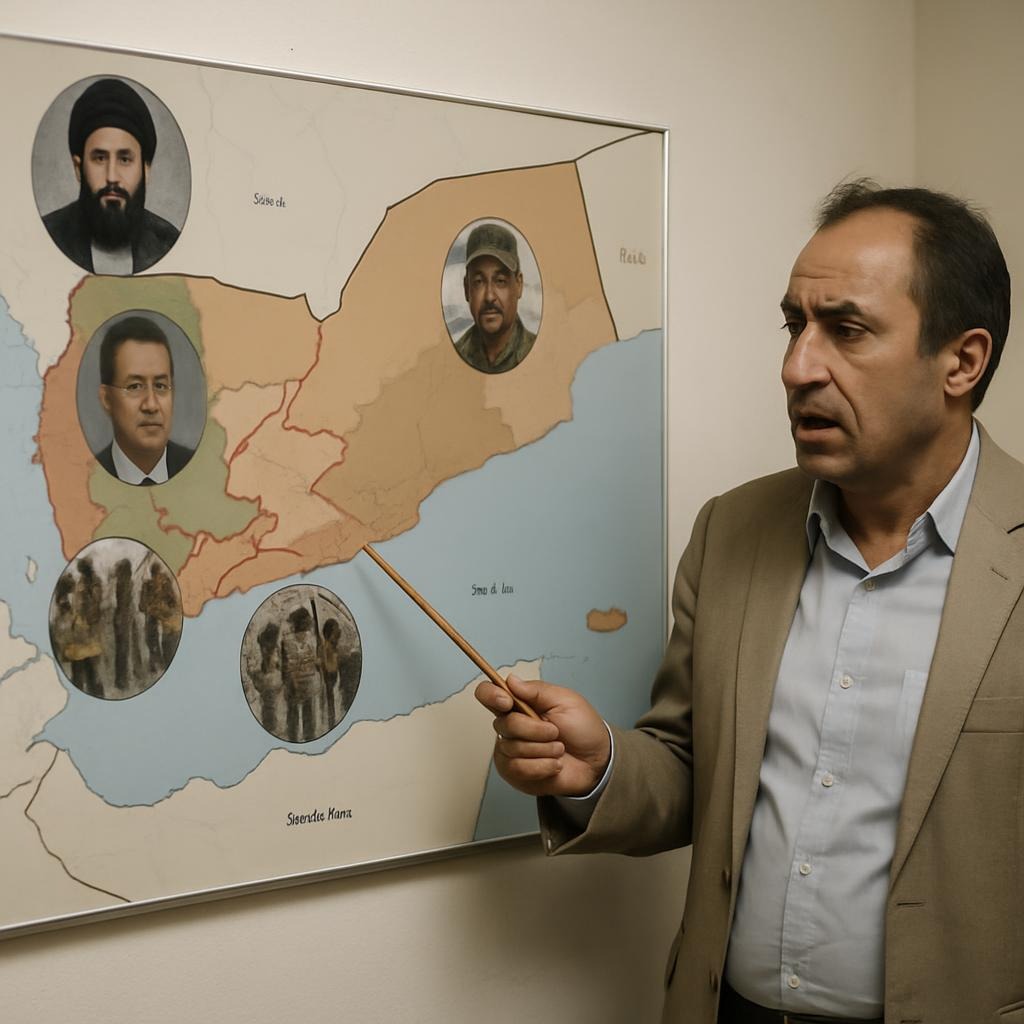
From Arabia Felix to Fragmented Yemen: How Failed Unification, Elite Pacts, and Regional Rivalries Turned a Promised State into a Permanent Battleground
I. The roots and historical context
1. How did the 1990 unification of North and South Yemen create structural imbalances that still drive conflict today?
Unification in 1990 merged two very different regimes without truly integrating their armies, civil services, or power networks; northern elites around Ali Abdullah Saleh quickly dominated the new institutions, marginalizing southern Socialists and leaving their patrons, officers, and bureaucrats underrepresented in the state and security sector. JSTOR peaceagreements.org Economic shocks (loss of Gulf remittances after Yemen’s stance in the 1990–91 Gulf crisis) and uneven control over new oil fields deepened a perception that unity meant northern capture of southern resources, baking structural north–south grievance into the new state. IMF eLibrary Middle East Institute
Source: “The Unification of Yemen: Process, Politics, and Prospects” (JSTOR) JSTOR
2. What role did the 1994 Civil War play in the rise of southern secessionist sentiment?
The 1994 war ended with a northern “unionist” victory that crushed the short‑lived Democratic Republic of Yemen and drove many southern leaders into exile, while Saleh’s network used victory to purge southern officers, seize land, and restructure patronage in favor of northern allies. peaceagreements.org Wikipedia This converted abstract resentment into an enduring “southern question,” laying foundations for the later Southern Movement and, after 2015, for the STC’s armed separatism by embedding the memory of defeat, dispossession, and broken promises of equality under unity. Britannica Chatham House
Source: PA‑X Peace Agreements – Yemeni Civil Wars peaceagreements.org
3. How did the six Sa’dah Wars (2004–2010) transform the Houthi movement from a religious revivalist group into a militant political force?
The Houthis began as “Believing Youth,” a Zaydi revivalist current, but state repression during six rounds of war in Sa’dah militarized the movement, pushed it to develop guerrilla capabilities, and gave it a martyrdom narrative rooted in resistance to Saleh and Saudi interference. Wikipedia Sana’a Center For Strategic Studies Repeated campaigns radicalized leadership, institutionalized a military command structure, and expanded their local governance in Sa’dah, so that by 2010 the group had evolved into a hybrid insurgent–political actor capable of contesting the Yemeni state, not just preaching religious renewal. Middle East Institute אוניברסיטת אריאל
Source: “Houthi insurgency” (Wikipedia) Wikipedia
4. Why did the 2011 Arab Spring protests fail to produce a stable democratic transition despite the removal of Ali Abdullah Saleh?
The uprising removed Saleh but not his networks: the GCC‑brokered deal transferred power to his vice‑president Hadi through an elite pact, while leaving core military, party, and tribal structures largely intact and granting Saleh immunity, so the old regime remained embedded in the “new” order. Sana’a Center For Strategic Studies cihrs.org Simultaneously, unresolved regional conflicts (Sa’dah, southern grievances), economic crisis, and a single‑candidate election produced a weak, contested presidency without the tools or legitimacy to dismantle patronage structures or negotiate a new social contract, making relapse into war likely. JSTOR Bibliothek der Friedrich-Ebert-Stiftung
Source: “How Yemen’s post‑2011 transitional phase ended in war” (Sana’a Center) Sana’a Center For Strategic Studies
5. What were the fatal flaws of the GCC Initiative that allowed the old elite to retain power?
The GCC Initiative was an elite bargain between the GPC and the JMP that sidelined protest movements and granted Saleh and his associates immunity, entrenching impunity and preserving much of the security and economic apparatus under figures loyal to him. Sana’a Center For Strategic Studies cihrs.org By focusing on orderly transfer rather than structural dismantling of patronage networks or meaningful transitional justice, it reproduced the balance of power of the old regime, enabling spoilers—especially Saleh—to sabotage the transition from within. JSTOR Bibliothek der Friedrich-Ebert-Stiftung
Source: “How Yemen’s post‑2011 transitional phase ended in war” (Sana’a Center) Sana’a Center For Strategic Studies
6. How did the National Dialogue Conference (2013–2014) lead to the Houthi rejection of the proposed six‑region federal model?
The NDC was inclusive in form, but the late and top‑down design of a six‑region federal map left the Houthis with a landlocked “Azal” region lacking oil or access to the sea, intensifying their perception of marginalization. Wikipedia yemenpolicy.org They argued the map consolidated elite and Islah interests while freezing northern core areas into a poor, resource‑starved federal unit, and used this grievance—as well as the NDC’s failure to resolve security and power‑sharing questions—to justify their later armed push on Sana’a. United States Institute of Peace Wiley Online Library
Source: “Yemen’s Incomplete National Dialogue” (Yemen Policy Center) yemenpolicy.org
7. What was the strategic logic behind the unlikely 2014 alliance between the Houthis and Ali Abdullah Saleh?
Saleh, ousted but still commanding parts of the army and deep patronage networks, saw in the Houthis a tool to weaken Hadi, sabotage the transition, and position himself or his family to return to power; he quietly aligned units loyal to him with their advance on Sana’a. OAPEN Wikipedia For the Houthis, alliance with their former enemy provided heavy weapons, access to Republican Guard units, and political cover in Sana’a’s elite circles, turning a regional insurgency into a force capable of seizing the capital despite deep mutual distrust that later led to Saleh’s killing in 2017. Springer Arab Center Washington DC
Source: “The Role of ‘Coup Forces,’ Saleh, and the Houthis” (Springer chapter) Springer
8. How did the Houthi takeover of Sana’a in September 2014 differ from previous coup attempts?
Rather than a classic sudden military coup, the takeover was a calibrated armed encirclement combined with mass protests over fuel prices and a political agreement (the Peace and National Partnership Agreement) that allowed the Houthis to claim revolutionary legitimacy while occupying institutions by force. Wikipedia Carnegie Endowment for International Peace It unfolded over weeks, exploiting divisions within Hadi’s camp and Saleh’s sabotage, and left formal republican structures intact but hollowed out—creating a de facto parallel authority rather than an immediate abrogation of the state, unlike earlier abrupt coups in modern Yemeni history. The Washington Institute Brandeis University
Source: “Houthi takeover in Yemen” (Wikipedia) Wikipedia
9. To what extent were economic grievances, such as fuel subsidy removal, the primary spark for the 2014 escalation?
The July 2014 removal of fuel subsidies sharply raised prices and triggered protests in Sana’a that the Houthis skillfully co‑opted, presenting themselves as anti‑corruption defenders of the poor against IMF‑backed austerity and a failing transitional government. Aljazeera military-history.fandom.com However, those grievances were an accelerant rather than the sole cause: long‑standing political exclusion, NDC frustrations, and Saleh’s alliance meant that subsidy protests provided the social cover and moral narrative for an advance that was fundamentally about power redistribution, not just economic policy. Carnegie Endowment for International Peace Arab Center Washington DC
Source: “Yemen protests erupt after fuel price doubled” (Al Jazeera) Aljazeera
10. How has Yemen’s “rentier state” model—relying on oil and patronage—prevented the development of inclusive institutions?
Limited oil revenues allowed ruling elites to use state resources for patronage—salaries, subsidies, and selective investment—rather than building accountable, diversified institutions, aligning Yemen with broader MENA patterns where rents weaken taxation and citizen oversight. Middle East Institute Elgaronline In Yemen’s case, dependence on volatile oil income and external aid fed corruption, empowered a narrow coalition around the presidency and tribal–military leaders, and left peripheral regions under‑served, so when revenues shrank and conflict expanded, there were few resilient, inclusive state structures capable of mediating grievances non‑violently. Blavatnik School of Government Brandeis University
Source: “Yemen: The 60‑Year War” (Middle East Institute) Middle East Institute
II. The forces and alliances involved
11. Who are the Houthis (Ansar Allah), and how does their Zaydi Shia identity influence their agenda?
The Houthis (Ansar Allah) are a Zaydi Shia‑rooted movement from Sa’dah that began as a revivalist trend and evolved into a Shia‑Islamist, populist armed group controlling most of northern Yemen and a majority of the population. Wikipedia Wikipedia Their Zaydi identity shapes a narrative of historical dispossession by Sunni republican elites and Wahhabi influence, informs their Imam‑inspired leadership structure, and aligns them ideologically with Iran’s “Axis of Resistance,” blending local grievances with a regional anti‑US/anti‑Israel posture that legitimizes both domestic rule and cross‑border attacks. Wikipedia wikishia
Source: “Houthis” (Wikipedia) Wikipedia
12. What is the Presidential Leadership Council (PLC), and can it effectively represent a unified “official” government?
Formed in April 2022, the PLC is an eight‑member executive council—chaired by Rashad al‑Alimi—that assumed the powers of president and vice‑president and is recognized internationally as Yemen’s government, backed heavily by Saudi Arabia and the UAE. Wikipedia Carnegie Endowment for International Peace Its members represent rival anti‑Houthi factions (including the STC), and persistent internal fragmentation, regional patronage, and limited territorial control mean the PLC is more a balancing mechanism among factions than a coherent sovereign authority, constraining its ability to act as a unified negotiating partner or governing center. Policy Center for the New South researchbriefings.files.parliament.uk
Source: “Presidential Leadership Council” (Wikipedia) Wikipedia
13. Why does the Southern Transitional Council (STC) seek independence, and how do they differ from the PLC?
The STC, founded in 2017, claims to represent the southern cause and openly seeks restoration of an independent South Yemen, drawing on grievances from post‑1994 marginalization and current resentment over resource control and security in the south. Wikipedia Chatham House Unlike the PLC—which formally defends a united republic—the STC functions as a separatist project with its own security forces (Southern Armed Forces, Security Belt) and, since late 2025, controls most of the south and east including much of Hadramawt and Mahra, using de facto authority to build a proto‑state even while technically being represented inside the PLC. DW Aljazeera
Source: “Southern Transitional Council” (Wikipedia) Wikipedia
14. How has the Saudi‑led Coalition’s strategy shifted from Operation Decisive Storm (2015) to the diplomatic approach of 2026?
Operation Decisive Storm in 2015 aimed at a swift military rollback of Houthi gains and restoration of Hadi’s government through intensive airstrikes and ground proxies; it quickly morphed into a protracted, inconclusive intervention under Operation Restoring Hope. Wikipedia Critical Threats By 2022–2025, facing costs, reputational damage, and limited battlefield success, Saudi Arabia pivoted toward ceasefires, direct talks with the Houthis, and support for political mechanisms like the PLC, seeking border security and de‑escalation rather than outright victory—culminating in 2025–26 diplomacy even as Red Sea dynamics complicate a final settlement. Arab Center Washington DC SAGE Journals
Source: “Saudi‑led intervention in the Yemeni civil war” (Wikipedia) Wikipedia
15. What is the nature of the Iranian relationship with the Houthis: direct proxy or marriage of convenience?
Iran has provided the Houthis with ideological support, training, and increasingly sophisticated weaponry and know‑how since at least the late Sa’dah wars, integrating them into the Axis of Resistance and enhancing their regional strike capabilities, especially after 2014. ISPI – Istituto per gli Studi di Politica Internazionale Council on Foreign Relations Yet serious analyses stress that the Houthis are not a classic, tightly controlled proxy; they retain autonomous leadership, financing, and local legitimacy, making the relationship an evolved partnership—from convenience to more strategic alignment—where Tehran’s influence is significant but not determinative over Houthi domestic decisions. Clingendael Institute The Iran Primer
Source: “Shades of grey: The evolving links between the Houthi and Iran” (Clingendael) Clingendael Institute
16. How did the UAE’s withdrawal of formal troops change the balance of power in southern Yemen?
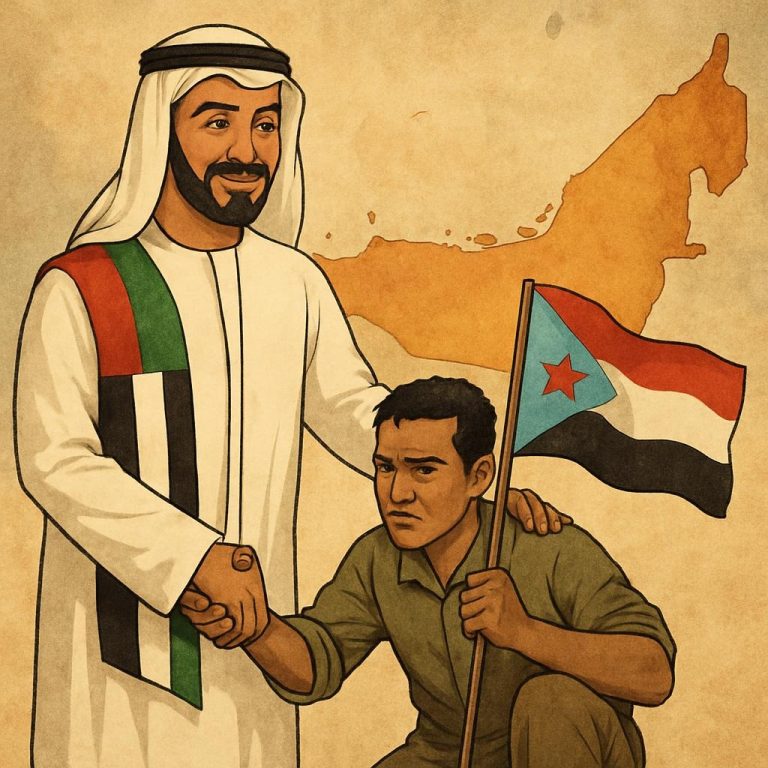
The UAE built powerful local formations (Elite Forces, STC units) and then began drawing down regular forces from 2019, culminating in a 2025 decision to withdraw remaining counter‑terrorism teams amid a sharp spat with Saudi Arabia over alleged arms shipments to the STC. DW The Conversation This shift reduced direct Emirati footprint but left behind heavily armed, UAE‑aligned southern actors who have since expanded across the south and east, deepening fragmentation and increasingly putting Abu Dhabi’s local allies at odds not just with the Houthis but with Riyadh’s favored elements of the PLC. Aljazeera PBS
Source: “UAE to withdraw forces from Yemen after Saudi strike” (DW) DW
17. What role do the “Elite Forces” (Hadhrami and Shabwani) play, and who funds them?
Hadhrami and Shabwani Elite Forces were created from 2016 as special units to fight AQAP and secure key territories; they recruit locally and, while nominally under Yemen’s Defense Ministry, have been trained, armed, and financed primarily by the UAE, with Saudi financial backing for some Hadhrami elements. Wikipedia ACLED In practice they function as semi‑autonomous regional forces closely tied to the STC and local power brokers, shaping security and political control over oil‑rich areas like Shabwa and Hadramawt and giving external patrons leverage over sub‑national dynamics. Wikipedia en.stcaden.com
Source: “Elite Forces” (ACLED actor profile) ACLED
18. Why has AQAP been able to persist in the “shadow zones” of the conflict?
AQAP has repeatedly exploited security vacuums, local grievances, and shifting front lines to embed itself in marginalized tribal areas, retreating when pressured and reemerging when state and coalition focus swings back to the main civil war fronts. JSTOR Wikipedia Fragmented governance, rival anti‑Houthi factions, and at times pragmatic non‑aggression or tacit arrangements with local actors (and more recently alleged limited understandings even with Houthi authorities) have allowed AQAP to survive, even if weakened, as a persistent insurgent and terrorist presence. justice4yemenpact.org سوث24
Source: “Al‑Qaeda insurgency in Yemen” (Wikipedia) Wikipedia
19. How do tribal loyalties in Marib and Al‑Jawf complicate the “Houthis vs Government” narrative?
In Marib and Al‑Jawf, powerful tribes—many historically tied to the republican state but also fiercely protective of local autonomy—have fought both for and against the Houthis at different times, depending on calculations over oil and gas, local governance, and security of their lands. Sana’a Center For Strategic Studies abaadstudies.org The defense of Marib, for example, has hinged on tribal mobilization as much as on formal army units, while the Houthi advance in Al‑Jawf relied on deals with some tribal segments; this fluid tribal politics means the war is not a simple binary but a shifting mosaic of alliances where local identities often trump national camp lines. Wikipedia Asharq Al-Awsat
Source: “Marib’s Tribes Hold the Line Against the Houthi Assault” (Sana’a Center) Sana’a Center For Strategic Studies
20. In what ways has the Israel–Hamas conflict since late 2023 integrated the Houthis into the Axis of Resistance?
After October 7, 2023, the Houthis began launching missiles and drones toward Israel and then systematically attacking commercial and naval vessels in the Red Sea and Gulf of Aden, framing their operations as solidarity with Gaza and coordination with Iran‑aligned actors. Wikipedia The International Institute for Strategic Studies This elevated them from a primarily Yemeni actor to a frontline regional player in the Axis of Resistance, prompting US, UK, and Israeli strikes and tying any Yemeni settlement to broader regional escalation dynamics around Israel–Iran and maritime security. The Iran Primer Wikipedia
Source: “Red Sea crisis” (Wikipedia) Wikipedia
III. Future scenarios and geopolitical impact
21. What would a “Two‑State Solution” (North/South) mean for oil and gas wealth distribution?
Most producing oil and gas fields (Marib, Shabwa, Hadramawt, Mahra) lie in areas currently under PLC/STC‑aligned control, so a formal north–south partition would likely leave the Houthi‑run north with the bulk of the population but limited hydrocarbon resources—unless new arrangements or fields are developed. MEES researchbriefings.files.parliament.uk Analysts therefore warn that any two‑state outcome would require robust revenue‑sharing or compensation mechanisms, or risk locking in an economically starved northern state and a resource‑holding but internally divided south, perpetuating incentives for renewed conflict over export routes and fields. سوث24 therestjournal.com
Source: “Restarting Yemen’s Oil And Gas Exports” (MEES) MEES
22. How do Houthi attacks in the Red Sea affect the chances of a permanent UN‑brokered peace roadmap?
The Red Sea campaign has internationalized Yemen’s war, drawing in US, UK, and others and leading UN envoys to warn that escalating maritime attacks and retaliatory strikes are undermining both regional stability and the fragile de‑escalation on the ground in Yemen. press.un.org Al Arabiya While a ceasefire mission in Hudaydah has been extended to keep ports open, many diplomats now see a peace roadmap as hostage to whether the Houthis will trade their new leverage as a maritime spoiler for political recognition and economic concessions, complicating classical intra‑Yemeni mediation. JURIST The House of Commons Library
Source: UN SC meeting coverage on Yemen and Red Sea press.un.org
23. Could Saudi–UAE rivalry evolve into a “war within a war” between their Yemeni allies?
Saudi airstrikes on an alleged UAE‑linked weapons shipment to the STC in Mukalla in December 2025, followed by Riyadh‑backed demands for Emirati withdrawal, have exposed a sharp rift in how both powers envision Yemen’s map and allies. PBS Business Standard With Saudi Arabia backing the PLC and preferring a formally unified but de facto partitioned state, and the UAE deepening its investment in STC‑led southern autonomy, there is clear risk that their Yemeni clients could slide into open confrontation—indeed the STC’s current offensive in the south already pits it against other anti‑Houthi forces, amounting to a war‑within‑a‑war scenario. Middle East Eye News18
Source: “Escalation in Yemen threatens to reignite civil war and heighten Gulf region tensions” (PBS) PBS
24. What are the long‑term consequences of the “Lost Generation” of Yemeni children out of school?
Roughly 4.5 million children—about two in five—are currently out of school, with millions more facing severe disruption; this scale of educational collapse is likely to produce entrenched poverty, child labor, early marriage, and a generation with limited skills for reconstruction or peaceful political engagement. Save the Children’s Resource Centre UNICEF Over the long term, this “lost generation” undermines state capacity, fuels recruitment into armed groups and criminal economies, and bakes intergenerational trauma into Yemen’s social fabric, making post‑war governance and social cohesion much harder to rebuild. Save the Children Deutschland ahsedu.org
Source: “Hanging in the Balance: Yemeni Children’s Struggle for Education” (Save the Children) Save the Children’s Resource Centre
25. How might the 2023 Saudi–Iran rapprochement manifest as a cooling of the Yemeni frontlines?
The China‑brokered Saudi–Iran deal has already contributed to reduced cross‑border attacks and opened channels for Saudi–Houthi talks, reframing Yemen from an existential proxy battleground to a file within a broader managed rivalry. Middle East Institute The Century Foundation However, Iran is unlikely to relinquish gains in Yemen, and analysts warn that while the détente can help sustain lower levels of violence and encourage border arrangements and de‑facto ceasefires, it won’t by itself resolve Yemen’s internal power struggles or guarantee a comprehensive settlement. Atlantic Council CNBC
Source: “China and the Saudi–Iran rapprochement: Implications for Yemen” (MEI) Middle East Institute
26. Is a federalized Yemen still possible, or has the state fragmented too far into localized “warlordisms”?
A number of recent studies argue that while federalism remains on the table conceptually, a decade of war has produced highly differentiated local governance systems—Houthi theocratic rule in the north, STC and Elite Forces’ security orders in the south, and patchy PLC‑aligned structures—making a neat return to the six‑region model unrealistic. Wiley Online Library International IDEA A viable federal arrangement would now require acknowledging entrenched de facto authorities, strong decentralization, and security guarantees; otherwise, the reality of fragmented “warlordisms” and sub‑state entities is likely to persist, with only a thin national framework overlaying them. global-e journal Sana’a Center For Strategic Studies
Source: “Navigating post‑conflict governance in Yemen: Decentralization, federalism, and the path to stability” Wiley Online Library
27. What is the “catastrophic” scenario for food security in 2026 if Red Sea ports remain militarized?
Yemen imports about 90% of its staple cereals, much of it through Red Sea ports; FAO and EU analyses warn that prolonged disruption or blockage of Red Sea shipping and damage to port infrastructure would sharply raise prices, delay or halt food and fuel imports, and push millions deeper into Crisis and Emergency levels of acute food insecurity. knowledge4policy.ec.europa.eu Food and Agriculture Organization With already 70% of households struggling to access adequate food and up to 18–19 million people projected in need of assistance, a scenario where Hudaydah and other ports are severely constrained could tip localized famine conditions (IPC 5) in vulnerable, especially Houthi‑controlled, areas. yemenonline.info Famine Early Warning Systems Network Food Security Cluster
Source: “Potential Impacts of Red Sea Crisis Escalation on Food Insecurity in Yemen” (EU JRC) knowledge4policy.ec.europa.eu
28. How will the Houthis’ new role as a regional maritime threat change Western willingness to recognize them?
By demonstrating the ability to sink ships, kill international crew, and significantly disrupt a trillion‑dollar trade route, the Houthis have proven themselves a major maritime security threat, prompting sustained Western military responses and terrorist‑designation debates. The Independent The Washington Institute This raises their profile as indispensable interlocutors but also hardens Western reluctance to offer formal recognition or normalization without verifiable guarantees on shipping and hostages, meaning their leverage comes with high reputational costs that could lock them into pariah‑but‑essential status rather than full governmental legitimacy in Western eyes. Voice of America Wikipedia
Source: “Navigating Troubled Waters: The Houthis’ Campaign in the Red Sea and the Gulf of Aden” (IISS) The International Institute for Strategic Studies
29. Could Hadramawt emerge as a third autonomous power center, distinct from Sana’a and Aden?
Hadramawt already functions as a semi‑autonomous arena, historically inclined toward self‑rule and now informally divided between rival security and political camps with different external backers; since 2015 it has become a key border periphery with its own aspirations and resources. Springer Middle East Institute The STC’s December 2025 offensive and the strength of Hadhrami Elite Forces show Hadramawt can be either folded into a southern project or assert a more independent trajectory, potentially emerging as a third pole if local elites, tribes, and external patrons coalesce around “Hadramawt first” demands rather than simple alignment with Sana’a or Aden. Foundation for Defense of Democracies Aljazeera
Source: “Hadramawt’s Emergence as a Center” (Springer chapter) Springer
30. What does “victory” look like for any side when no party can seize the whole country?
For the Houthis, realistic “victory” increasingly means securing uncontested control over the populous north, guaranteed revenues, and international de facto acceptance sufficient to sustain their regime—not reconquering Aden or Marib by force. Britannica Middle East Institute For the PLC/STC camp, it is less about retaking Sana’a and more about preserving territorial and resource control (especially in the south and east), ensuring external backing, and locking in some form of international recognition for their entities; for external actors, “victory” is a contained Yemen that no longer exports instability via missiles, refugees, or famine, even if that means living with an unresolved, partitioned conflict rather than a neat peace deal. yemenmonitor.com Sana’a Center For Strategic Studies
Source: “The balance of power in Yemen after the US–Houthi cease‑fire” (MEI) Middle East Institute
Keywords
Keywords: Yemen, Arabia Felix, Yemeni unification, 1994 Civil War, Sa’dah Wars, Houthis, Ansar Allah, Ali Abdullah Saleh, GCC Initiative, National Dialogue Conference, six‑region federalism, Hadi transition, fuel subsidies, rentier state, patronage politics, Presidential Leadership Council, Southern Transitional Council, Elite Forces, Hadhrami Elite, Shabwani Elite, AQAP, Marib tribes, Al‑Jawf, Axis of Resistance, Red Sea crisis, Saudi‑led coalition, UAE withdrawal, Saudi–UAE rivalry, Saudi–Iran rapprochement, two‑state solution Yemen, federalism, food security, famine risk, Hadramawt autonomy, lost generation, Yemen peace roadmap.
About the Author