Political and domestic influence
1. Extent of swing-riding influence on Canadian foreign policy toward India
The concentration of Sikh voters in key suburban ridings around Vancouver, Toronto, and Brampton gives the community real leverage over party nominations and election outcomes, which indirectly shapes the tone and limits of Canadian policy toward India, particularly on rights and “Khalistan” discourse. Parties avoid positions that could be framed domestically as hostility toward Sikh civil rights, so Ottawa tends to emphasize due process and free expression even when this frustrates New Delhi. CBC The Hindu
Source: CBC – Why Canada is becoming the focus of India’s concerns CBC
2. Vote-bank politics and India’s perception of Canada
In Indian political language, “vote-bank politics” suggests that Trudeau’s Liberals (and to a degree the NDP) shield Sikh activists to retain support from a cohesive Sikh voting bloc, especially in British Columbia and Ontario. Indian commentators and officials frame Canada’s reluctance to curb pro‑Khalistan activism as pandering to this “vote bank,” arguing that domestic politics is prioritized over Indian security concerns. The Hindu
Source: The Hindu – On India–Canada diplomatic relations The Hindu
3. NDP and Jagmeet Singh’s role in shaping Liberal stances
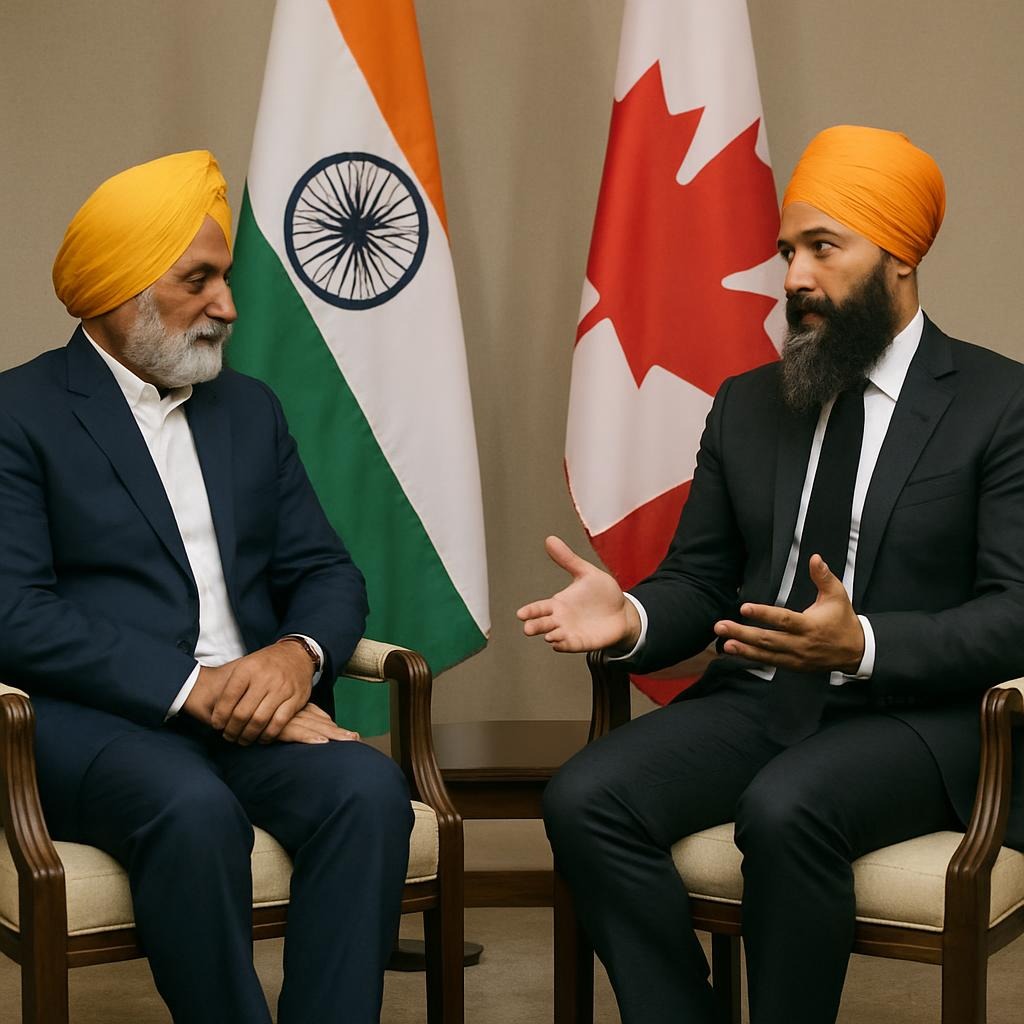
Because the Liberals governed in a minority and relied on the NDP for confidence and supply, Jagmeet Singh’s party has had structural leverage over Trudeau’s government. Singh has consistently framed Sikh issues through a civil‑rights and civil‑liberties lens, which reinforces political costs for any Liberal move that might be seen as capitulating to Indian pressure on “Khalistan” or diaspora activism. CBC The Hindu
Source: CBC – Why Canada is becoming the focus of India’s concerns CBC
4. Refusal to ban Khalistan-linked groups: law or strategy?
Canada’s refusal to broadly ban “Khalistan” organizations is driven by both legal constraints and political calculations. Strong constitutional protections for expression mean only clearly violent or terrorist entities can be proscribed, while politically, Ottawa avoids sweeping bans that would be read domestically as criminalizing Sikh identity or non‑violent separatist sentiment. India Today The Hindu
Source: India Today – Khalistan movement’s complex journey from India to Canada India Today
5. Balancing Sikh rights with strategic partnership with India
Ottawa balances these priorities by publicly stressing rule of law and equality of all citizens, while privately seeking cooperation with India on security cases that meet Canadian legal thresholds. Canada frames any actions against Sikh individuals as case‑specific (terrorism, violence, or hate) rather than ideological, allowing it to defend civil liberties at home while still signalling willingness to work with India on clearly defined security threats. CBC The Hindu
Source: The Hindu – On India–Canada diplomatic relations The Hindu
6. Use of Gurdwara appearances to signal separatist sympathy
Indian officials have repeatedly criticized Canadian politicians for attending events where portraits of Khalistani figures or separatist symbolism are present, interpreting these appearances as tacit endorsement. Canadian politicians generally frame these visits as routine outreach to religious communities, but the optics—banners, posters, or martyrs’ imagery—have fed New Delhi’s narrative that Canadian leaders court separatist sentiment for domestic gain. CBC The Hindu
Source: CBC – Why Canada is becoming the focus of India’s concerns CBC
7. Do human rights concerns about Punjab override trade interests?
Human rights concerns about Punjab and Sikh activism do not fully override trade priorities, but they narrow Ottawa’s room to compromise for economic gain. Canada has been willing to absorb stalled trade talks and visa restrictions rather than be seen domestically as sacrificing civil liberties or due process to secure a trade deal or Indo‑Pacific access. The Diplomat The Hindu
Source: The Hindu – On India–Canada diplomatic relations The Hindu
Diplomatic tensions and sovereignty
8. How Nijjar’s killing reframed the issue as sovereignty
The allegation that Indian agents were involved in the 2023 killing of Hardeep Singh Nijjar on Canadian soil shifted the debate from a “diaspora extremism” issue to a core sovereignty and rule‑of‑law question. Ottawa cast the case as unacceptable foreign interference and “transnational repression” against a Canadian citizen, which obliged the government to respond regardless of Nijjar’s political views. icct.nl The Hindu
Source: ICCT – The India–Canada rift: Sikh extremism and transnational repression icct.nl
9. Does Canada see protection of Sikh activists as moral leverage?
Canada’s stance is framed less as leverage and more as adherence to a rights‑based foreign policy: it argues that all residents, including Sikh activists, are entitled to protection from intimidation or extrajudicial targeting. That said, this rights‑based framing gives Ottawa moral standing in multilateral debates about transnational repression and state overreach, implicitly strengthening its hand when criticizing India in international forums. icct.nl
Source: ICCT – The India–Canada rift icct.nl
10. India’s use of trade and visa suspensions as counter‑leverage
In response to Trudeau’s public allegation over Nijjar, India suspended visa services for Canadians and slowed or froze trade and investment talks, using economic and mobility instruments to impose political costs on Ottawa. New Delhi leverages its growing market size and strategic value in the Indo‑Pacific to signal that tolerating what it calls “extremism” will carry concrete consequences. The Hindu
Source: The Hindu – On India–Canada diplomatic relations The Hindu
11. Impact of Five Eyes intelligence sharing
Five Eyes partners, especially the United States, reportedly provided signals intelligence that strengthened Canada’s assessment of Indian involvement in Nijjar’s killing, giving Ottawa confidence to make an unusually direct public accusation. This allied backing constrained India’s ability to dismiss the claims outright and increased the reputational stakes for New Delhi among Western democracies. icct.nl
Source: ICCT – The India–Canada rift icct.nl
12. Naming Indian involvement as deterrence against repression
By publicly linking Indian state actors to Nijjar’s killing instead of handling it quietly, Canada aimed to raise the political cost of any future operations against diaspora activists. Framing the episode as an example of “transnational repression” places India alongside other states criticized for such tactics, thereby using reputation and alliance politics as a deterrent tool. icct.nl
Source: ICCT – The India–Canada rift icct.nl
13. India’s “safe haven” claim and Canada’s legal reply
India argues that Canada provides a “safe haven” for individuals whom India designates as terrorists, citing open rallies, referendums, and fundraising by pro‑Khalistan groups. Canada replies that it cannot act merely on foreign designations; only activities meeting Canadian legal thresholds for terrorism, hate, or violence can be prosecuted or banned, and extradition requires credible evidence and fair‑trial guarantees. The Hindu
Source: The Hindu – On India–Canada diplomatic relations The Hindu
14. 2023 diplomat expulsions as tactical signalling
Canada’s expulsion of a senior Indian diplomat and India’s reciprocal expulsion of a Canadian envoy allowed both governments to signal resolve to domestic audiences. Ottawa emphasized defense of sovereignty and rule of law, while New Delhi underscored its refusal to accept what it framed as politically motivated and unsubstantiated accusations, each reinforcing their domestic narratives without completely severing ties. The Hindu
Source: The Hindu – On India–Canada diplomatic relations The Hindu
Legal and human rights frameworks
15. Canadian legal threshold: advocacy vs incitement
In Canada, merely advocating for an independent state like Khalistan is protected expression; speech crosses into criminality when it involves counselling, threatening, or explicitly encouraging violence, terrorism, or hatred against identifiable groups. Courts require a real risk that words will lead to harm before limiting expression, which makes broad suppression of separatist advocacy legally difficult. India Today
Source: India Today – Khalistan movement’s complex journey from India to Canada India Today
16. Charter limits on “cracking down” as India requests
Canada’s Charter of Rights and Freedoms protects freedoms of expression, association, religion, and peaceful assembly, meaning the government cannot simply outlaw non‑violent separatist speech at India’s request. Any restriction must be demonstrably justified in a “free and democratic society,” so Ottawa must show proportionality and evidence of harm, which sharply narrows the scope for sweeping bans against Sikh activism. India Today The Hindu
Source: India Today – Khalistan movement’s complex journey India Today
17. Use of Sikh informants to monitor Indian activities
Open sources on specific informant operations are limited, but analyses of the Nijjar case note growing concern in Ottawa about Indian intelligence activity targeting Sikh activists in Canada. Western counter‑terrorism and counter‑intelligence practice generally includes cultivating community sources, and reporting on transnational repression suggests that diaspora members sometimes provide information on foreign state intimidation or surveillance efforts. icct.nl
Source: ICCT – The India–Canada rift icct.nl
18. Handling and frequent denial of Indian extradition requests
Canadian courts scrutinize Indian extradition requests for due process, prison conditions, and risk of politically motivated charges, especially when applicants are linked to Sikh activism. When India’s evidence is weak, or when there are credible concerns about fair‑trial guarantees and human rights, Canadian judges and ministers have often refused extradition, which India interprets as political shielding. The Hindu
Source: The Hindu – On India–Canada diplomatic relations The Hindu
19. Policy differentiation between Khalistan and the broader Sikh community
Officially, Canada distinguishes between a small subset of individuals who may support violence and the much larger Sikh community, which is integrated into politics, business, and public life. Canadian statements routinely emphasize that Sikhs as a whole are not under suspicion and that only specific individuals or organizations meeting terrorism or incitement thresholds can face legal action. CBC
Source: CBC – Why Canada is becoming the focus of India’s concerns CBC
Geopolitics and external perceptions
20. Effect on Canada’s Indo‑Pacific Strategy vs China
Canada’s rift with India complicates its Indo‑Pacific Strategy by weakening cooperation with a key democratic counterweight to China, particularly on trade and security. Ottawa’s insistence on rights‑based treatment of Sikh activists, however, also aligns it more closely with other Western partners who are wary of overlooking human rights for geopolitical convenience. The Diplomat
Source: The Diplomat – Signs of a shift in Canada–India relations The Diplomat
21. U.S. and UK views of Canada’s management of Sikh activism
Other Western states have sizable Sikh communities and their own frictions with India but tend to manage them quietly, prioritizing strategic ties with New Delhi. The U.S. and UK have shown cautious support for Canada’s concern about transnational repression while avoiding Trudeau’s level of public confrontation, seeking to balance diaspora rights with deeper security and economic partnerships with India. CBC icct.nl
Source: ICCT – The India–Canada rift icct.nl
22. Third‑party actors exploiting the “Sikh issue”
Analysts of transnational repression warn that rival states like China or Pakistan can exploit tensions between Canada and India by amplifying narratives of persecution or “safe haven” through information campaigns. Such actors benefit from weakened India–West cooperation and may seek to magnify diaspora grievances or Indian security anxieties for strategic gain. icct.nl
Source: ICCT – The India–Canada rift icct.nl
23. India’s internal security narrative vs Canadian multiculturalism
India frames Punjab‑related militancy as an enduring national security threat linked to terrorism and foreign interference, demanding robust action against sympathizers abroad. Canada views Sikh political expression, including non‑violent separatism, as part of a multicultural democracy, and sees itself as obliged to protect such expression when it does not cross into violence, creating a fundamental narrative clash. CBC The Hindu
Source: CBC – Why Canada is becoming the focus of India’s concerns CBC
Historical and future outlook
24. Legacy of the 1985 Air India bombing
The Air India Flight 182 bombing, planned in Canada and killing mostly Canadian citizens, remains a trauma for both countries and a symbol of the dangers of diaspora‑based extremism. Perceived investigative failures and intelligence lapses still shape Indian skepticism about Canada’s seriousness on Sikh extremism, while in Canada the case is cited as a reason to guard against both terrorism and overreach. CBC
Source: CBC – Why Canada is becoming the focus of India’s concerns CBC
25. Evolution of Canadian rhetoric from Harper to Trudeau
Under Stephen Harper, Ottawa emphasized trade, economic engagement, and quiet diplomacy with India, while still acknowledging Sikh community concerns. Trudeau’s government has used more explicit rights‑based language and has been more visibly engaged with diaspora politics, which India reads as greater tolerance of Khalistan‑linked activism, heightening mutual mistrust. The Hindu
Source: The Hindu – On India–Canada diplomatic relations The Hindu
26. What a “reset” in relations would require
A genuine reset would likely require India to refrain from any operations on Canadian soil and to work strictly through legal channels, while Canada would need to show consistent action against individuals who clearly cross into violence or terrorism. Both sides would have to agree on practical information‑sharing standards and develop a shared language that distinguishes legitimate political advocacy from security threats. The Diplomat The Hindu
Source: The Diplomat – Signs of a shift in Canada–India relations The Diplomat
27. Risk of marginalizing other Indo‑Canadian subgroups
An intense political focus on Sikh‑related issues risks overshadowing concerns of other Indo‑Canadian communities such as Hindus, Muslims, and non‑Punjabi migrants, who may feel their priorities are secondary. This dynamic can foster intra‑diaspora resentment and complicate Canada’s domestic cohesion, especially when Indian domestic politics spill over into community relations in Canadian cities. CBC
Source: CBC – Why Canada is becoming the focus of India’s concerns CBC
28. Social media, digital activism, and diplomatic complications
Online campaigns, virtual “referendums,” and targeted harassment on social media have amplified both pro‑Khalistan activism and Indian government pushback, making the conflict more visible and harder to manage diplomatically. Viral content and disinformation can quickly inflame public opinion in both countries, reducing policymakers’ flexibility and feeding New Delhi’s perception that Canada tolerates hostile propaganda. India Today
Source: India Today – Khalistan movement’s complex journey India Today
29. Impact on Indian students’ and migrants’ destination choices
India’s suspension of visas and warnings about anti‑India activities in Canada, combined with the diplomatic chill, have already prompted discussions about diverting students and migrants to other destinations like Australia, the UK, or the U.S. If tensions persist, Canada could see a gradual shift in educational and migration flows, affecting its economic and people‑to‑people ties with India. CBC The Hindu
Source: The Hindu – On India–Canada diplomatic relations The Hindu
30. How the Sikh diaspora sees its role: pawn or stakeholder?
Many Sikh activists portray themselves as rights‑bearing citizens and transnational stakeholders who can influence policy in both Canada and India, not merely as pawns. At the same time, there is awareness that major powers, Indian parties, and Canadian politicians instrumentalize Sikh issues for their own agendas, producing a dual sense of empowerment and vulnerability within the diaspora. CBC icct.nl
Source: CBC – Why Canada is becoming the focus of India’s concerns CBC
Keywords
Keywords: Canada–India relations, Sikh diaspora, Khalistan movement, vote‑bank politics, Jagmeet Singh, NDP, Justin Trudeau, Charter of Rights and Freedoms, transnational repression, Hardeep Singh Nijjar, Five Eyes, extradition, Air India Flight 182, Indo‑Pacific Strategy, human rights, free speech, Gurdwara politics, visa suspension, trade negotiations, Punjab security, multiculturalism, diaspora activism, social media radicalization, diplomat expulsions, safe haven narrative, geopolitical leverage.
About the Author