From repeated panics to a decentralized central bank: why the U.S. created the Federal Reserve in 1913 Federal Reserve Bank of St. Louis Federal Reserve History
Historical context
- 1. Pre-Fed financial crises: The U.S. faced recurrent panics and bank runs—major episodes include 1819, 1837, 1857, 1873, 1893, and especially 1907—reflecting a fragmented system without a lender of last resort or elastic currency Federal Reserve Bank of St. Louis Federal Reserve Bank of Philadelphia. https://www.stlouisfed.org/in-plain-english/history-and-purpose-of-the-fed
- 2. Panic of 1907’s influence: The severe 1907 crisis catalyzed monetary reform, convincing policymakers and bankers of the need for a central bank and spurring the legislative path that culminated in the Federal Reserve Act of 1913 Federal Reserve History. https://www.federalreservehistory.org/essays/panic-of-1907
- 3. Why early national banks failed: The First Bank’s charter expired amid political opposition in 1811; the Second Bank was killed by Jackson’s 1832 veto and subsequent “Bank War,” driven by fears of corruption and concentrated power Federal Reserve Bank of Richmond Wikipedia. https://www.richmondfed.org/publications/research/econ_focus/2023/q2_economic_history
- 4. Role of recurring bank runs: Frequent runs amplified contagion and public anxiety, shaping support for reforms that would provide emergency reserves and systemic stability Federal Reserve Bank of St. Louis. https://www.stlouisfed.org/in-plain-english/history-and-purpose-of-the-fed
- 5. Effects of no central bank in the 19th century: The absence of a central bank left an inelastic currency and unstable credit system, intensifying cyclical volatility and regional fragmentation during the state and national banking eras Federal Reserve Bank of Philadelphia JSTOR. https://www.philadelphiafed.org/education/the-state-and-national-banking-eras
Legislative foundations
- 6. What the Federal Reserve Act did and why: Enacted in 1913, it created the Federal Reserve to provide a safer, more flexible, and more stable monetary and financial system—directly addressing panic-driven instability Federal Reserve Board. https://www.federalreserve.gov/aboutthefed/fract.htm
- 7. Main sponsors in Congress: The House bill H.R. 7837 was introduced by Carter Glass; Senator Robert L. Owen led in the Senate Wikipedia. https://en.wikipedia.org/wiki/Federal_Reserve_Act
- 8. Woodrow Wilson’s role: Wilson prioritized central banking legislation and signed the Federal Reserve Act on December 23, 1913, steering compromises that secured passage Federal Reserve History FRASER. https://www.federalreservehistory.org/essays/federal-reserve-act-signed
- 9. Public–private compromises in the Act: Congress balanced regional Reserve Banks (with private boards) under a public Board of Governors to diffuse power and insulate policy from short-term politics Federal Reserve Bank of Atlanta Federal Reserve Bank of Kansas City. https://www.atlantafed.org/about/publications/fed-structure-and-functions/structure.aspx
- 10. Aldrich Plan’s influence: Aldrich’s National Monetary Commission plan for flexible reserves and regional institutions informed the final decentralized structure, though Democrats rejected banker control and added stronger public oversight FRASER Federal Reserve History. https://fraser.stlouisfed.org/files/docs/historical/frbsf/frbsf_let/frbsf_let_19840106.pdf
Key figures
- 11. Senator Nelson Aldrich’s role: As Finance Committee chair, Aldrich led the National Monetary Commission and authored the Aldrich Plan—an essential precursor to the Fed’s design U.S. Senate Wikipedia. https://www.senate.gov/senators/FeaturedBios/Featured_Bio_Aldrich.htm
- 12. Paul Warburg’s influence: Warburg championed a European-style central bank and participated in the 1910 Jekyll Island meeting; his ideas helped shape elastic currency and lender-of-last-resort functions adopted by the Fed Wikipedia Federal Reserve History. https://en.wikipedia.org/wiki/Paul_Warburg
- 13. Carter Glass’s role: House Banking chair, co-sponsored and drove the Act through Congress; later served as Treasury Secretary and influenced Fed governance in the interwar period Federal Reserve History. https://www.federalreservehistory.org/people/carter-glass
- 14. Bankers vs. politicians’ visions: Bankers pressed for technocratic flexibility and regional, banker-led control (Aldrich Plan), while politicians insisted on public oversight, decentralization, and checks against the “Money Trust” U.S. Senate let.rug.nl. https://www.senate.gov/artandhistory/history/minute/Senate_Passes_the_Federal_Reserve_Act.htm
- 15. Opposition groups and why: Progressives and agrarian interests opposed concentrated Wall Street control, fearing democratic deficits and regional favoritism; they demanded public accountability and dispersion of power U.S. Senate. https://www.senate.gov/artandhistory/history/minute/Senate_Passes_the_Federal_Reserve_Act.htm
Structure and design
- 16. Why regional banks, not a single institution: Regional Reserve Banks assuaged distrust of centralized finance, ensured geographic representation, and reduced concentration risks in monetary governance The University of Chicago Law Review Federal Reserve Bank of St. Louis. https://lawreview.uchicago.edu/sites/default/files/2025-02/03_Judge%20%26%20Menand_SYMP_Final.pdf
- 17. Purpose of 12 regional banks: To reflect the nation’s diverse economic regions, provide services locally, and feed regional intelligence into national policy under a unified system Federal Reserve Board Federal Reserve Bank of Chicago. https://www.federalreserve.gov/aboutthefed/federal-reserve-system.htm
- 18. Addressing concentrated power concerns: The distributed network of 12 Banks plus a public Board created internal checks and balances to prevent dominance by any single body or region Federal Reserve Bank of Atlanta. https://www.atlantafed.org/about/publications/fed-structure-and-functions/structure.aspx
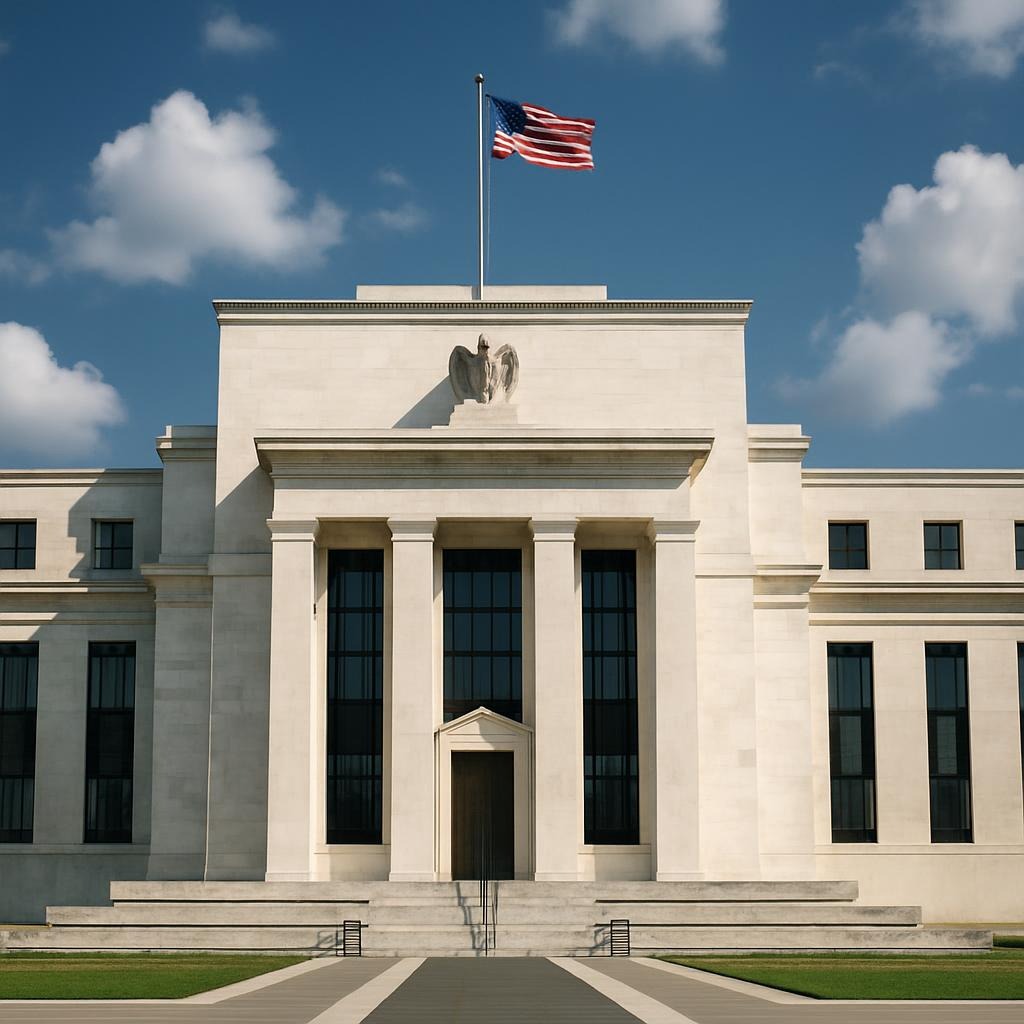
- 19. Role of the Federal Reserve Board (Washington, D.C.): The Board of Governors is the public, independent governmental agency overseeing the System, setting regulations, and co-leading monetary policy via the FOMC Federal Reserve Board. https://www.federalreserve.gov/aboutthefed/the-fed-explained.htm
- 20. Balancing public and private control: Public oversight (Board of Governors) with privately structured regional banks’ boards created a hybrid model—independent within government, accountable to Congress and the public Federal Reserve Bank of Kansas City Federal Reserve Bank of St. Louis. https://www.kansascityfed.org/about-us/accountability-and-governance-of-the-federal-reserve/
Broader economic and political context
- 21. International practices’ influence: U.S. reformers studied European central banks’ lender-of-last-resort roles, elastic currency mechanisms, and governance, adapting them to American federalism MIT Sloan IMF. https://mitsloan.mit.edu/shared/ods/documents?DocumentID=2358
- 22. American distrust of centralization: Longstanding republican suspicion of concentrated financial power—shaped by the Bank War and regional politics—made decentralization a political necessity Federal Reserve Bank of Philadelphia economics.barnard.edu. https://www.philadelphiafed.org/education/the-state-and-national-banking-eras
- 23. Progressive Era reforms’ impact: Progressive anti–Money Trust sentiment and regulatory ambitions framed the debate, pushing for transparency, oversight, and diffusion of power in the Fed’s design Taylor & Francis eBooks, Reference Works and Collections The Economic and Business History Society. https://www.taylorfrancis.com/books/mono/10.4324/9780203116883/banks-politics-progressive-era-rle-banking-finance-richard-mcculley
- 24. Lessons from European central banks: Elastic currency, discounting commercial paper, and formal lender-of-last-resort frameworks were incorporated, while governance was decentralized to fit U.S. political culture Brandeis Users’ Home Pages. https://www.people.brandeis.edu/~cecchett/Jpdf/J32.pdf
- 25. Agricultural sector’s influence: Agrarian interests demanded credit access and regional representation, shaping the Fed’s districting and discounting to support seasonal and rural finance needs Federal Reserve Bank of Chicago Federal Reserve Bank of St. Louis. https://www.chicagofed.org/utilities/about-us/regional-structure
Early impact and legacy
- 26. Immediate problems addressed (post‑1913): The Fed targeted inelastic currency and absence of emergency liquidity by establishing rediscounting and lender-of-last-resort capacity to prevent panics Federal Reserve Board Federal Reserve Bank of St. Louis. https://www.federalreserve.gov/aboutthefed/fract.htm
- 27. How banks’ roles changed: Banks gained access to rediscount windows, payments services, and a stabilizing backstop, integrating them into a national system with uniform oversight and monetary policy Federal Reserve Board Federal Reserve Board. https://www.federalreserve.gov/aboutthefed/the-fed-explained.htm
- 28. Initial public reaction: Mixed but broadly supportive after the trauma of 1907; skepticism of centralization persisted, tempered by the Fed’s decentralized architecture and congressional accountability U.S. Senate Federal Reserve History. https://www.senate.gov/artandhistory/history/minute/Senate_Passes_the_Federal_Reserve_Act.htm
- 29. Preparation for the Great Depression: While the Fed’s early tools and structure were steps forward, missteps in the 1930s exposed limits, leading to major reforms (e.g., Banking Acts) and stronger federal coordination Federal Reserve History Federal Reserve Board. https://www.federalreservehistory.org/essays/great-depression
- 30. Enduring origins shaping today’s mission: The Fed’s hybrid, regional design still underpins its five core functions—monetary policy, financial stability, supervision, payments, and community engagement—anchoring independence with accountability Federal Reserve Board Federal Reserve Board. https://www.federalreserve.gov/aboutthefed/the-fed-explained.htm
Documentary recommendations
| Title | Focus | Link |
|---|---|---|
| The Panic of 1907 (PBS-style explainers and archives) | Origins of the Fed and J.P. Morgan’s role | https://www.federalreservehistory.org/essays/panic-of-1907 |
| Money, Gold, and the Great Depression (Bernanke lecture) | Fed’s early history and lessons learned | https://www.federalreserve.gov/boarddocs/speeches/2004/200403022/default.htm |
| The Meeting at Jekyll Island | Secret 1910 meeting shaping the Aldrich Plan | https://www.federalreservehistory.org/essays/jekyll-island-conference |
| The Great Depression (Fed History) | Fed performance and subsequent reforms | https://www.federalreservehistory.org/essays/great-depression |
| Federal Reserve Act Signed into Law | Passage and political context | https://www.federalreservehistory.org/essays/federal-reserve-act-signed |
Sources: Federal Reserve History Federal Reserve Board Federal Reserve History Federal Reserve History Federal Reserve History
Keywords
- Foundations: Panic of 1907, Aldrich Plan, Jekyll Island, Money Trust, Progressive Era
- Legislation: Federal Reserve Act 1913, Carter Glass, Robert Owen, Board of Governors
- Structure: 12 Reserve Banks, regionalism, public–private governance, FOMC
- Functions: Elastic currency, lender of last resort, rediscounting, supervision, payments
- Legacy: Great Depression reforms, independence and accountability, agricultural credit, international comparisons
About the Author